Before I sold my first koi, I took them for colourful goldfish. One conversation changed that.
On the way during the harvest, Niigata, October 2013.
A cellar full of cichlids
It didn't begin with koi, but in the cellar of my parents' house. As a child and later as a teenager I bred ornamental fish there: cichlids from Lake Tanganyika, South Americans, discus. Some of them went to Japan through the wholesale trade. That was my first connection to the country I would later travel to more than a hundred times.
I was always drawn to fish whose cultivated forms can be shaped. With discus, the path runs from the brown fish with only a few lines, through the semi-striped, to the fully striped fish. As the lines grow wider and wider, you end up with a completely blue fish. Fully striped fish also occur in nature; they are called Royal Blue. For a while red was in fashion, too: from certain collecting areas, first Alenquer, later Curipera, came brown discus with a very high proportion of red, and breeders tried to turn them into solid red fish.
Changing fish according to my own ideas, breeding them and spreading them – that always fascinated me.
Koi in the dairy's cooling water
I saw my first koi at the aquarium club Hottonia in Darmstadt, one of the oldest aquarium clubs in Germany, founded in 1897. I have been a member since my youth, and still am today. The koi swam in outdoor ponds fed by cooling water from the neighbouring dairy. I wasn't impressed. To me they were something like goldfish: colourful, random, colour mutations. I didn't like them.
Then I sat down with a club member who owned the fish, and he showed me his animals: the Showa, there the Sanke, the Kujaku, the Chagoi. I asked him why he had given his fish Japanese names. He could just as well have called them Klaus, Dieter and Kurt. "No, no," he said, "that's the pattern on the fish." If a fish is red and white and the red is distributed in a particular way, it's a Kohaku. If there is black underneath, it's a Showa or a Sanke.
bonsai盆栽
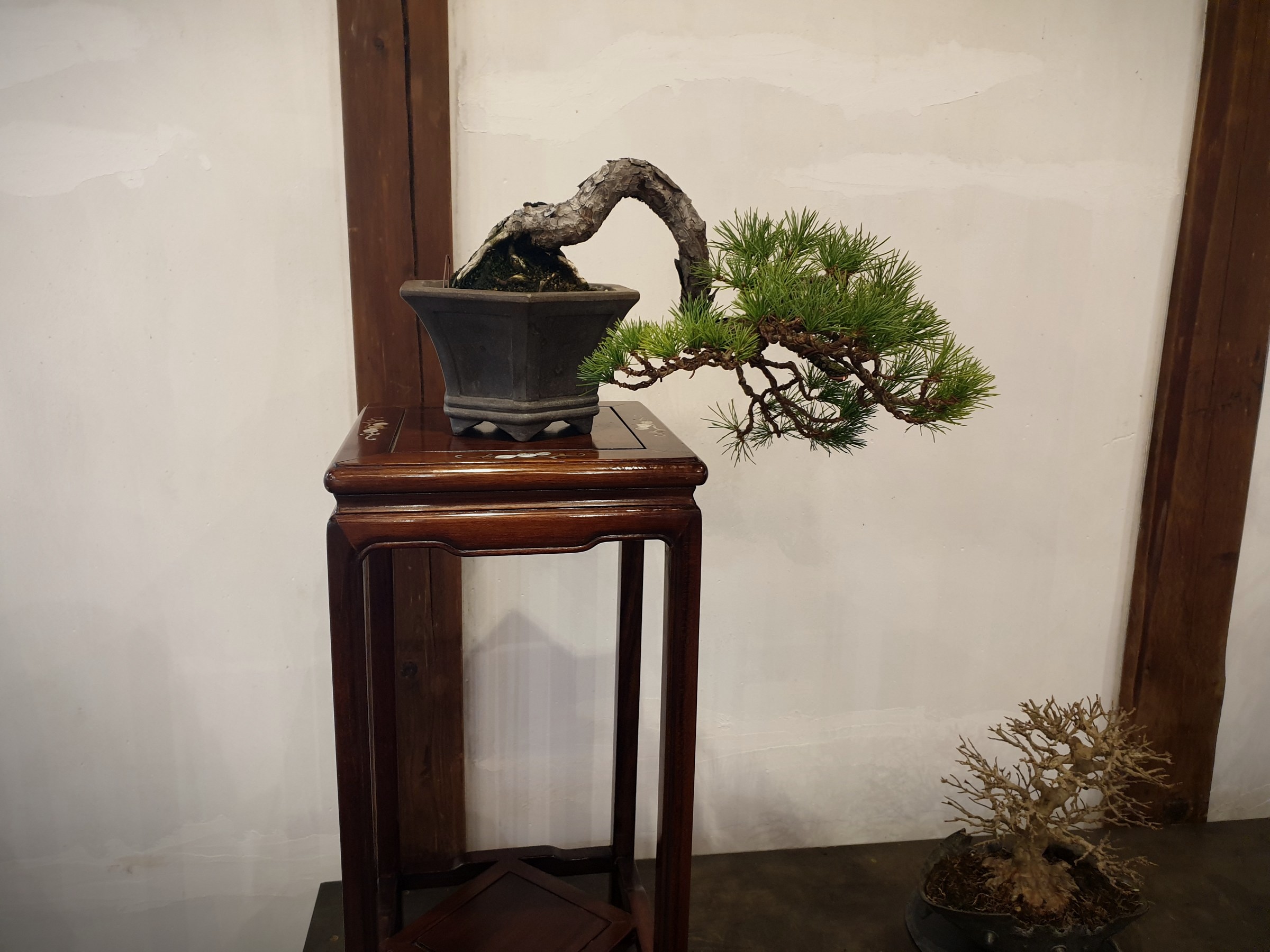
A people who grow trees in bowls
At that moment my interest was awakened. A people who keep trees small and low in bowls and still give them the presence of an ancient tree apply the same thing to fish. Their colouring follows a rule; they are meant to make a particular impression and stand up as art, measured by the quality of skin, body shape and size.
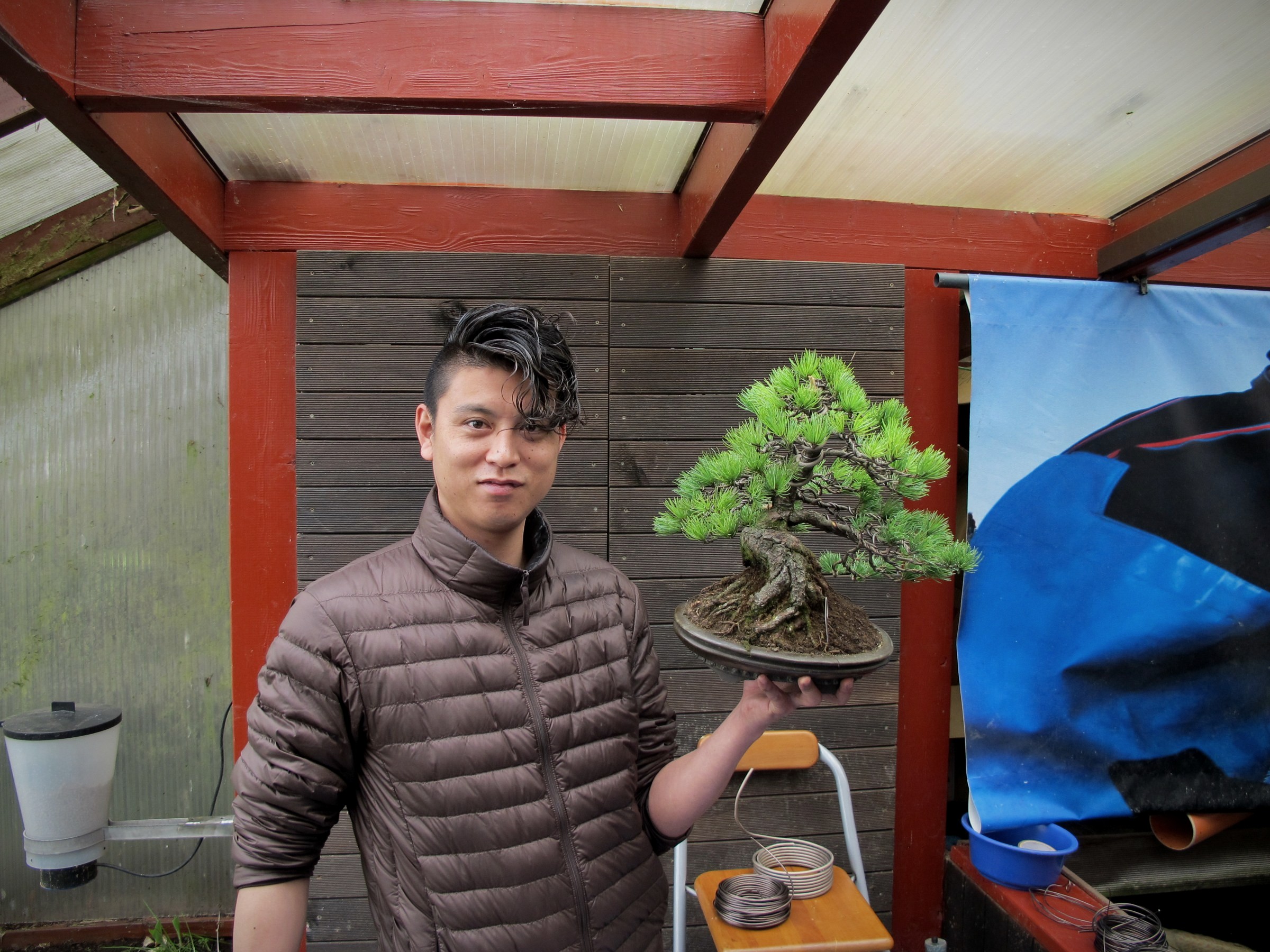
A tree in its bowl, at Masashi's nursery, February 2020.My friend Masashi Hirao, bonsai master. His work can be seen in the series "Bonsai Warrior".
“I found that breeding challenge really, really fascinating.”
tabi旅
Less than a year later in Japan
That same week I bought my first books, and within a few weeks I had read everything available in German about koi. I believe that less than a year later I was already on a plane to Japan to see it all for myself.
In the passenger seat sat Mr Takahashi from Chiba, one of the best-known koi agents of his time. At the wheel was a nineteen-year-old, Takehiro Furuya, and in the back two German dealers. So we went in a little minivan from Chiba via Tokyo and Nagoya to Hiroshima and Fukuoka, right across Japan. Years later I met the young driver again at Dainichi.
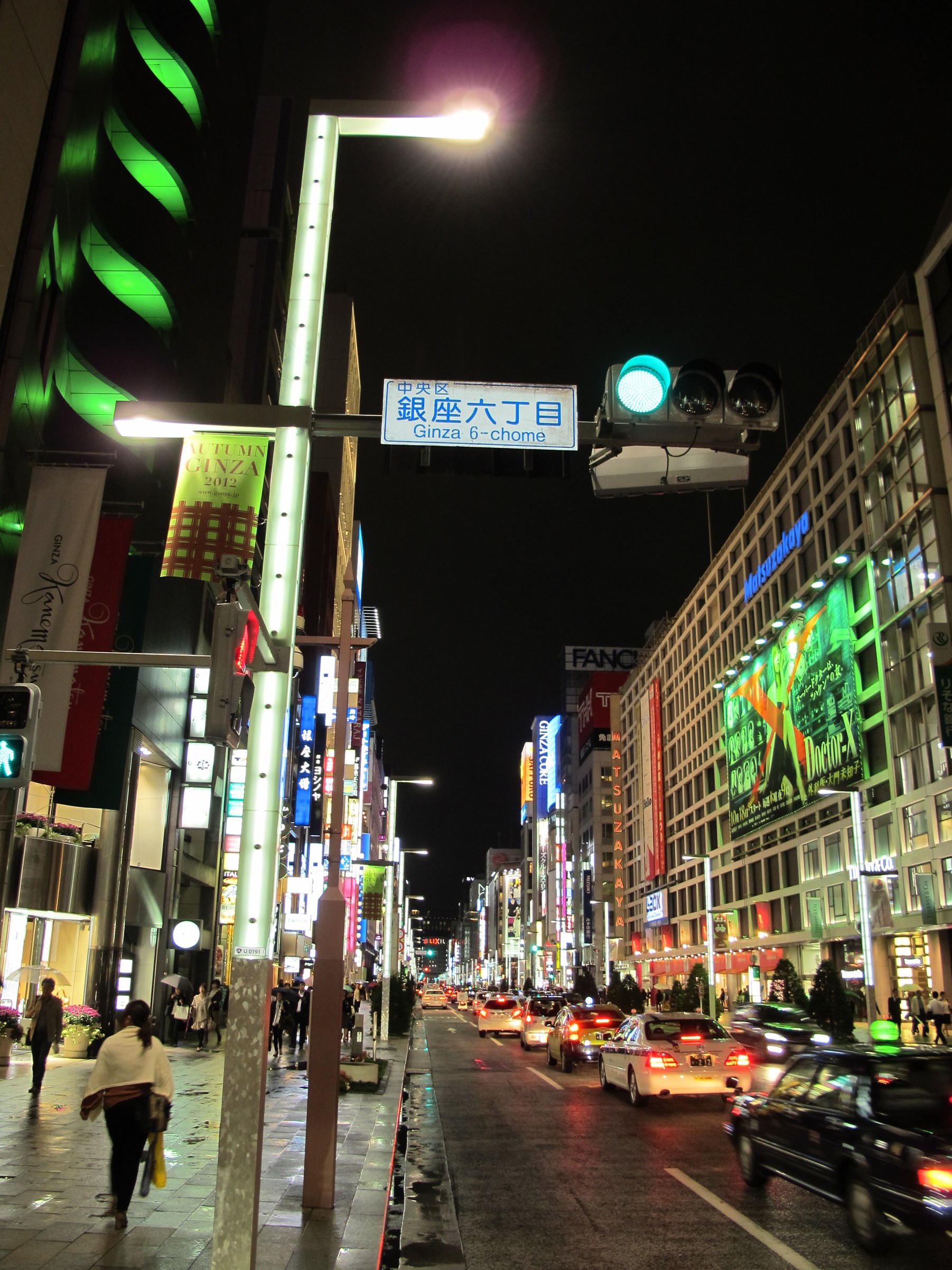
Tokyo, Ginza, 2012.
Koi fever
What followed was full-blown koi fever. Importing fish, selling fish, and always the question of how to raise the money for the next trip and how to get back there. Every koi dealer who is in it heart and soul will understand that.
In 1993 I registered my business.
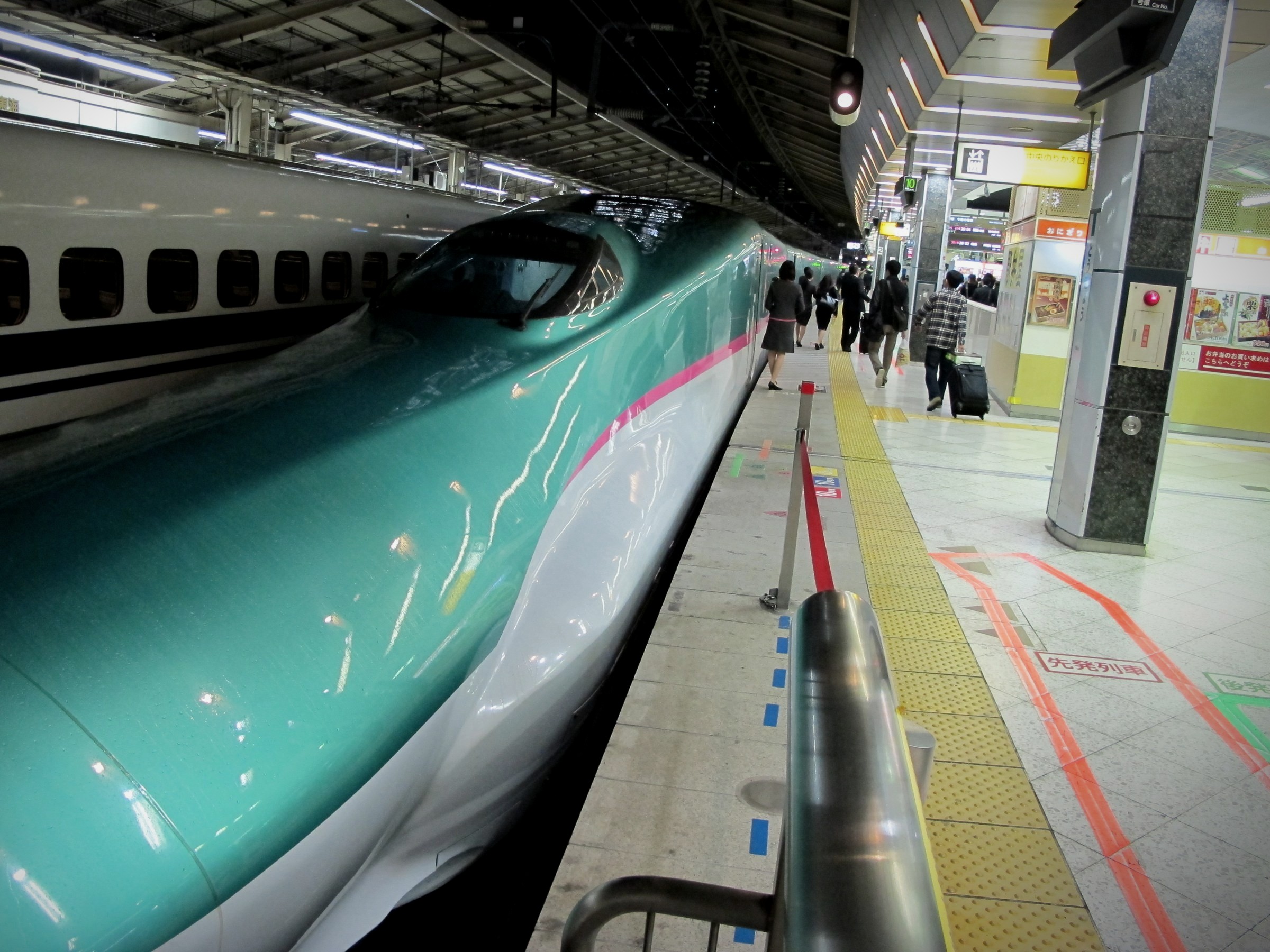
Shinkansen in Tokyo, 2012.
Today
To this day I don't breed koi myself. I buy the fish in Japan and raise them here in Germany. The young fish come from the Dainichi Koi Farm, and I select them together with Shigeru Mano.
It was a long road to get there. Our first project, a natural pond in Hesse, failed because of environmental regulations and the consent of the local council. In Mecklenburg-Western Pomerania we managed to establish ourselves, and today it is something like our home.
To provide the best experience, we use technologies such as cookies to store and/or access device information. Consenting to these technologies will allow us to process data such as browsing behaviour or unique IDs on this site. Not consenting or withdrawing consent may adversely affect certain features and functions.
Functional
Always active
The technical storage or access is strictly necessary for the legitimate purpose of enabling the use of a specific service explicitly requested by the subscriber or user, or for the sole purpose of carrying out the transmission of a communication over an electronic communications network.
Preferences
The technical storage or access is necessary for the legitimate purpose of storing preferences that are not requested by the subscriber or user.
Statistics
The technical storage or access that is used exclusively for statistical purposes.The technical storage or access that is used exclusively for anonymous statistical purposes. Without a subpoena, voluntary compliance on the part of your Internet Service Provider, or additional records from a third party, information stored or retrieved for this purpose alone cannot usually be used to identify you.
Marketing
The technical storage or access is required to create user profiles to send advertising, or to track the user on a website or across several websites for similar marketing purposes.

 Deutsch
  Nederlands
  English
  Français