
From garden pond to Zeeland
I got to know Bram Rohaan as an intern at Dainichi. Today he runs production at one of Europe's largest land-based fish farms. And he is one of my best friends.
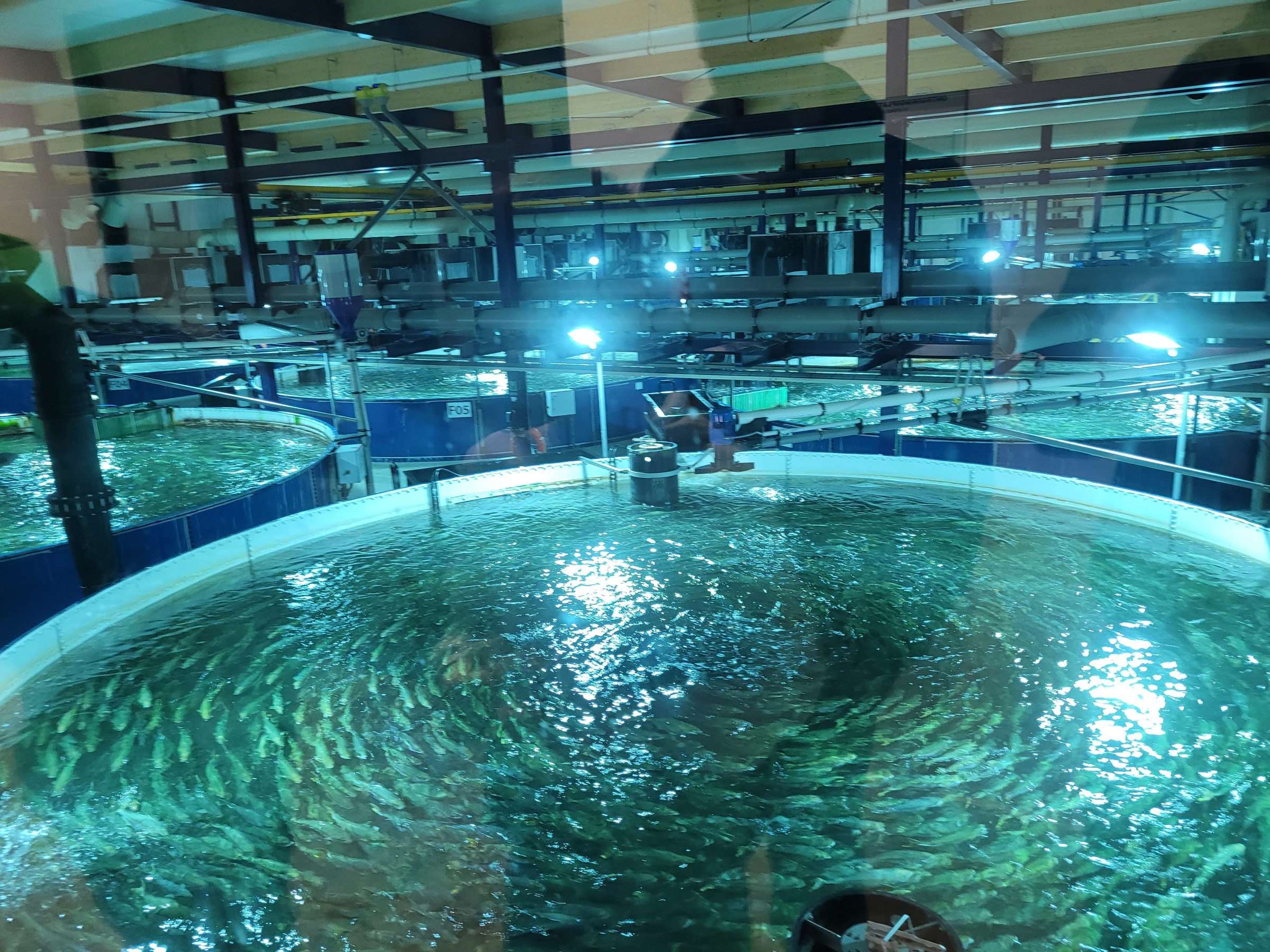
Round tanks at Kingfish Zeeland, January 2024.
A pond in his parents' garden
Bram struck me early on as an exceptionally talented young man. While still at school, long before his final exams, he was allowed to build a small koi pond in his parents' garden. His father gave him a free hand. I saw that pond once, later on: a perfectly ordinary liner pond, no showpiece with a drum filter.
But it was precisely there that he faced the questions that wouldn't let go of him. How do I get a fish to survive? What does the technology have to be like so that it finds an environment it can live in? Bram himself says that this garden pond helped him realise what he wanted to do with his life. Several years before his final exams, his direction was clear.
After his final exams he went straight to Wageningen and studied aquaculture. At some point he also realised that colourful ornamental fish alone would not fulfil him, and that fish farming holds even bigger challenges.
Autumn 2012, Dainichi
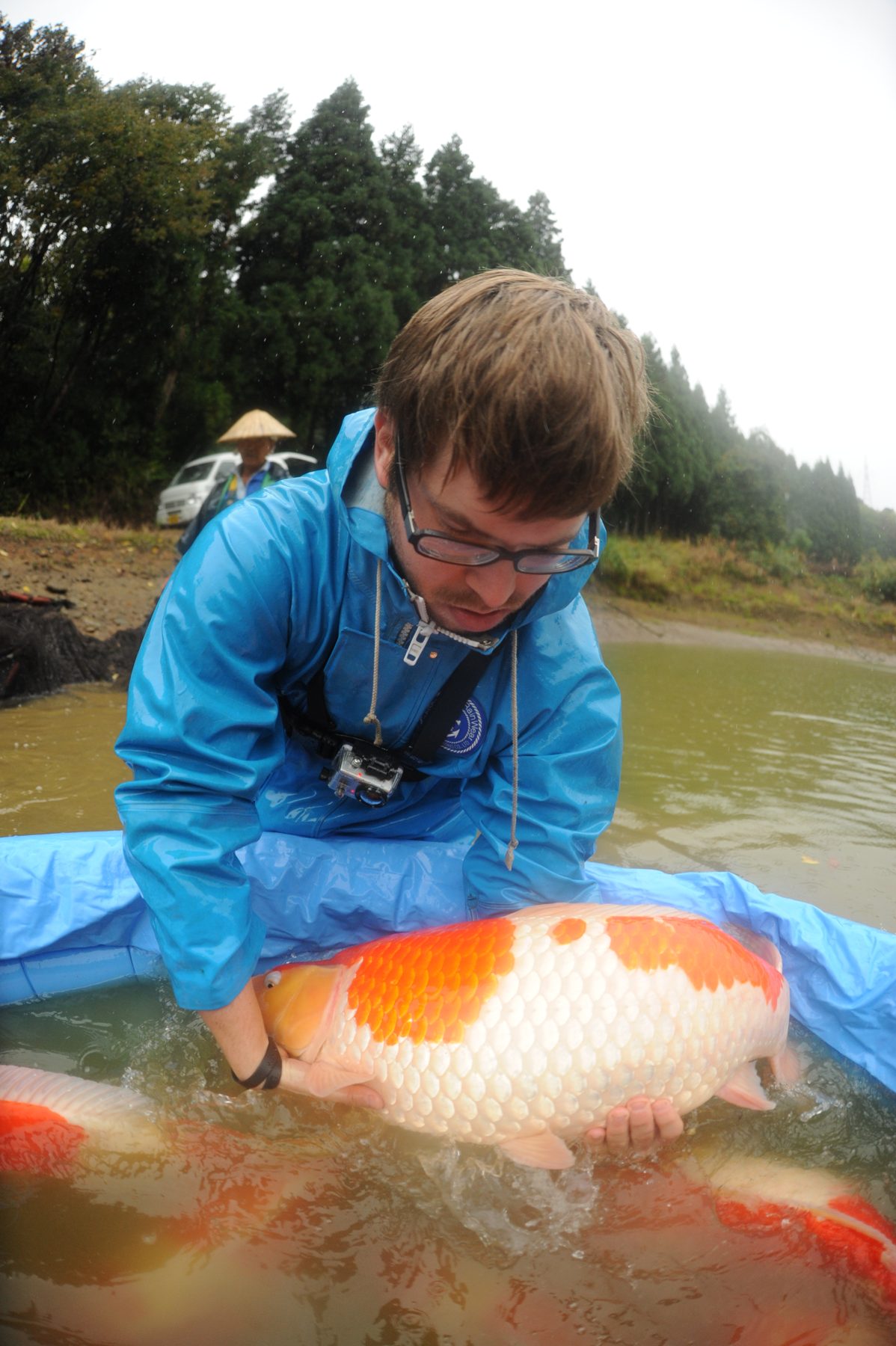
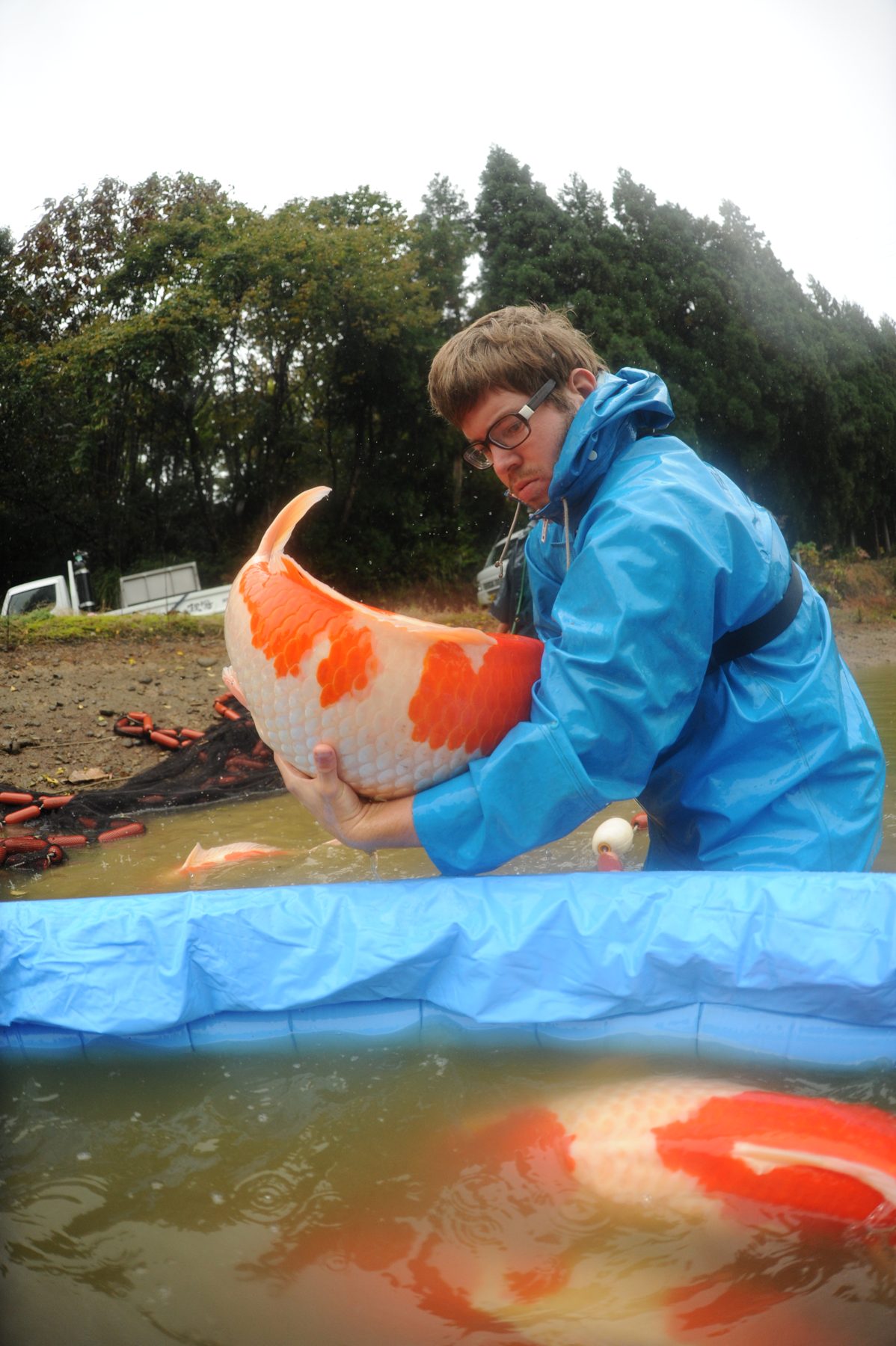
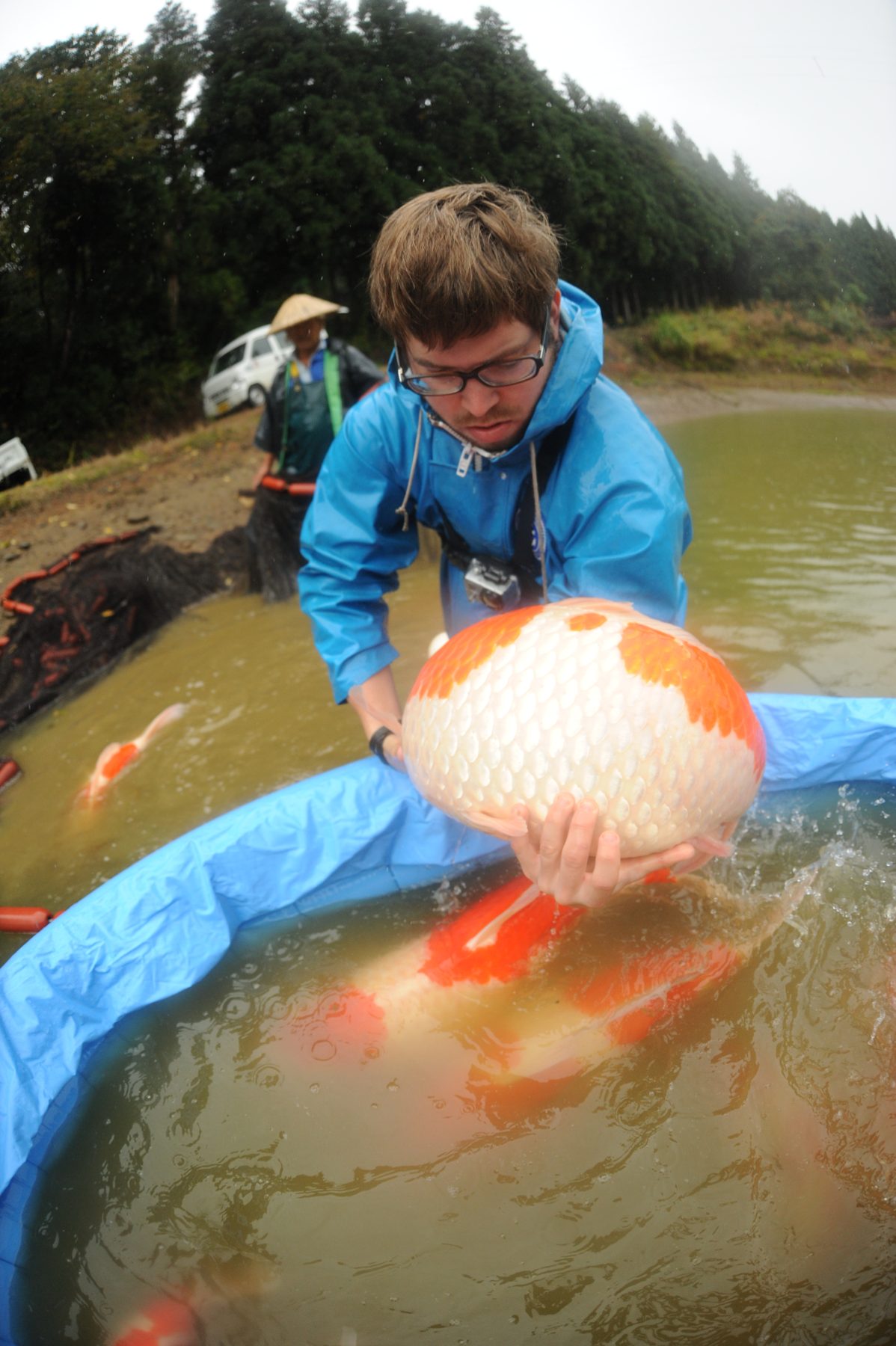
Bram did his nine-month internship at the Dainichi Koi Farm in Japan. In his last week we got to know each other better, and in October 2012 we stood in the pond together for the first time, harvesting large Kohaku. How that came about, I tell in the article about Dainichi.
Old books, a bowling alley and a seminar near Lyon
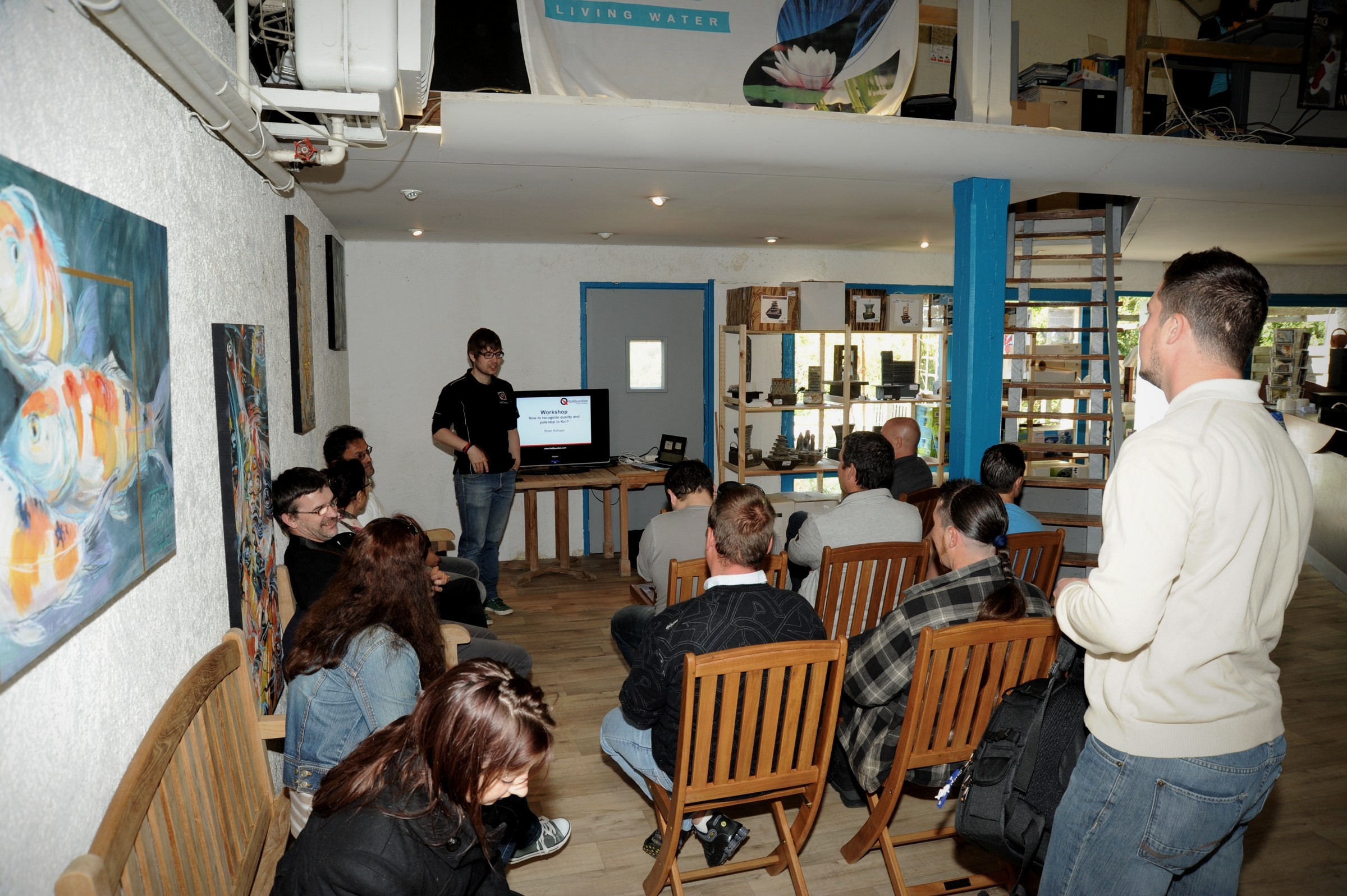
We stayed in touch. In 2013 Bram asked me whether I would accompany him to seminars in France. Of course I would. He didn't have a car yet, so I picked him up at the university in Wageningen. In my luggage I had a present for him: a set of very old Shinkokai winners' books from before 1970, old records about Japan and its koi. I thought they would interest him.
The seminar took place near Lyon. We were put up in a sort of motorway hotel, and in the evening we didn't really know what to do with ourselves at first. Then we discovered that the bar had a bowling alley. Bram and I both love a contest, so a harmless evening turned into one long battle over who was better. That's how it always was between us: we'd always find something to compete over.
There from the very beginning
After a spell at a salmon farm in Denmark, Bram came to Kingfish Zeeland. What attracted him: he could join while the design of the facility had not yet been finalised and help shape it from the very start. Today he is production manager there.
Kingfish Zeeland is located in Kats in the Dutch province of Zeeland, on the Oosterschelde. The facility opened in 2018 and raises yellowtail kingfish in a recirculating seawater system – a fish known in Japan as hiramasa. According to the company, the fish are raised without antibiotics, the electricity comes entirely from renewable sources, and the facility can now produce around 4,000 tonnes a year.
supply the facility with electricity, one in front of each of the three large halls.
without power, and the fish would be lost. That's why someone is on site around the clock.
of yellowtail kingfish a year is what the facility can produce, according to the company.
Three Ikea stores, three wind turbines
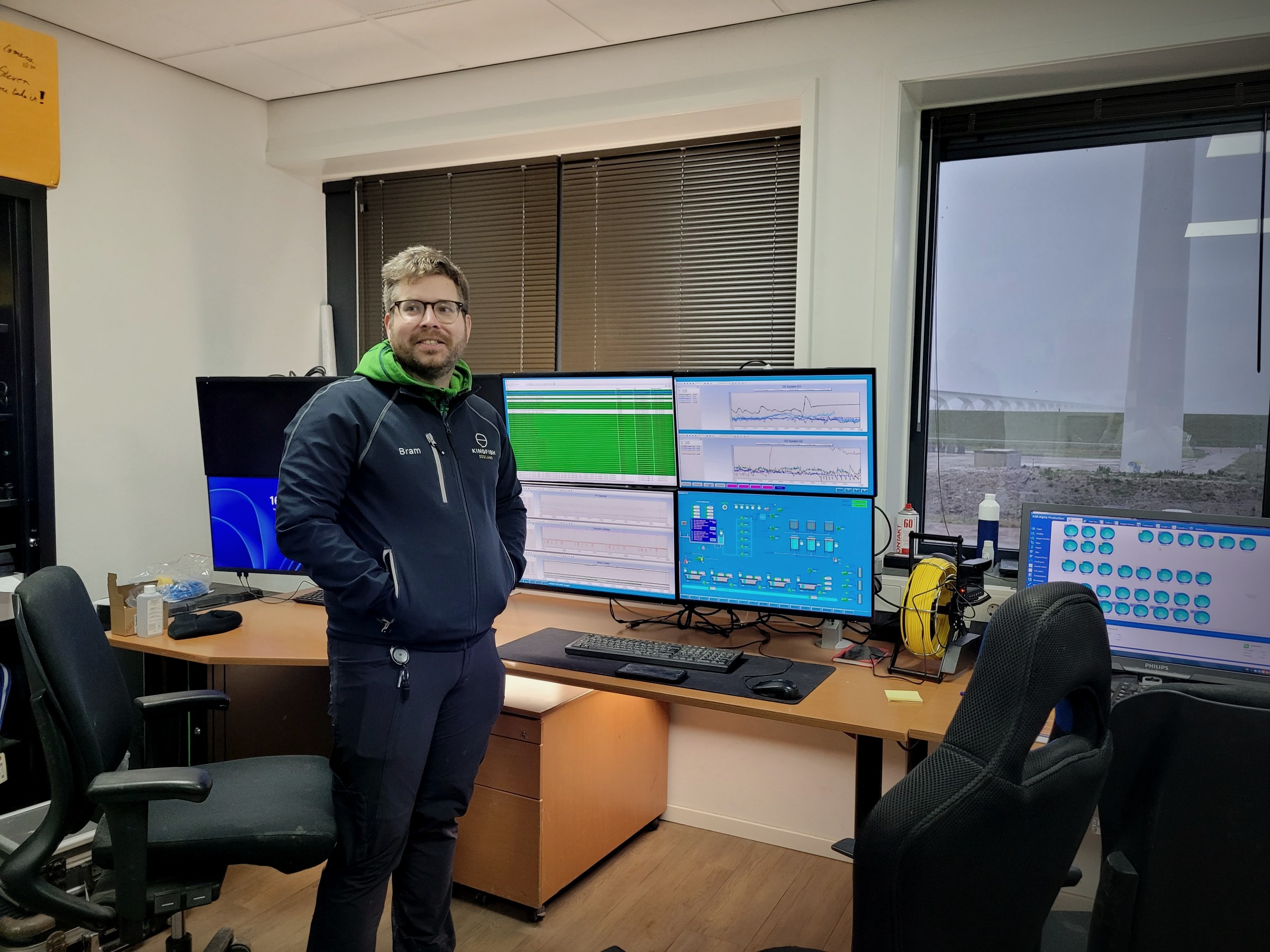
In January 2024 I visited Bram in Zeeland. Picture the facility as three Ikea stores side by side, with a big wind turbine in front of each one. What impressed me most was how safely everything is built. In case the power fails, numerous emergency generators stand ready, and there is a large oxygen tank outside the door. A quarter of an hour without power, and the fish would be lost. That's why three or four people are always on site in shifts – at least one for the fish and one for the electrics and technology.
The water treatment extends over three floors. Trickling filters and gas exchangers also act as protein skimmers there. The foam they produce is sucked off at the top, and on the top floor you practically crawl through the skimmer.
The same, on a smaller scale
Much of this I know from our own facility, just on a smaller scale. We too have a large oxygen tank outside the door, and our water circuits are supplied with pure oxygen, not just air. Each of our water systems has an alarm that beeps if the power or a system fails. I can hear the alarm all the way up in the bedroom – I am, so to speak, my own emergency power monitor. And there is always someone here: when I am in Japan, Kerstin, who heads shipping and customer service for us, sleeps upstairs in my flat, hears the alarms through the skylights and calls our colleagues.
Facilities like Bram's are a model for us. The large, professional operations show what is possible in water treatment, and we keep looking at what we can transfer to our own world. It isn't simple, because Bram works with seawater and we work with freshwater, and some things that work well in saltwater are considerably harder in freshwater. For that we are developing our own solutions, and we keep working on them. Bram has passed on his experience too: he helped design FRD Japan's large trout farm, as I describe in the article about FRD Japan .
Pike in the Lake District
Bram is a passionate angler. He spends his holidays wherever the fishing is especially good. And the Mecklenburg Lake District here is something like the European home of big pike. So that's another reason he comes here.
It rarely worked out, though. Sometimes it was too stormy, sometimes my boat wouldn't cooperate. And once I got my truck stuck at the spot where I had launched the boat. So Bram went out with Haaki, a good friend of mine and a gifted angler too, and I stayed on shore.
Among anglers there's always a contest anyway. But pike fishing is more about teamwork: you have to judge the boat, the spot and the weather together.
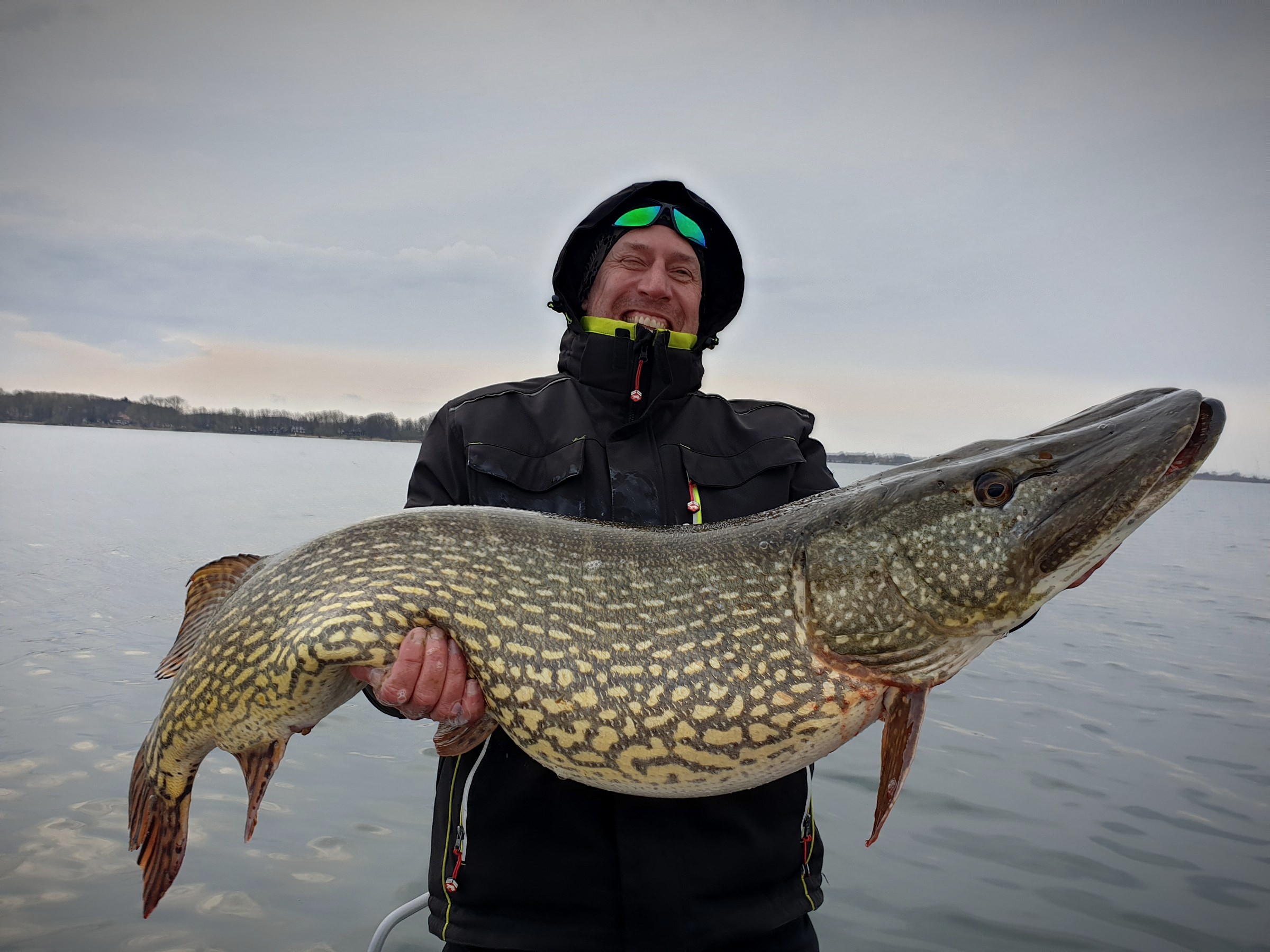
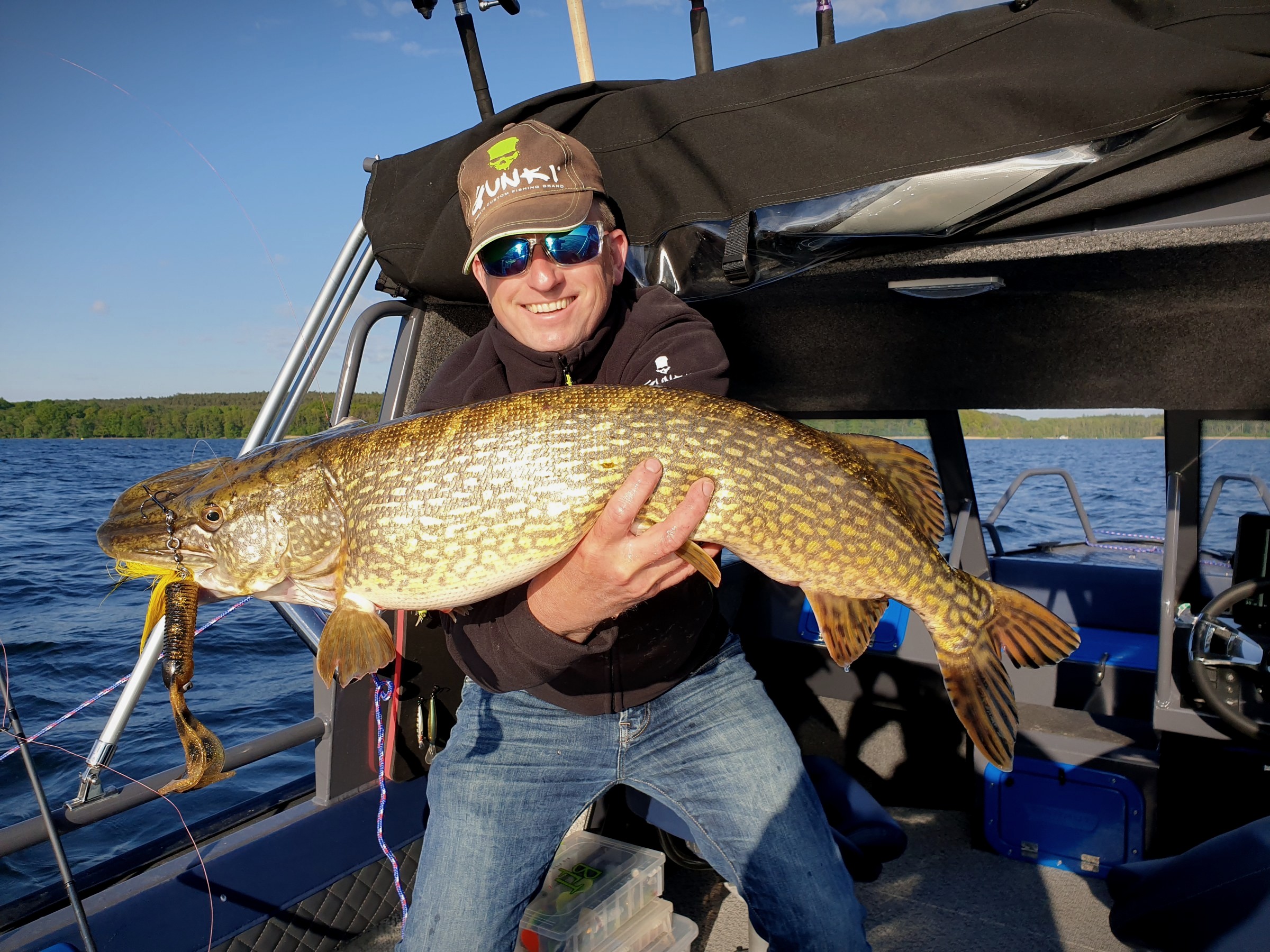
"The hobby that connects us is always the fish, really. Whether you look after it, raise it and sell it, or go after it."
I believe a large part of anglers are simply curious about what lies beneath the surface of the water. Searching for the unknown, coaxing out what lurks down there – that is the angler's passion. And perhaps it is also what gripped Bram as a boy at his little liner pond.
 Deutsch
  Nederlands
  English
  Français