Responsibility in the hobby
Sustainability
Economic sense and environmental responsibility
Our passion for koi goes hand in hand with our commitment to sustainability. We source our koi from the renowned Dainichi Koi Farm in Japan, which places the highest value on environmentally sound breeding methods. Invest in the future with our high-quality koi and support environmentally friendly initiatives.
Solar array
An energy transition for the future
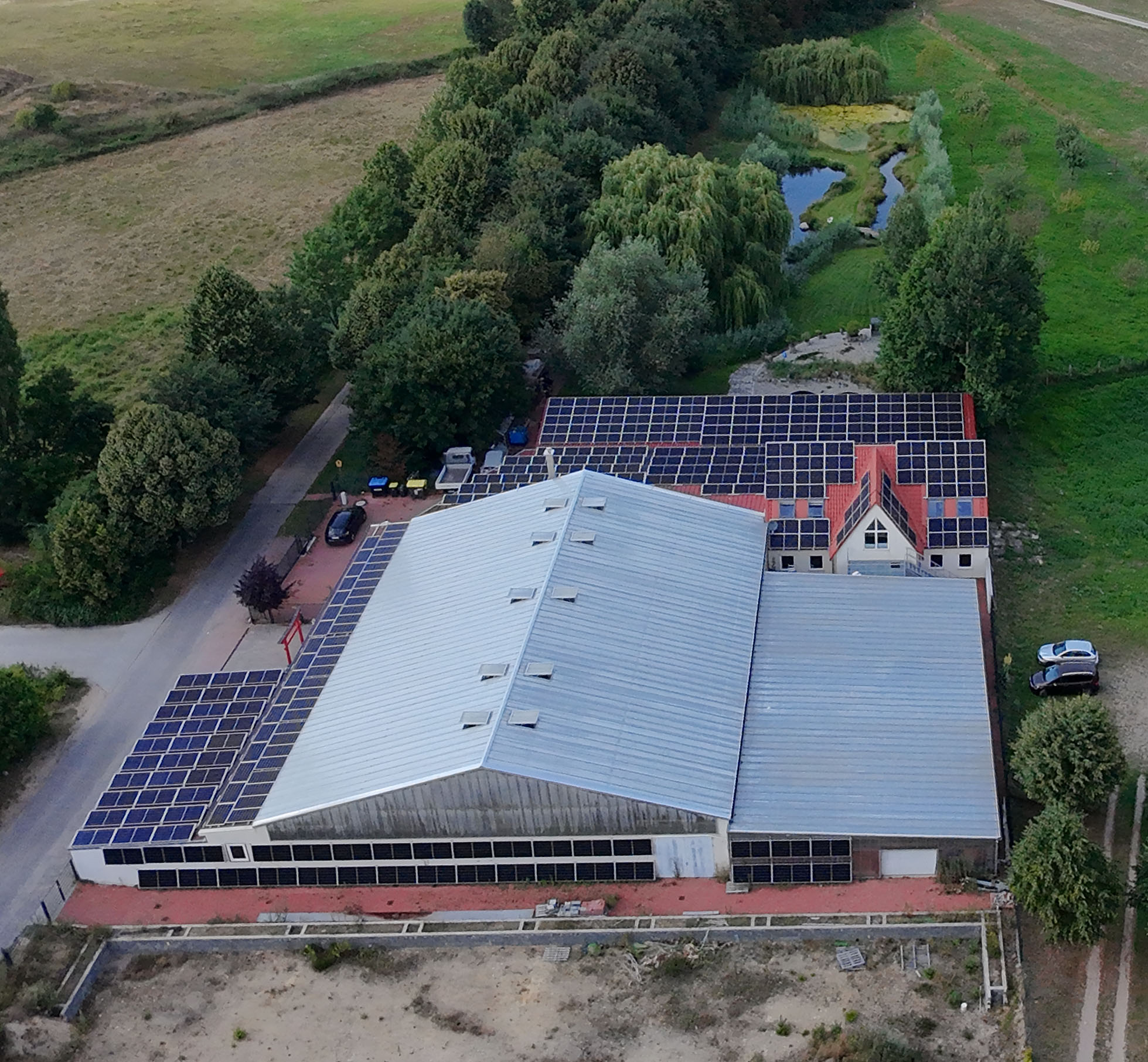
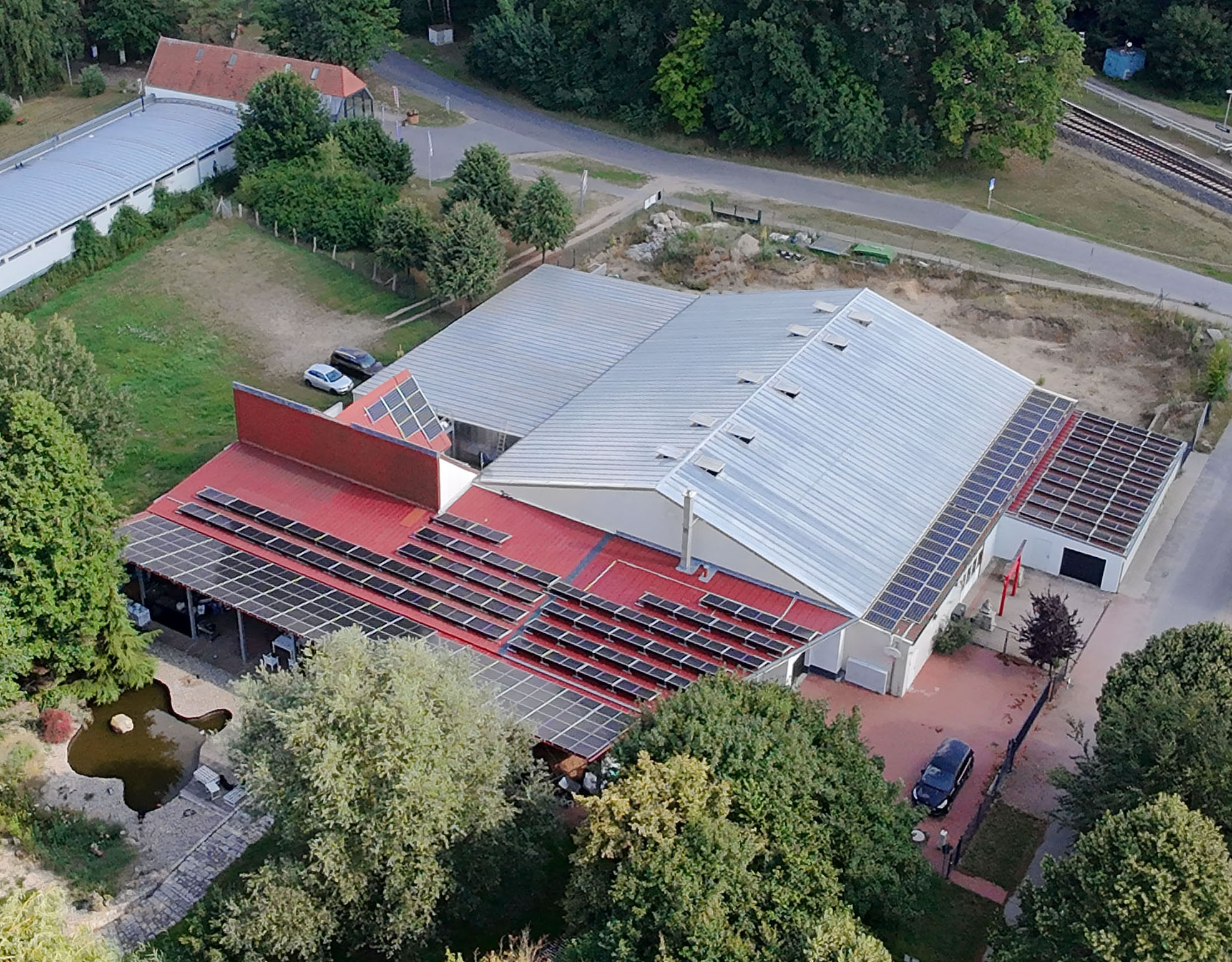
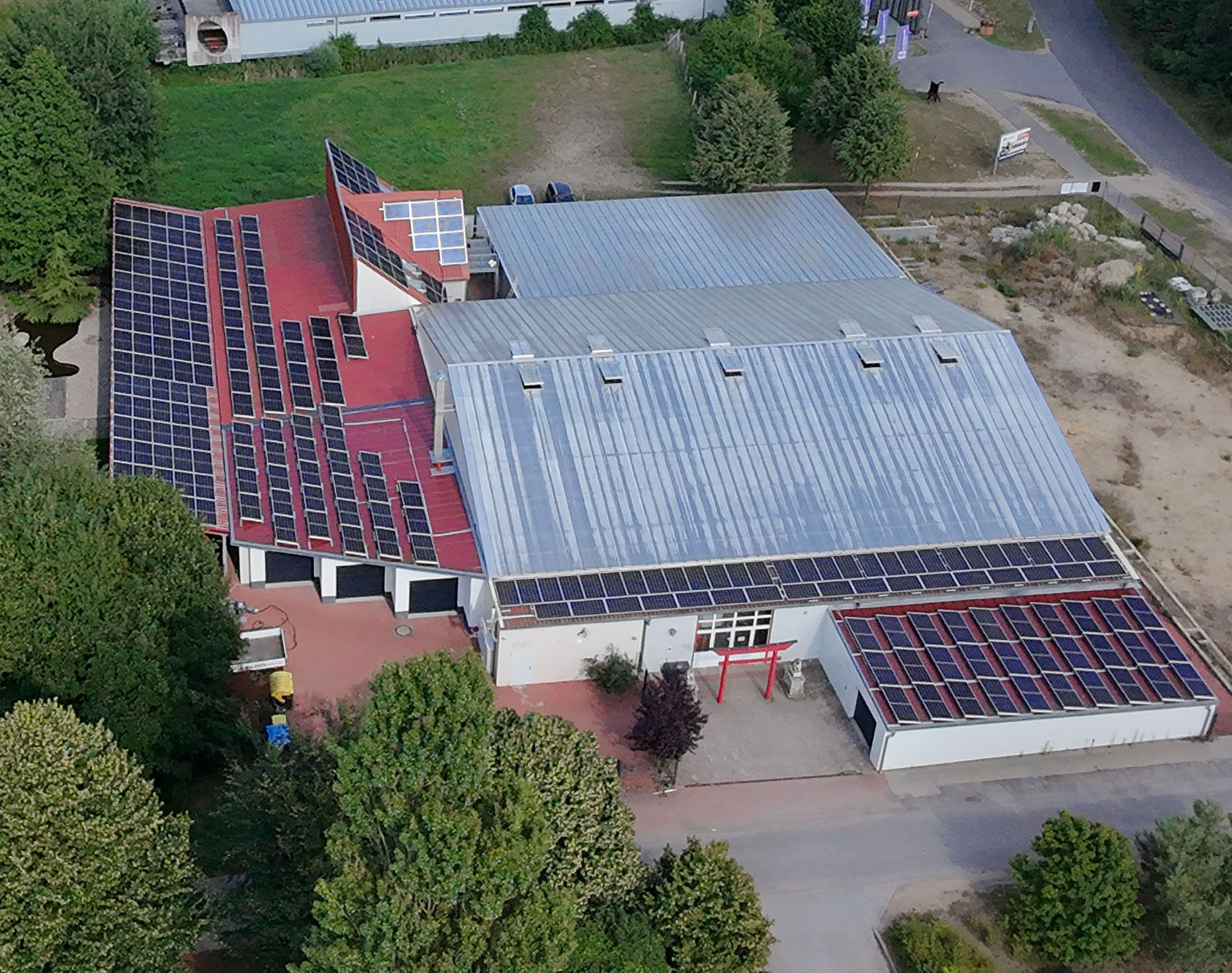
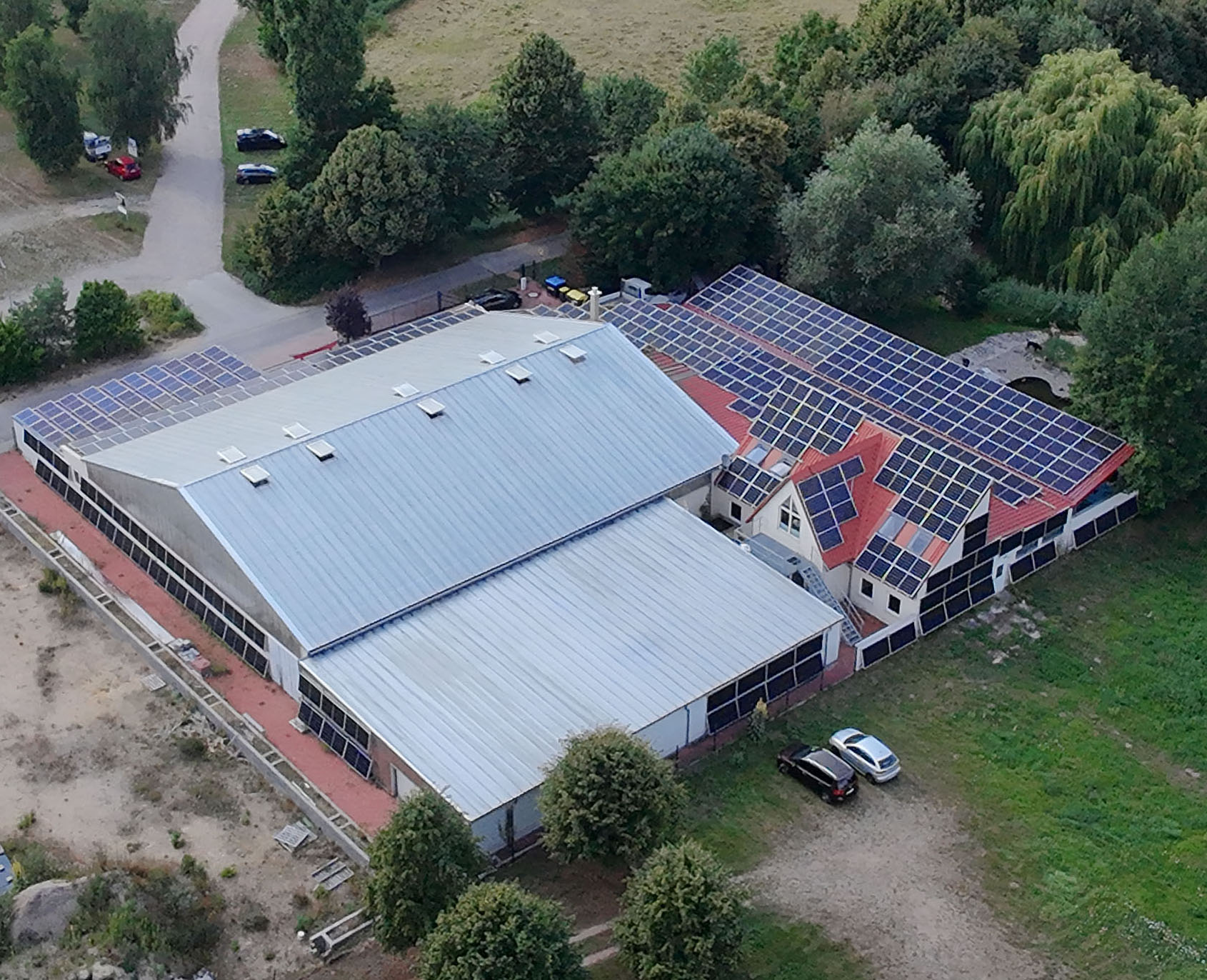
Our photovoltaic system is a central part of the energy supply at our site. More than 250 modules are installed across various buildings, deliberately oriented towards different compass directions. This lets us make the best possible use of the sunlight throughout the entire day – from the morning light in the east, through midday, and on into the evening.
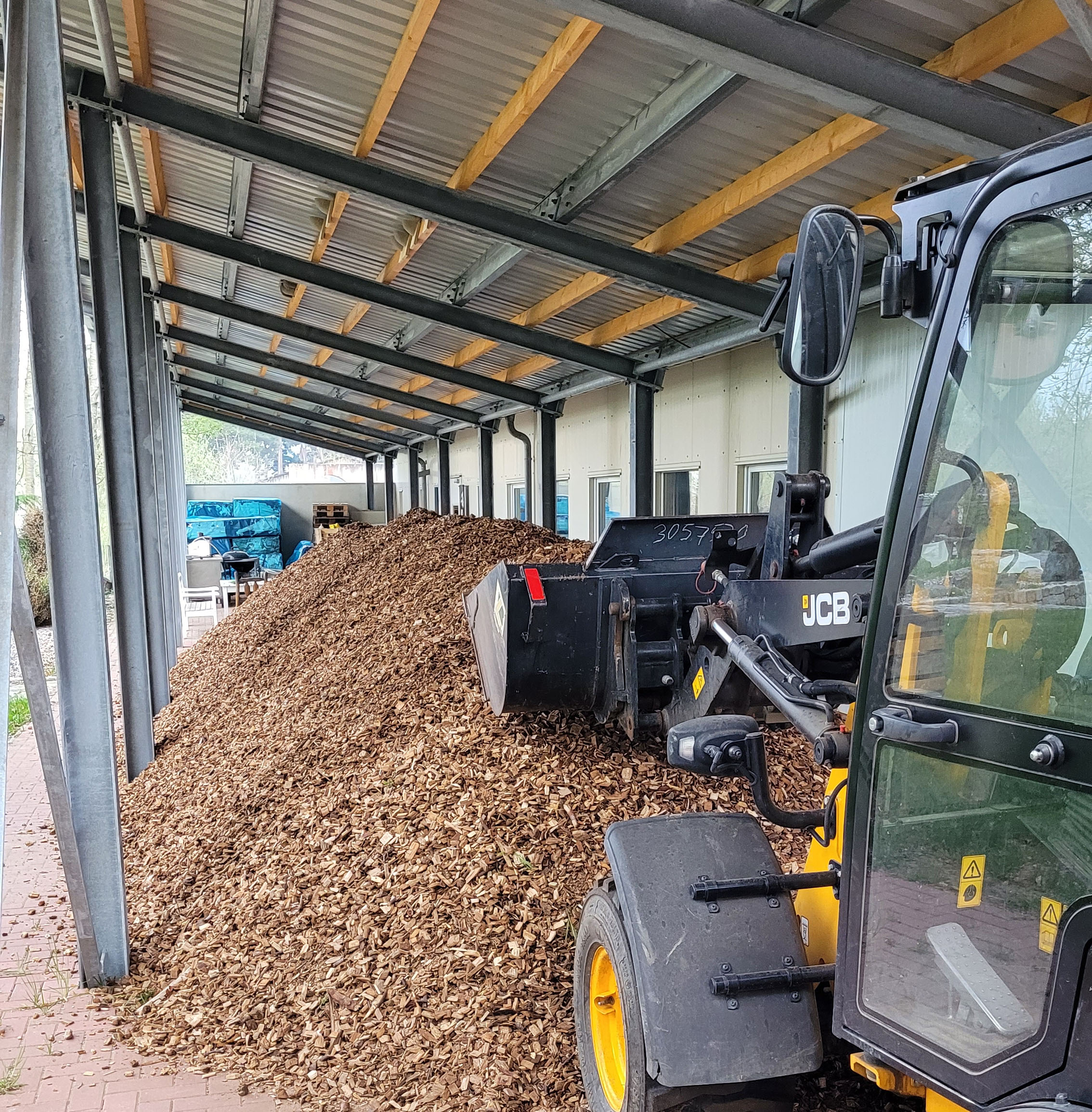
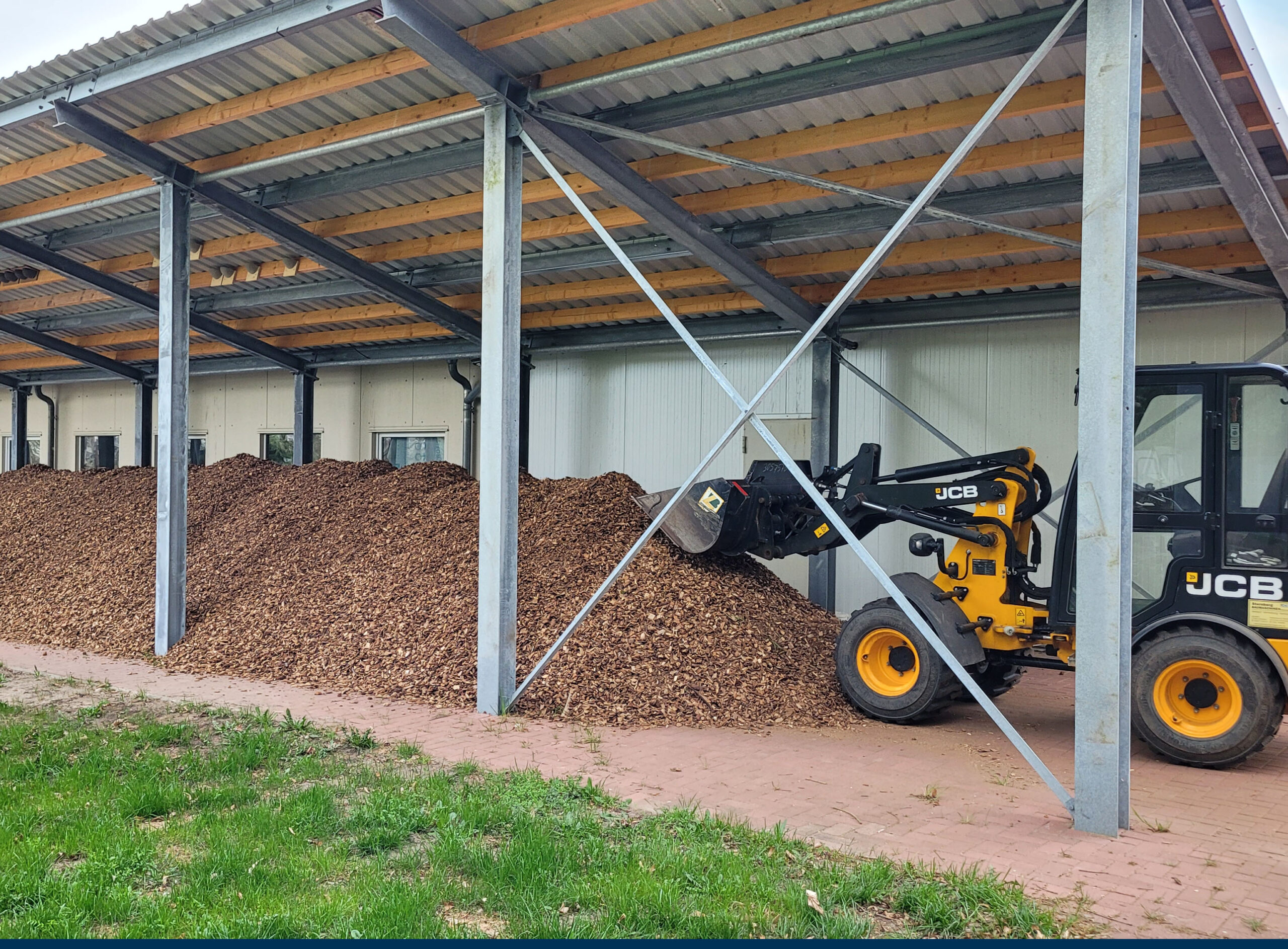
Modules sit on the roofs of the feed store, the office building, the wood-chip shelter, the plastics workshop, the metal workshop and the packing area, among others. The greenhouse roofs themselves are deliberately left clear, so that light and air can enter unhindered and conditions for climate, water management and the koi's pigment development remain ideal.
The photovoltaic system is complemented by a large battery storage installation. This allows us to use a substantial share of the energy we generate directly on site and to cover up to three quarters of our electricity demand from our own production. The result is an energy system that combines security of supply, independence and sustainability.
Wood-chip heating
Renewable energy from windfall timber and our own energy-wood plantation
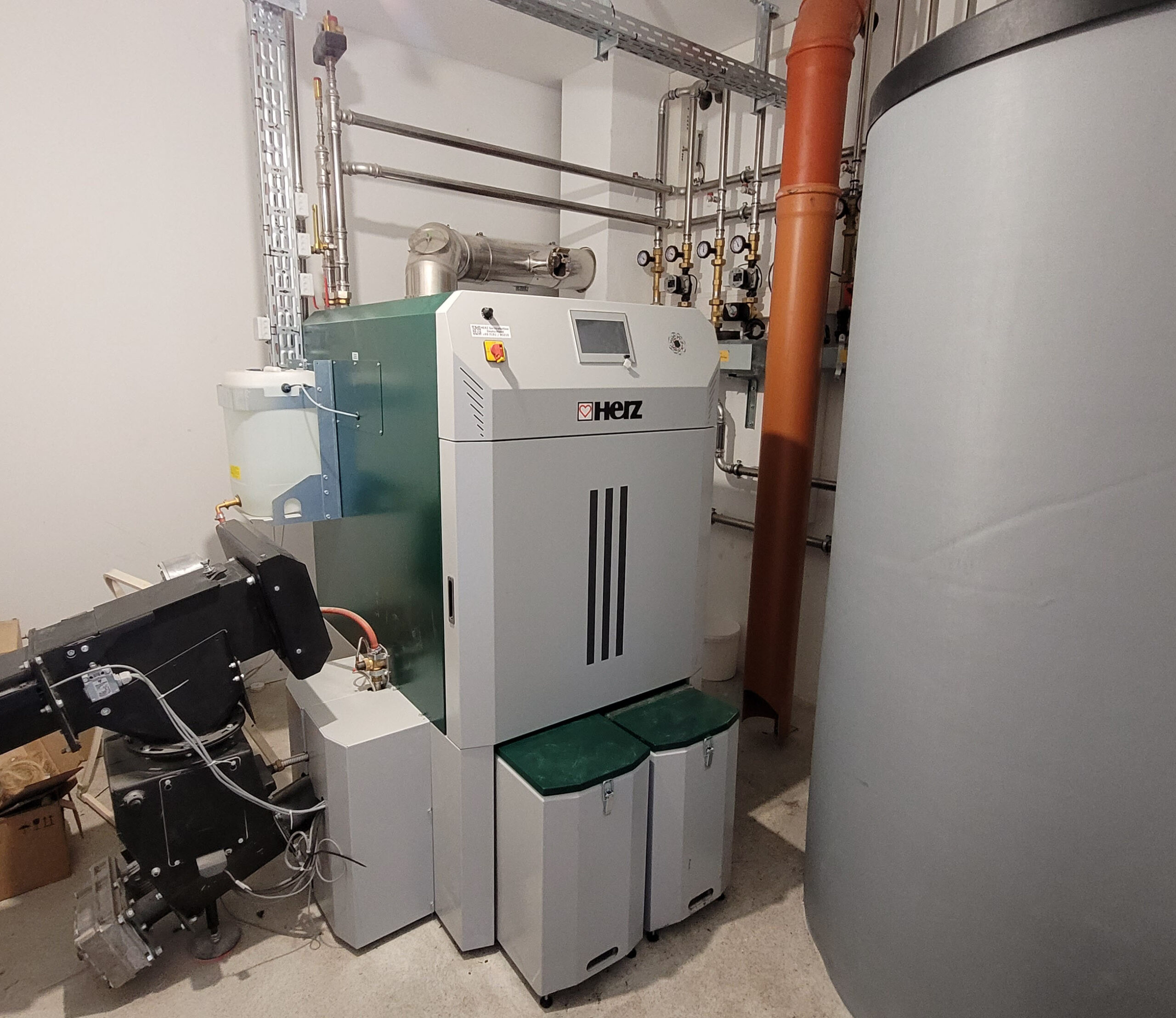
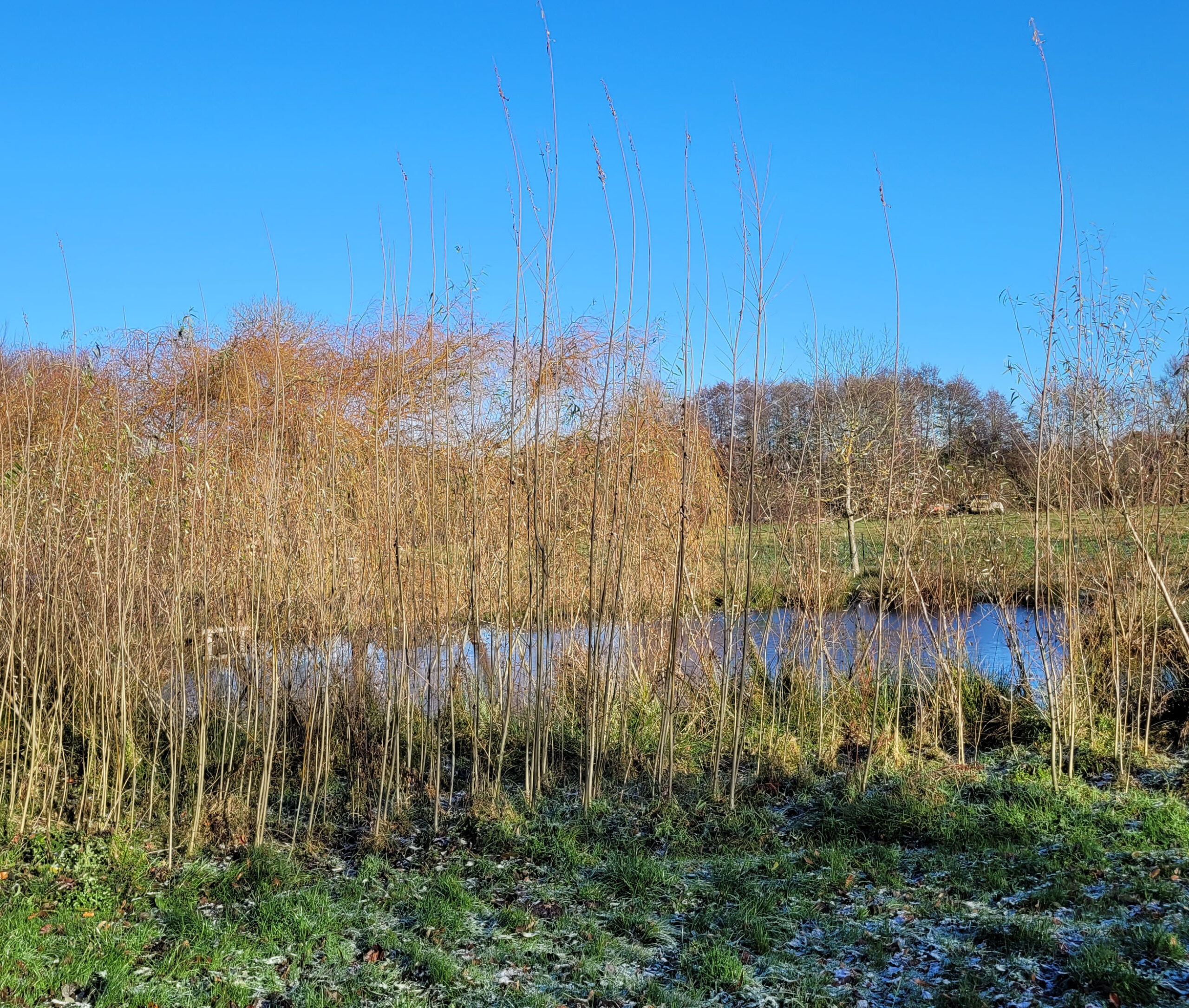
Our heat supply follows a clearly structured seasonal system. From mid-October to the end of February we heat with wood chips, because during that period the low sun in northern Germany is not enough for our photovoltaic system to generate the energy the heating requires. We fire the boiler with sustainably available material from the forests of Mecklenburg – above all windfall timber and trees that have already come down, which are not felled specifically for energy. This is supplemented by energy wood from our own short-rotation plantation of willow clones.
In the sunnier months from late February to mid-October we work with surplus electricity from our photovoltaic system. We use that energy to run heat pumps installed in the large greenhouses. The warmth already present in the sheltered greenhouse climate is captured and transferred to the pond system. On this basis we can control temperature profiles that actively support the healthy growth and development of the koi.
We deliberately work with temperature curves between roughly 20 and 26 degrees and also use controlled reductions. For the fish these phases act as a natural seasonal signal and support feeding behaviour, body development and the build-up of volume. In this way we combine modern energy use with a rearing system aimed not merely at length, but at healthy, powerful development with real substance.
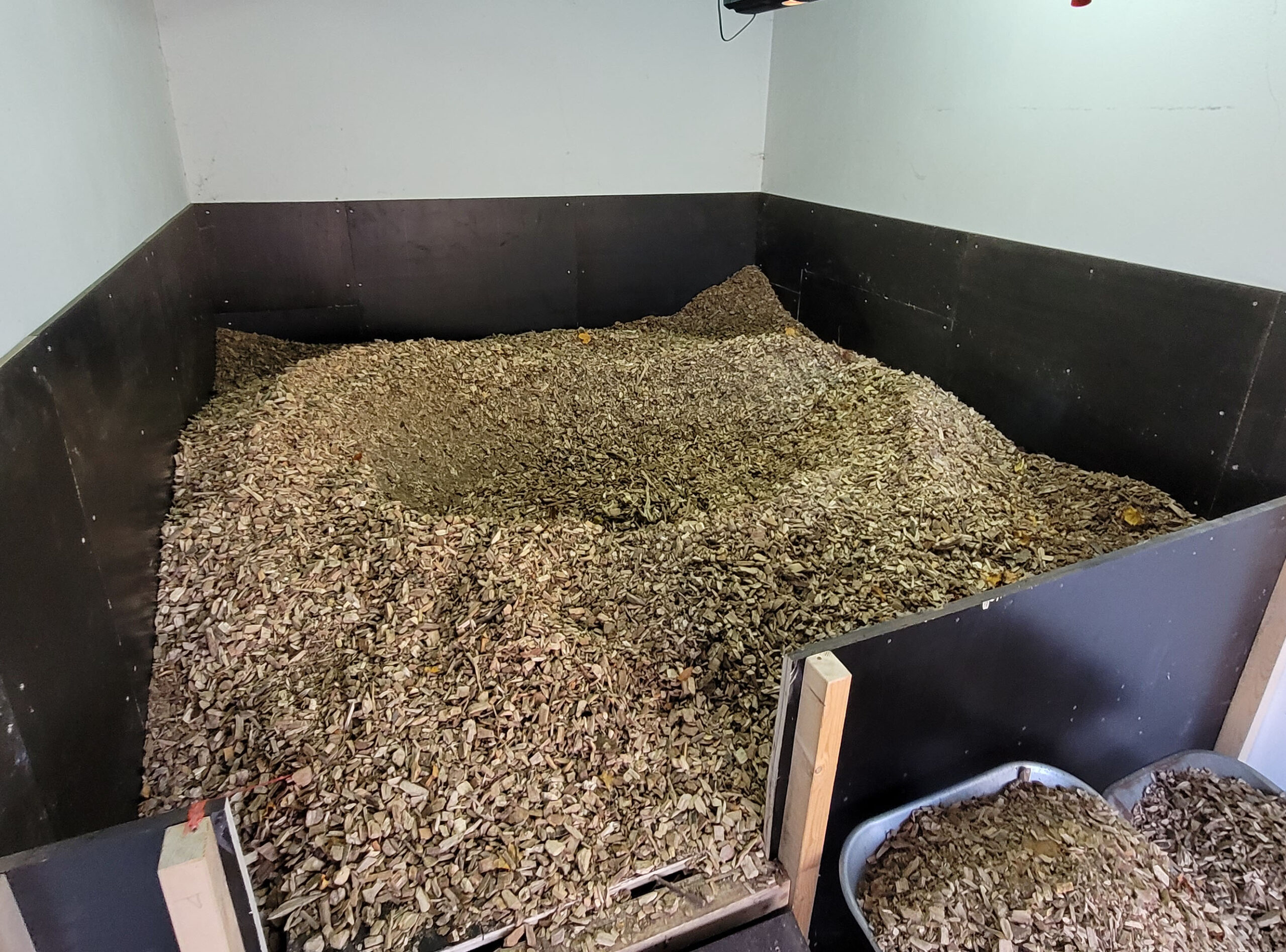
Energieholzplantage und Moorboden‑Wiedervernässung
Lasting environmental care and stewardship of biodiversity
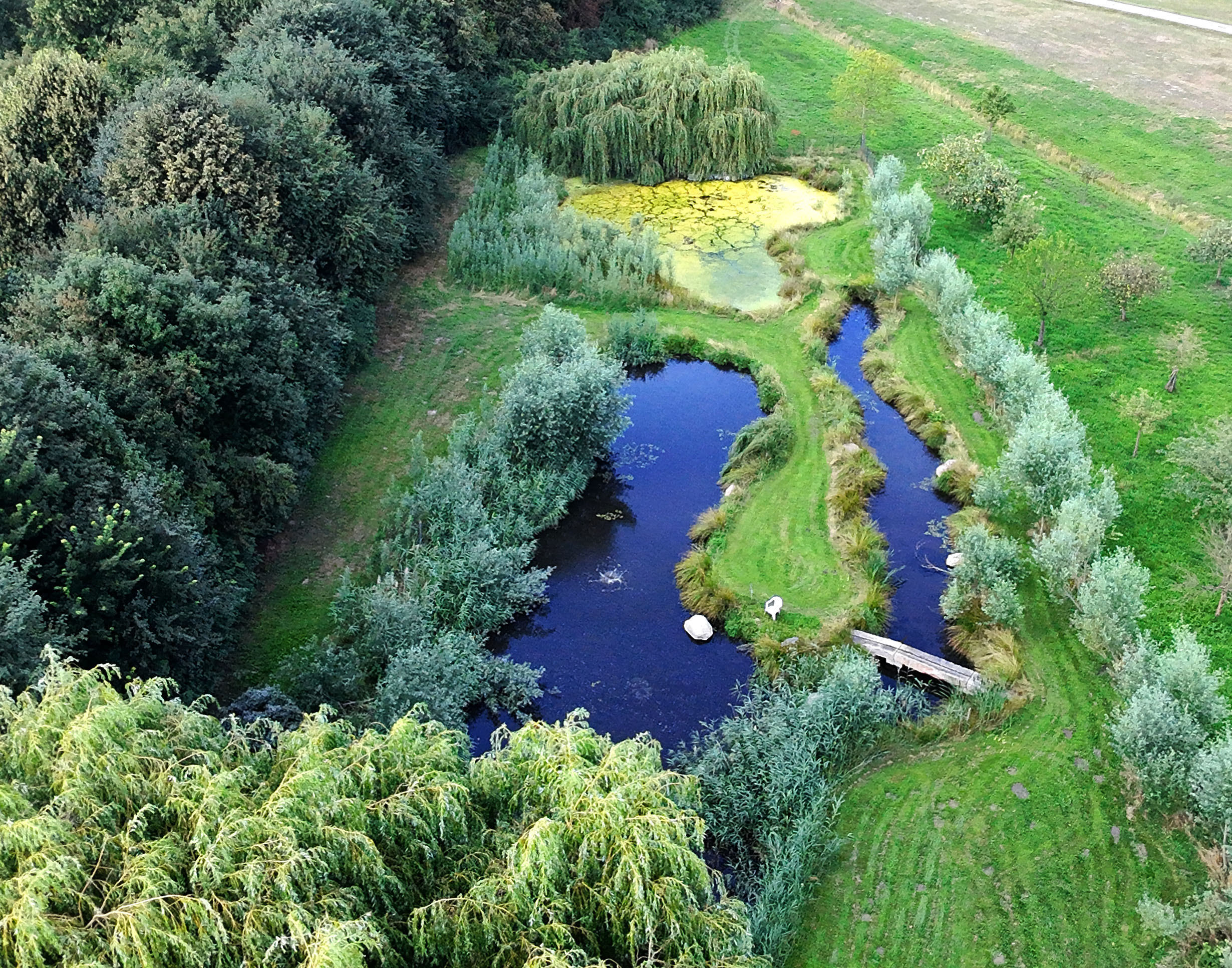
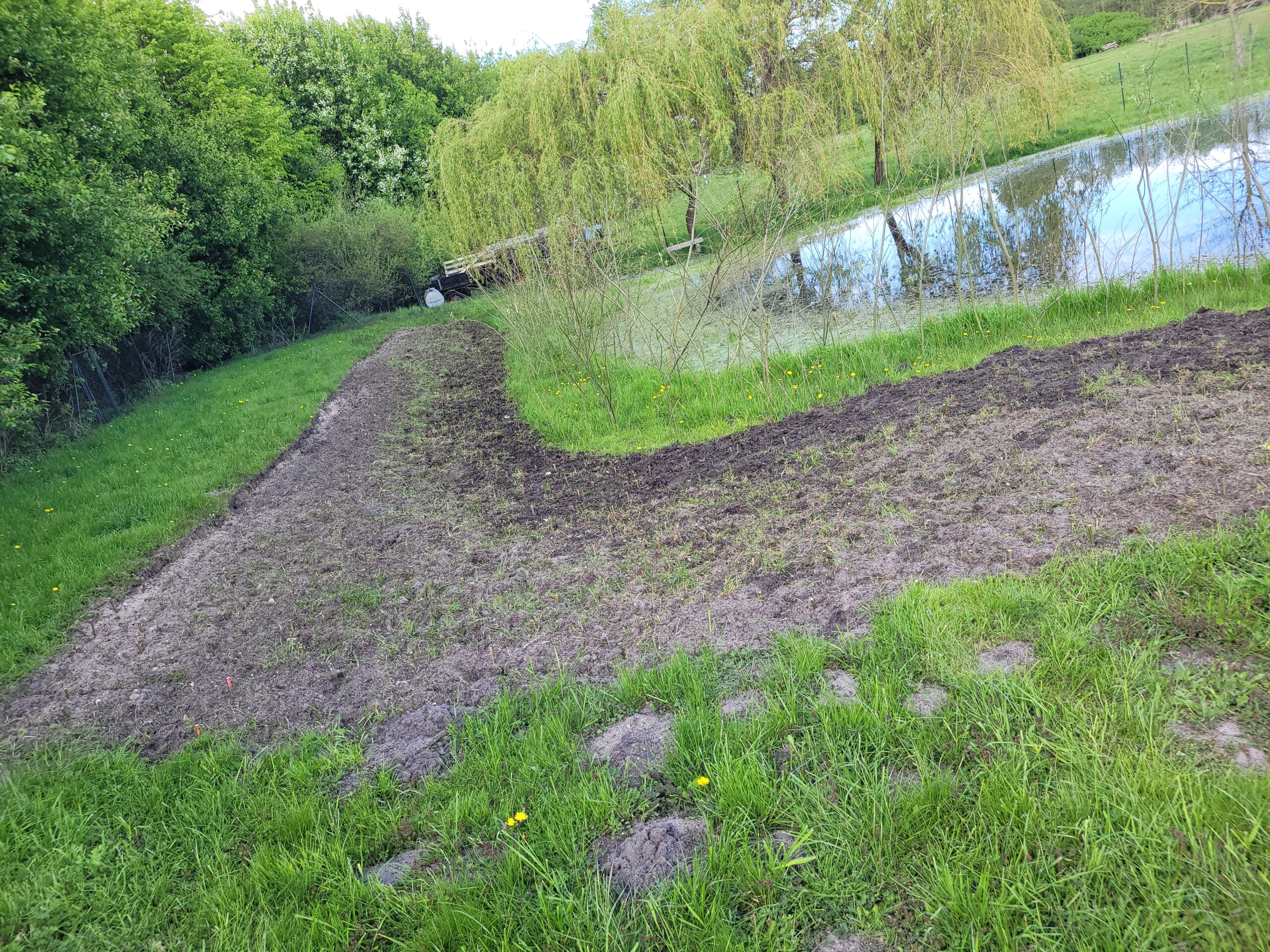
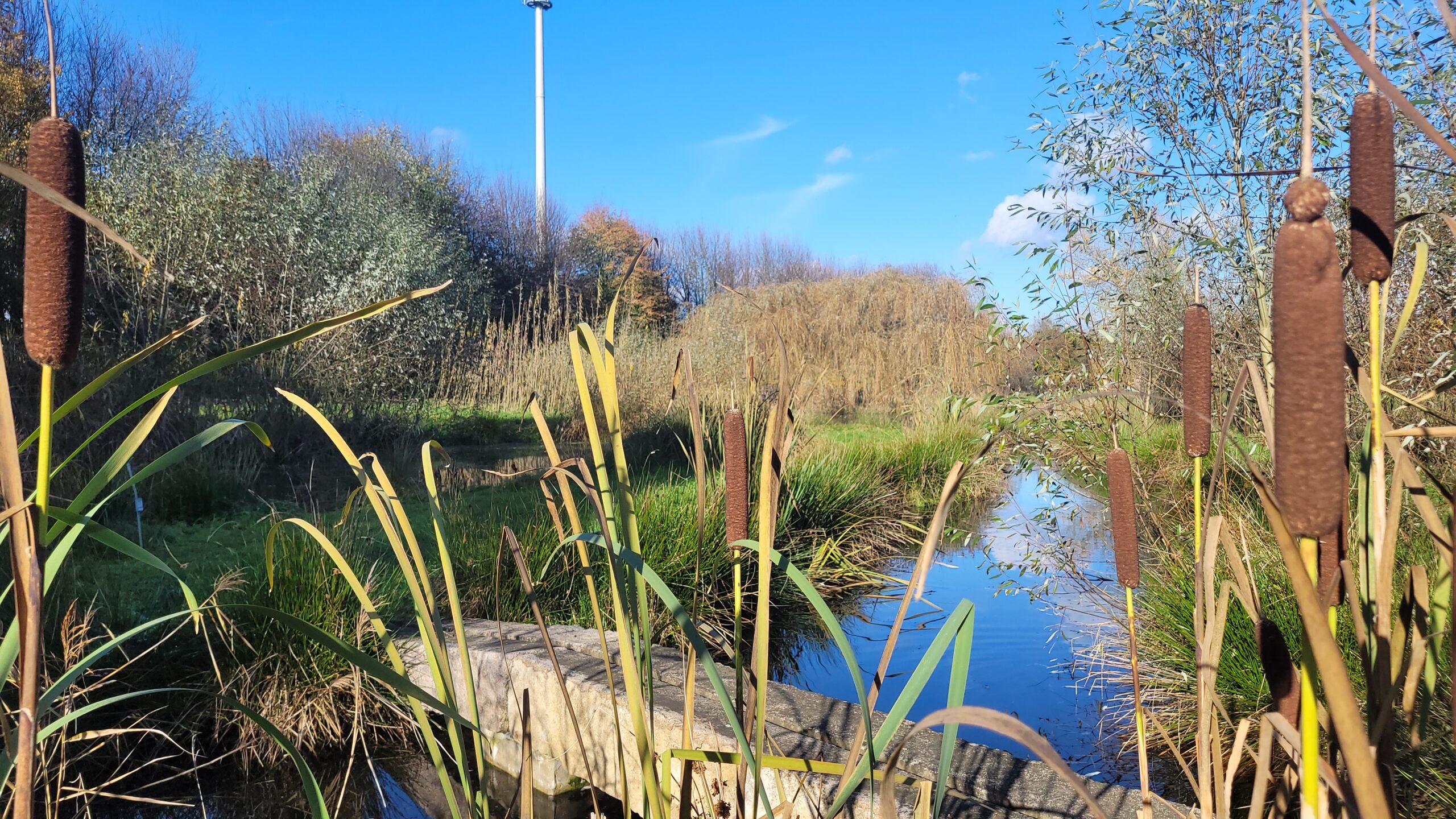
Our process water is closely monitored and carefully treated. To reduce remaining residues further, we have established a short-rotation plantation on the Danish model. It binds residual nutrients such as nitrate and phosphate and rules out any impact on the surrounding habitats.
Because our aquaculture operation lies in the middle of a peatland landscape, treated process water is also used to rewet the peat body. The cuttings produced as the plantation takes up nutrients are then used as fuel in our wood-chip heating. The result is a considered system in which water treatment, care for the landscape and energy generation work together.
Since 1993
For us, sustainability does not begin with keeping the fish – it begins with the way we rear them.
I have been importing koi from Japan to Germany since 1993. For many years I ran buying trips, accompanied specialist dealers through Japan and sourced high-quality fish directly on site. During that time koi were imported in every size class – from small Tosai to large jumbo fish with correspondingly high freight weight.
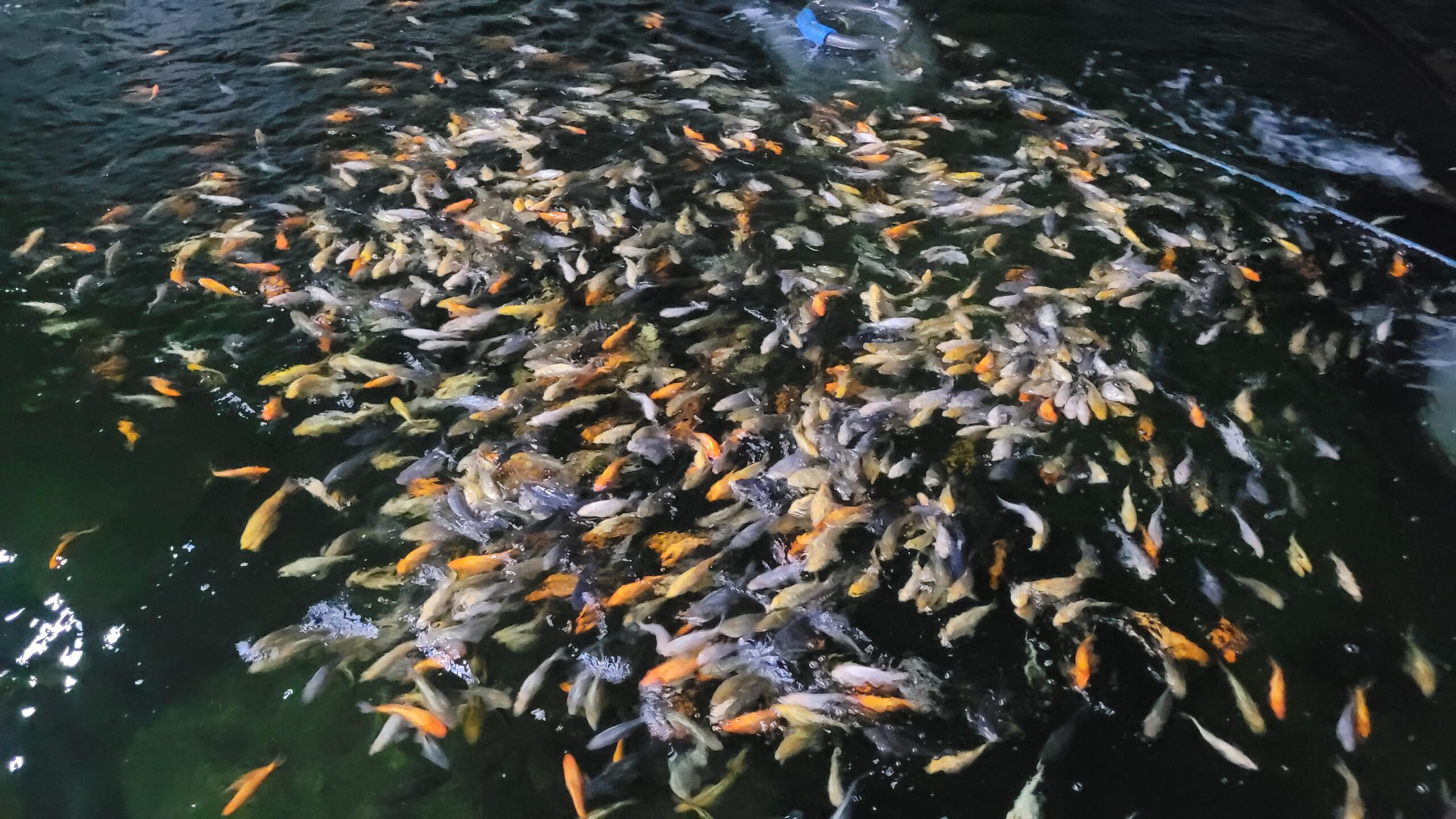
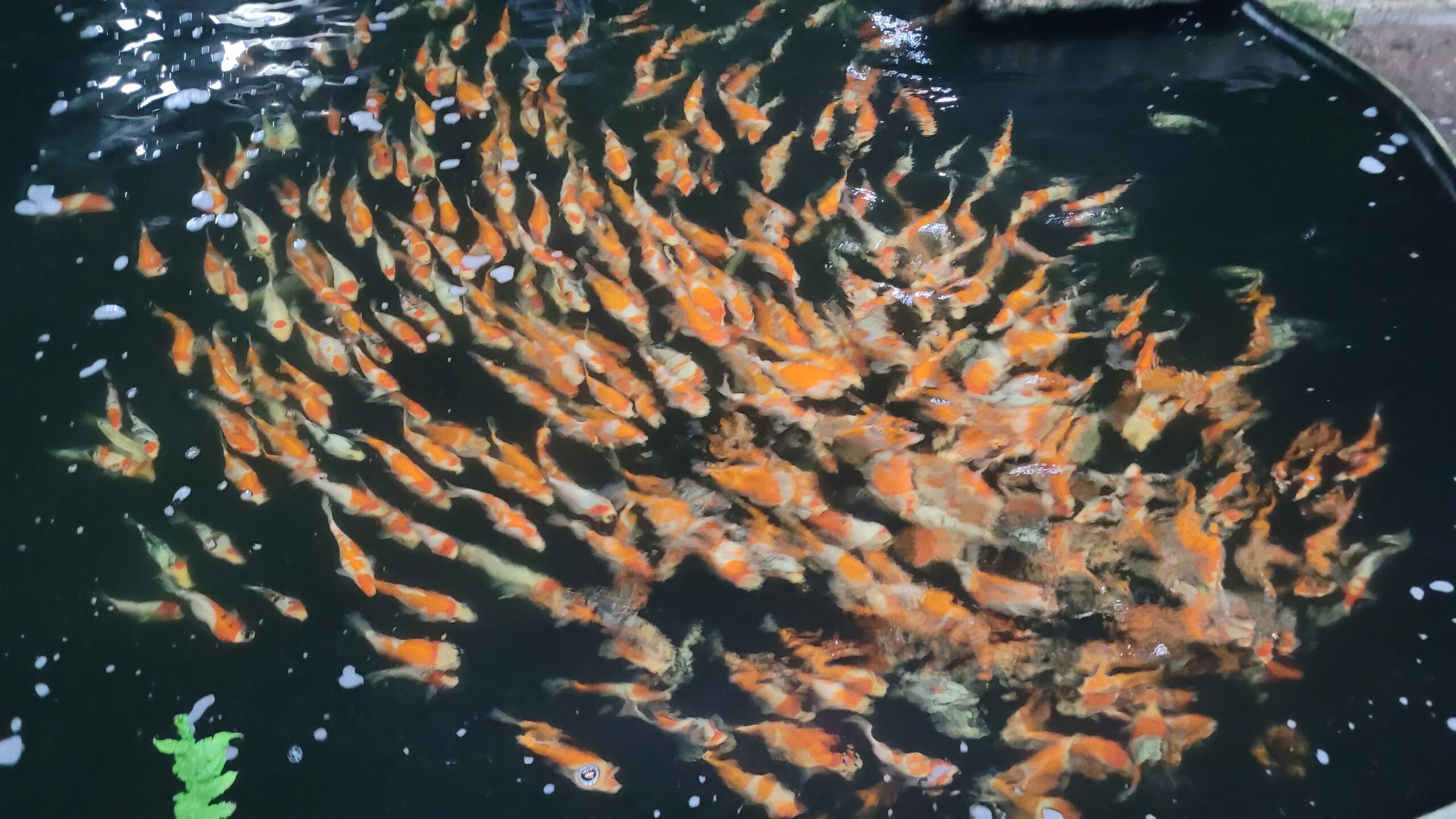
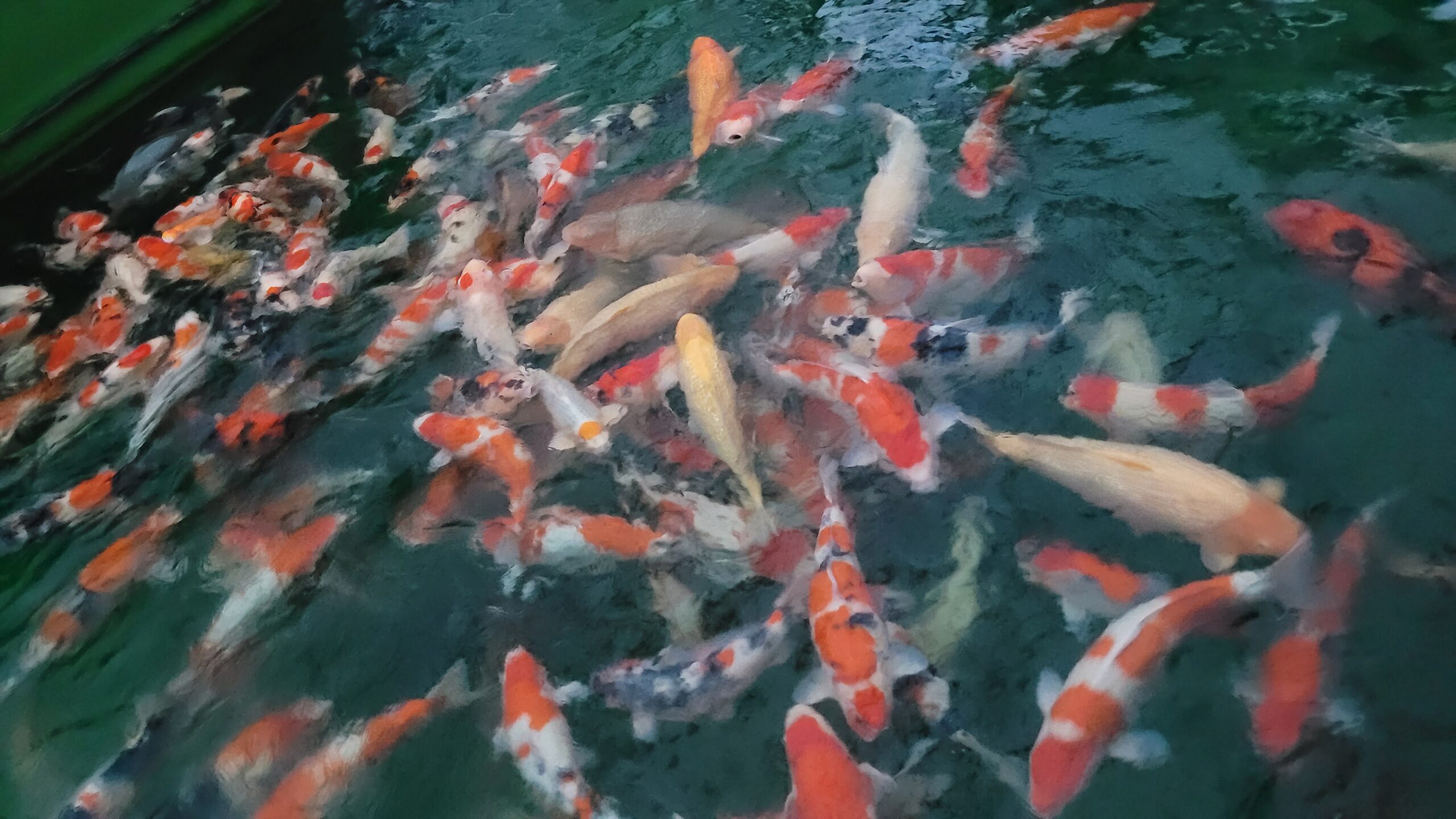
Since 2018 we have deliberately taken a different route. Today we mainly import small Tosai and take on the fish's further development here in Germany. Under controlled conditions these young koi grow into Jumbo Tosai, Nisai and Sansai with great potential — and on to fully matured large fish.
The decisive difference lies in the far lower transport burden. Instead of moving large individual fish with high freight weight by air, we bring young koi in with considerably more efficient logistics and carry out the value-defining rearing here. This noticeably reduces transport-related CO₂ emissions and combines high-quality development with a demonstrably more sustainable approach.
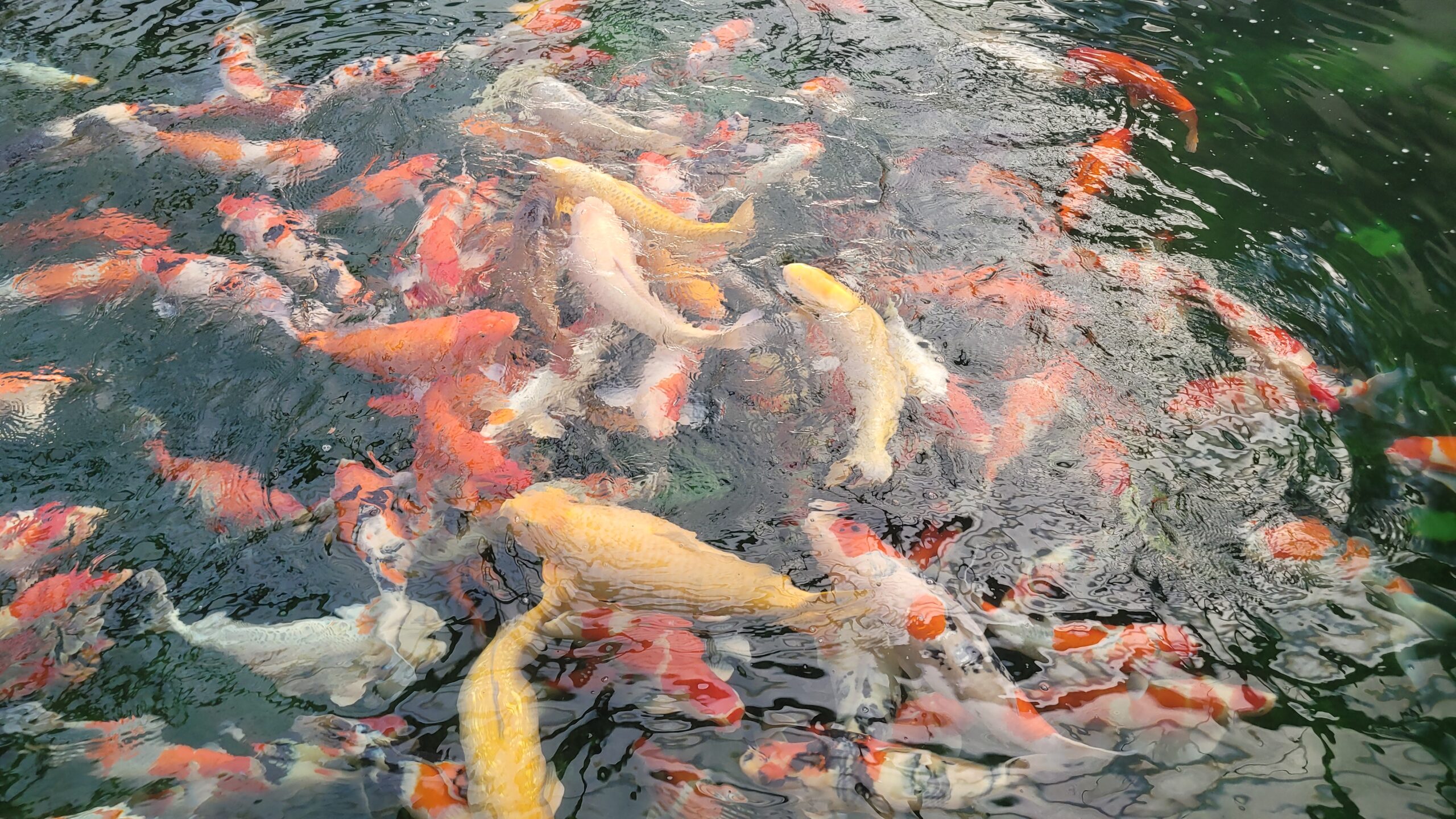
Join us in caring for sustainability!
Become part of the sustainable movement! Stand up for the preservation of nature and of our beautiful koi. Find out how you can help protect our environment together with us. Together we are building a better future.
 Deutsch
  Nederlands
  English