3,500 tonnes of fish – without the sea
In September 2026 Professor Harry Palm and I visited the largest land-based trout farm Japan is currently building. At first glance it has nothing to do with koi; at second glance, a great deal.
An appointment among friends
The visit had been arranged by Bram – the same Bram with whom I experienced my first Kohaku harvest at Dainichi many years ago. He studied aquaculture in Wageningen and is now production manager at one of Europe's largest aquaculture operations in the Netherlands. In exchange with Japan he helped design this facility, and he is good friends with Tetsuro Sogo, the production manager of FRD Japan.
Through the two of them, a door opened for us that usually stays closed: FRD Japan's new facility in Futtsu, in Chiba Prefecture, not far from Tokyo. So I was able to show Harry this facility, and he was thrilled.
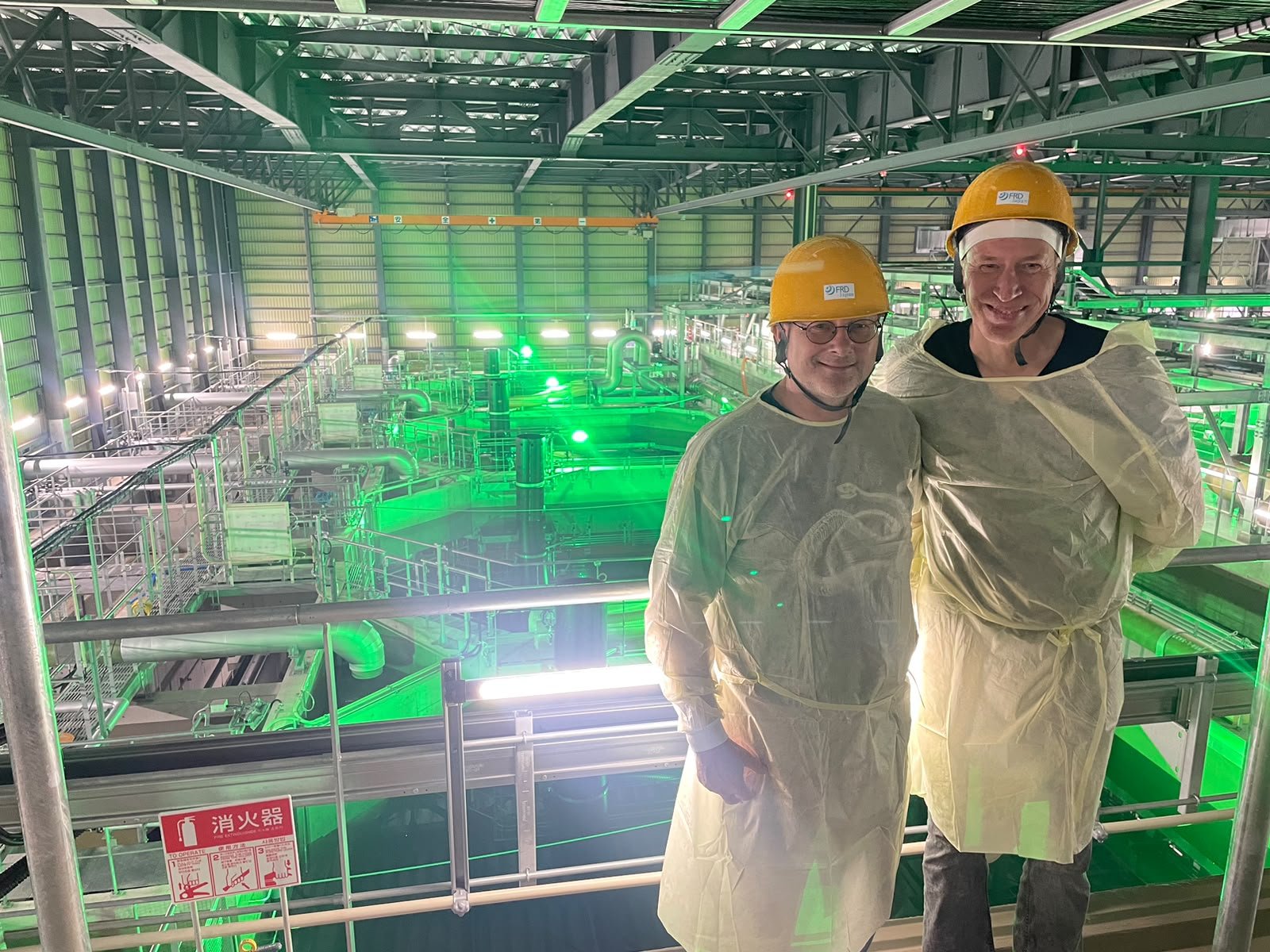
Salmon trout from the hall
FRD Japan raises rainbow trout that are sold as salmon trout under the name "Okasodachi" – roughly: raised on land. The water runs in a closed loop and is cleaned by the farm's own bacterial filters. So hardly any fresh water has to be added, and the facility doesn't need to be by the sea. No antibiotics are used, and the operation is ASC-certified.
It was first tested on a small scale: from 2017 in Saitama, where the fish hatch, and from 2018 in Kisarazu, where they grow to market size – about 30 tonnes a year. The first delivery went out in 2019. Construction in Futtsu began in July 2023, and operations started in February 2026. From 2027, 3,500 tonnes a year are to be produced there.
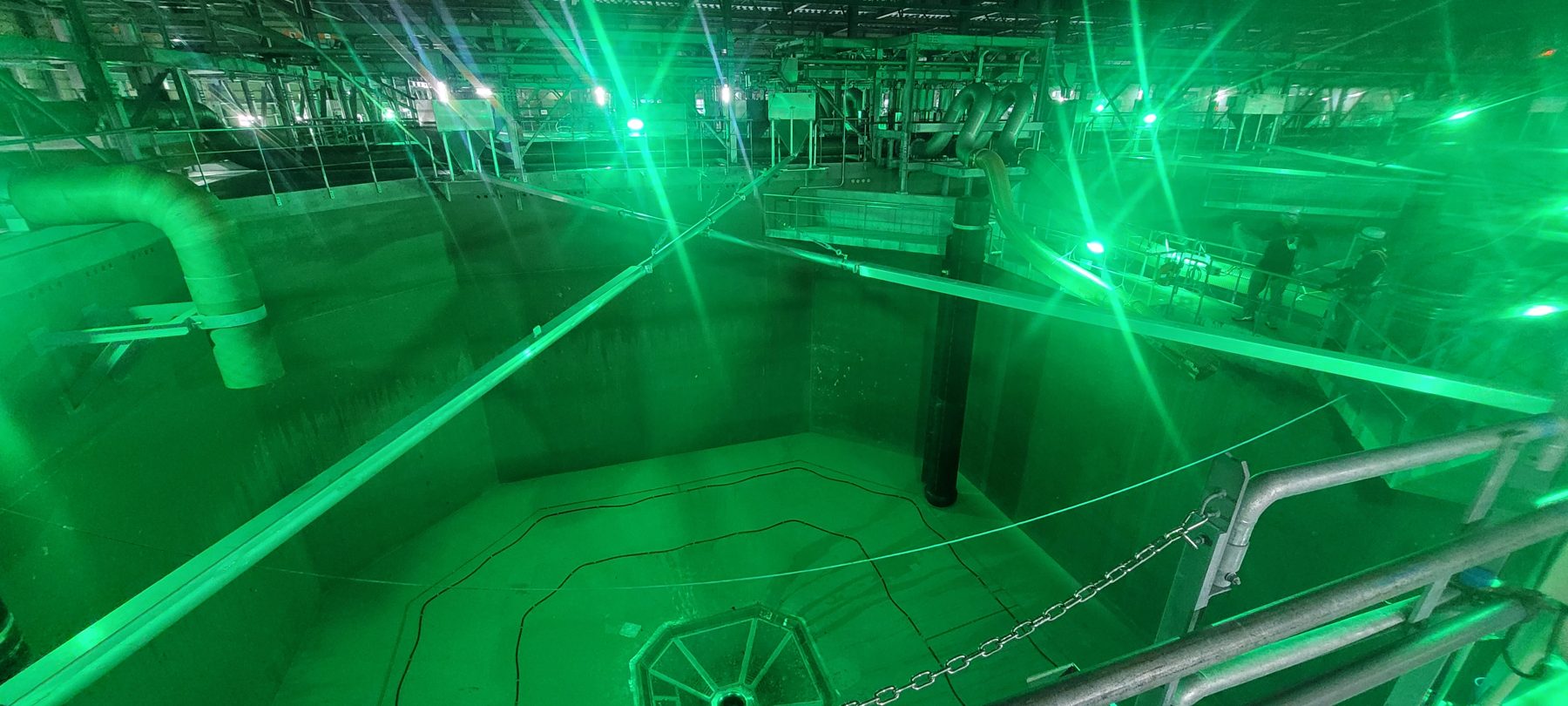
That's how deep the largest tanks are.
That's the diameter of the largest tanks.
That's how much trout is to be produced here each year from 2027.
Tanks like a power station
Huge reinforced-concrete foundations, huge tanks, huge fish pumps. The pumps and much of the technology come from Norwegian and Icelandic companies that usually build for salmon farming. Their experience transfers well to trout.
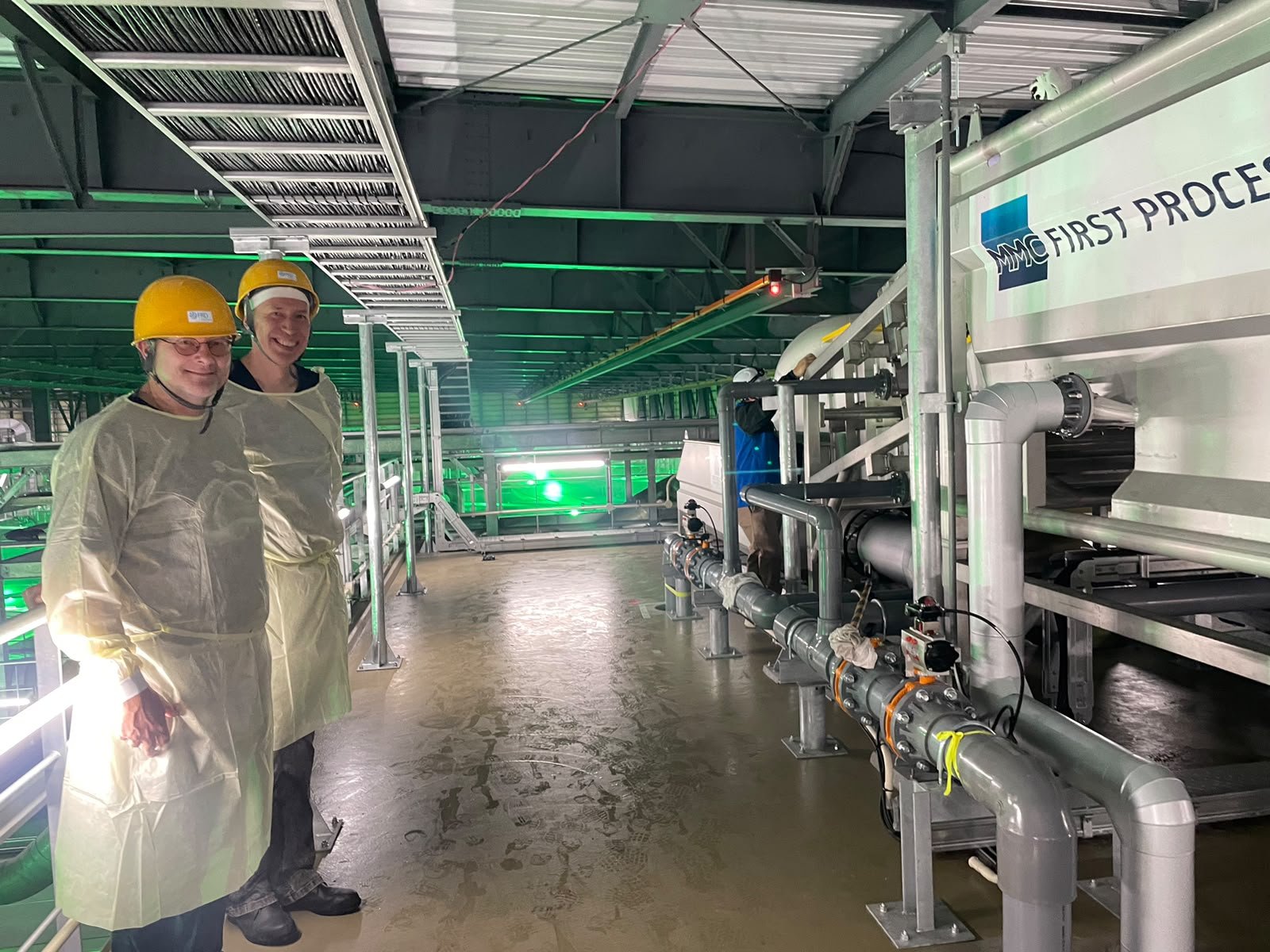
“The whole thing looks as if they were putting up a nuclear power station.”
What a koi farm learns from it
At first glance a trout farm has little in common with koi. But the questions are the same: how do you keep the water clean when it is hardly exchanged? Where do the nitrate and phosphate go? How do you keep electricity and heat affordable? We wrestle with exactly that in Mecklenburg-Western Pomerania too, where the district closely monitors our wastewater – just on a much smaller scale.
I am a trained chemical laboratory technician and have set up our own laboratory with measuring equipment at our facility. Visits like this one and our exchange with the University of Rostock are our way of continually learning: how do you do it better, and how can you make it even more effective?
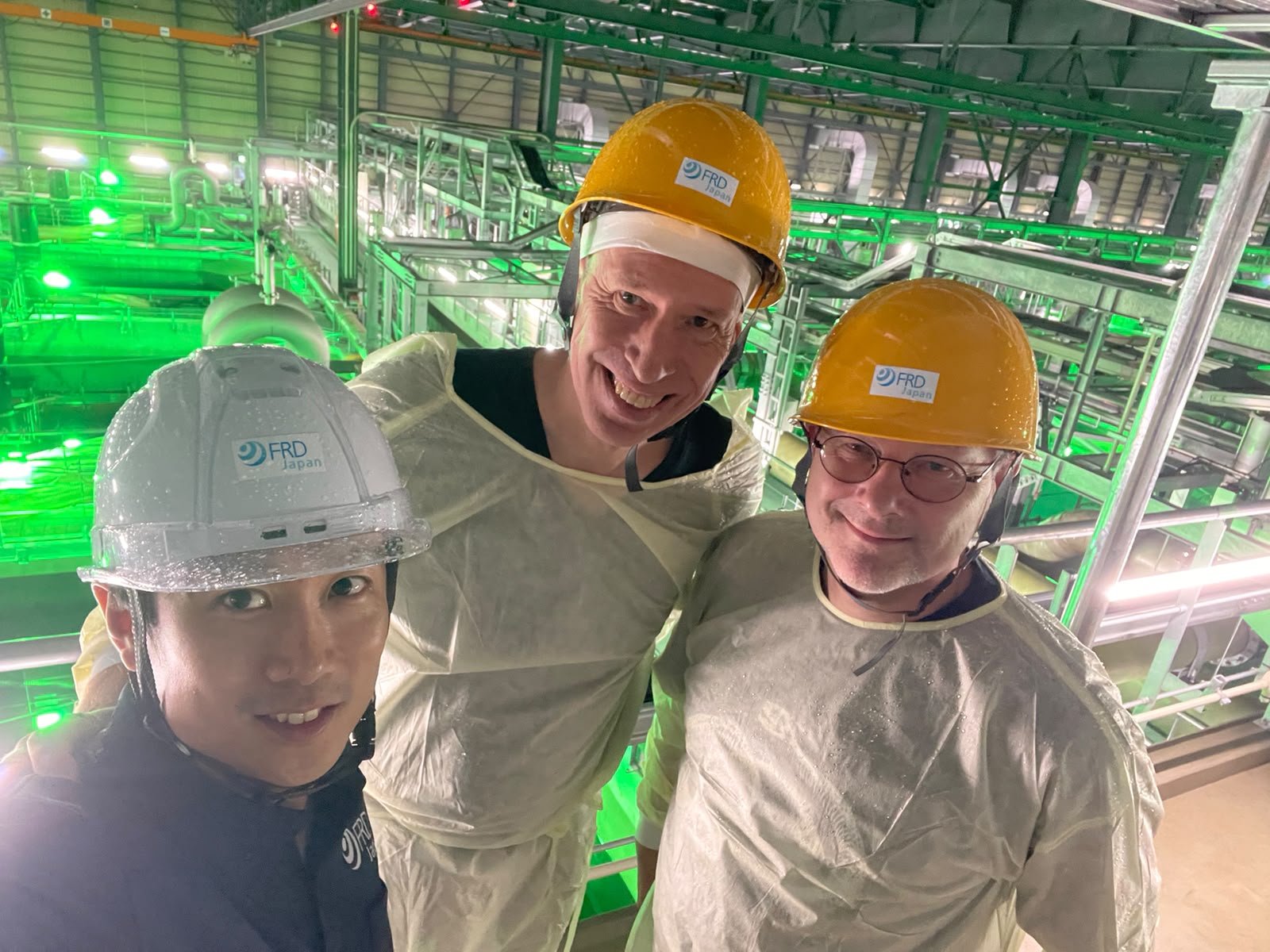
Information on FRD Japan according to the company's website: frd-j.com
 Deutsch
  Nederlands
  English
  Français