A little travel guide for koi lovers: what else there is to experience in Niigata besides koi, told through the year.
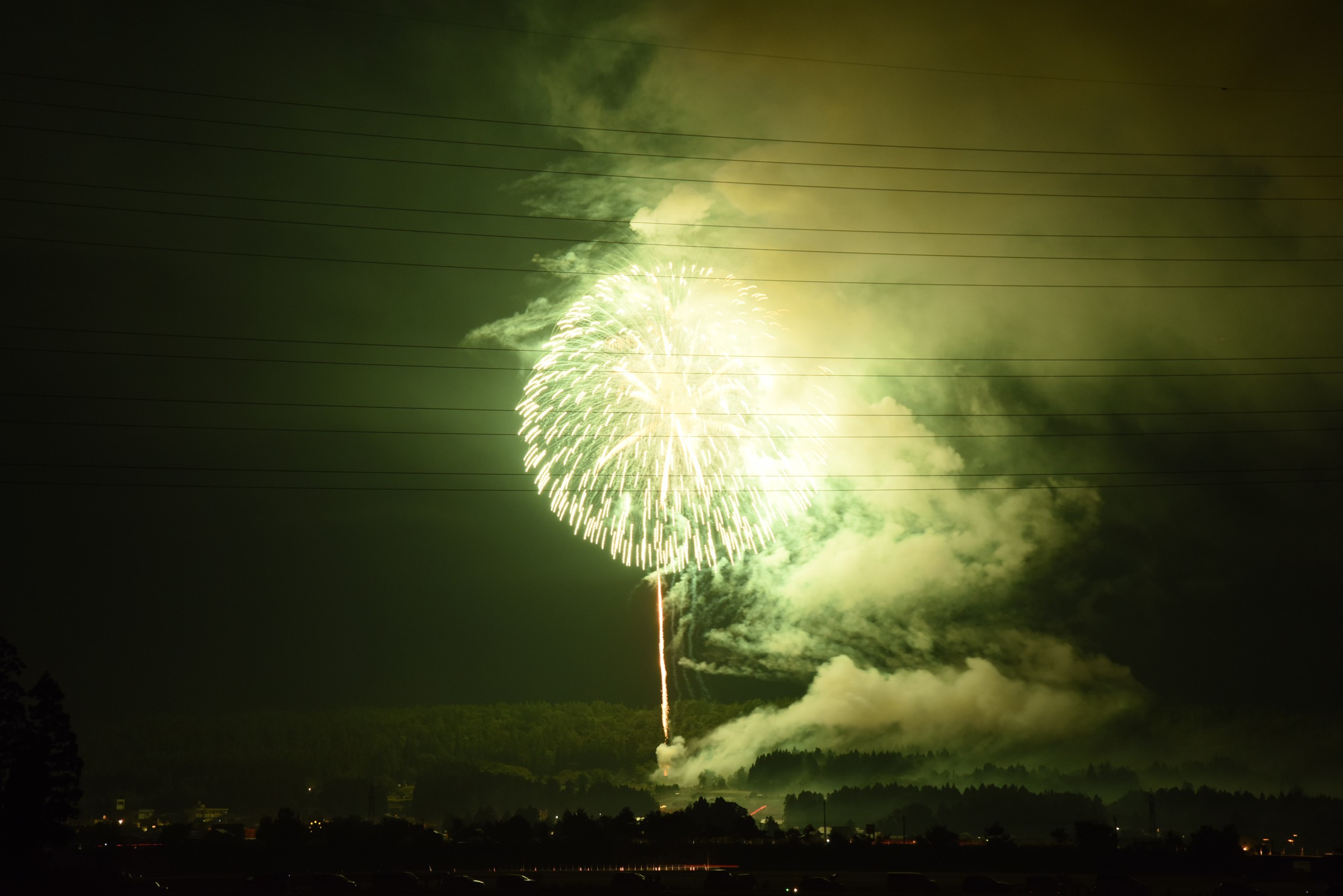
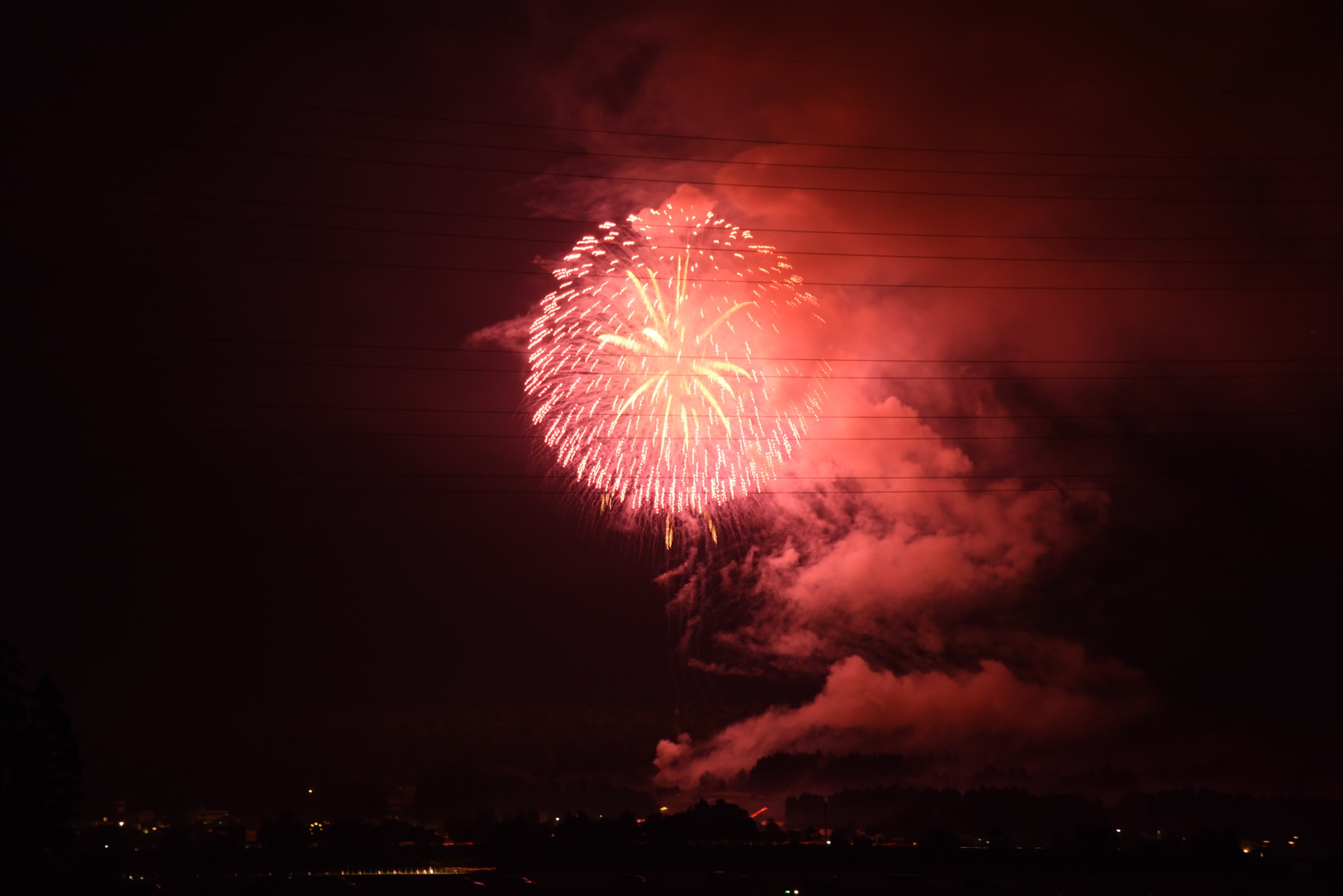
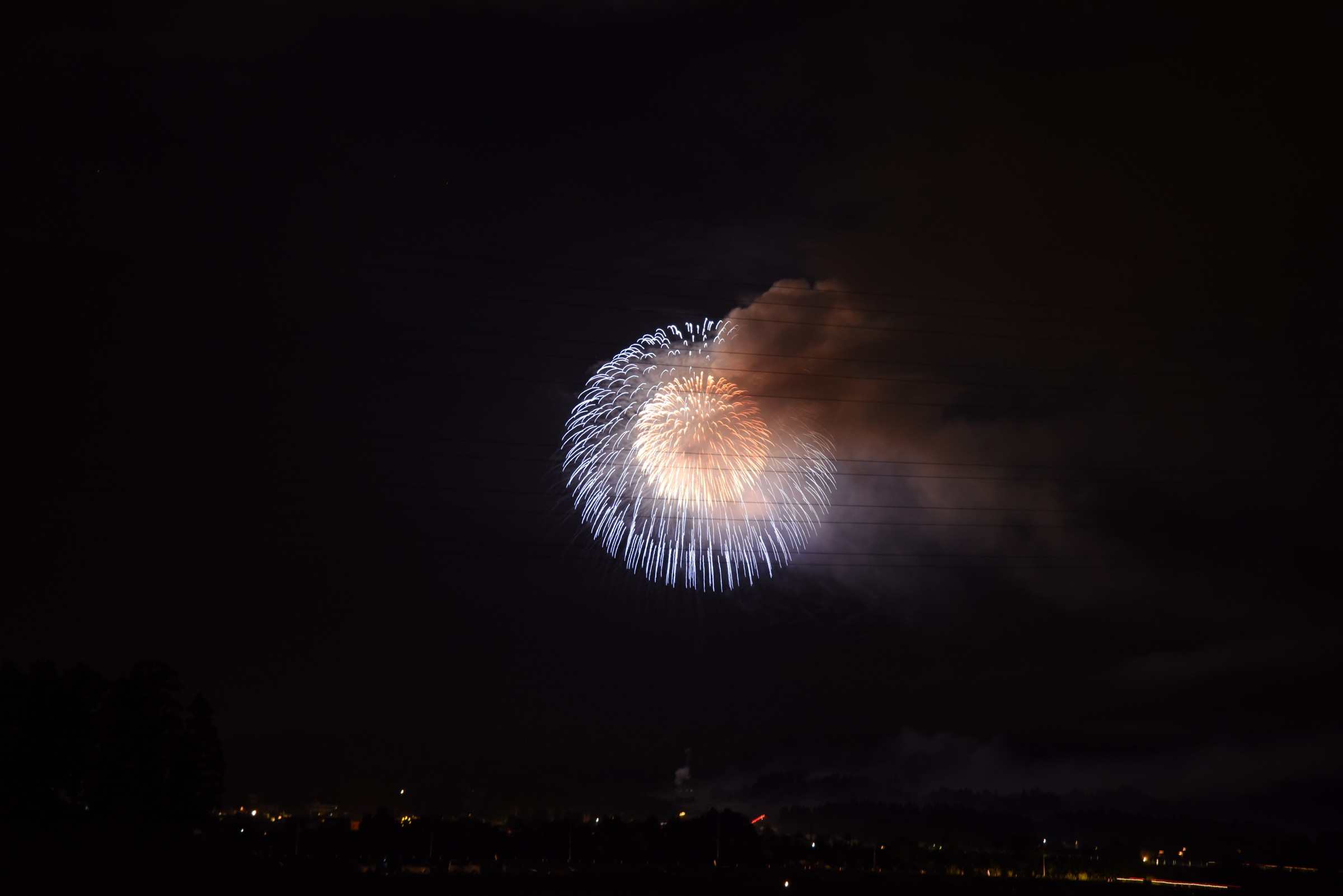
Fireworks at the Katakai Matsuri in Ojiya.
When Professor Harry Palm asked me what I could show him on our joint trip to Japan in September 2026, the fish naturally came first: the aquaculture, the breeders, the mudponds in the mountains. But anyone coming to Niigata for the first time should also see something of the country. So I looked at the website of the city of Ojiya and at our hotel's page. There I kept coming across the same three events: the balloon festival, the bullfighting and the great fireworks.
A fourth came along on the way. Everywhere in the mountains there were racks on which rice sheaves were drying, and Harry wanted to know what they were about. The answer took us into the middle of winter, to a fire where children roast squid. These four stories became this little travel guide. It follows the year, because each of these festivals has its own time. Koi lovers travelling to Niigata can plan their trip accordingly.
ine稲
Autumn: racks full of rice
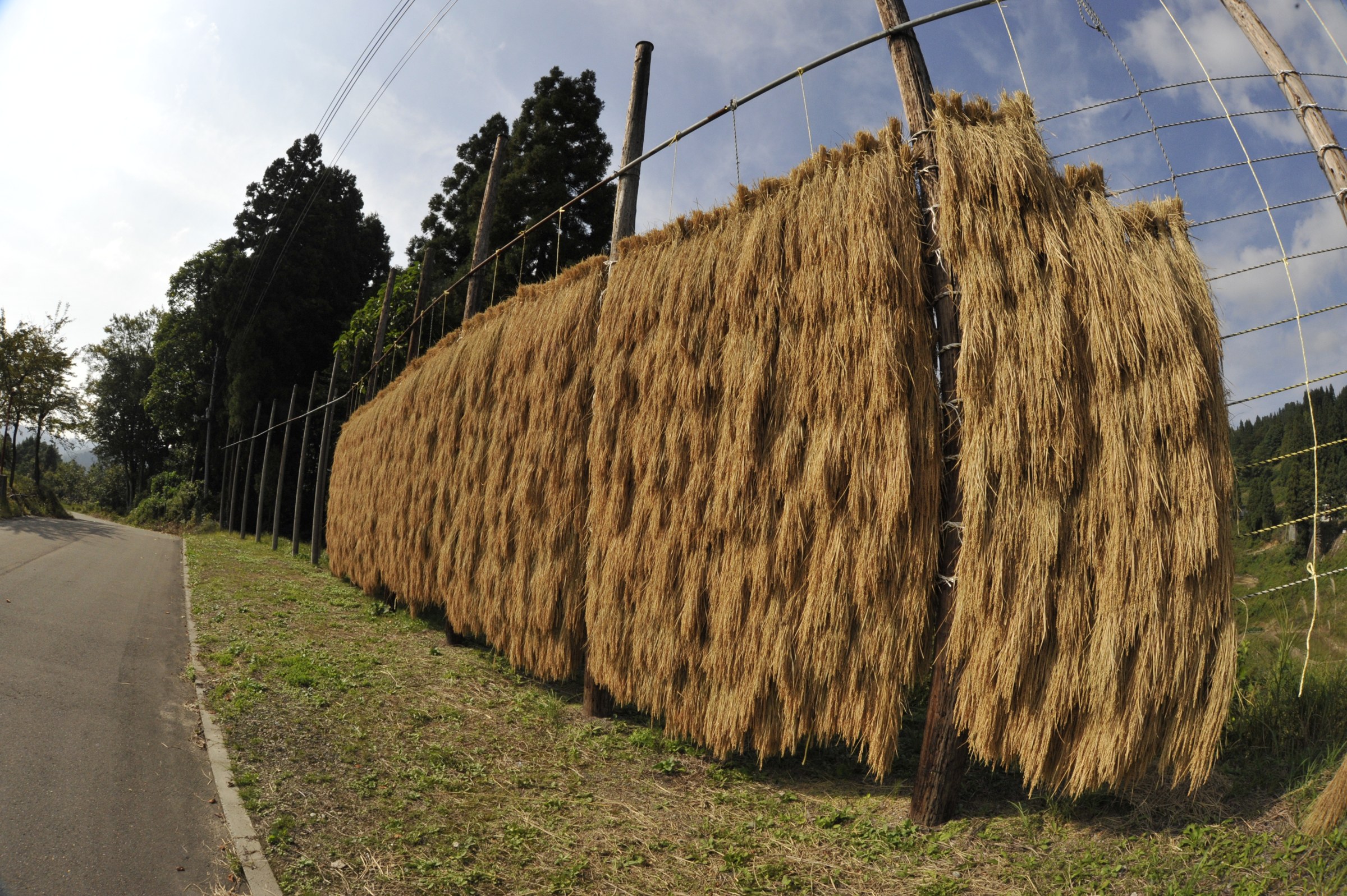
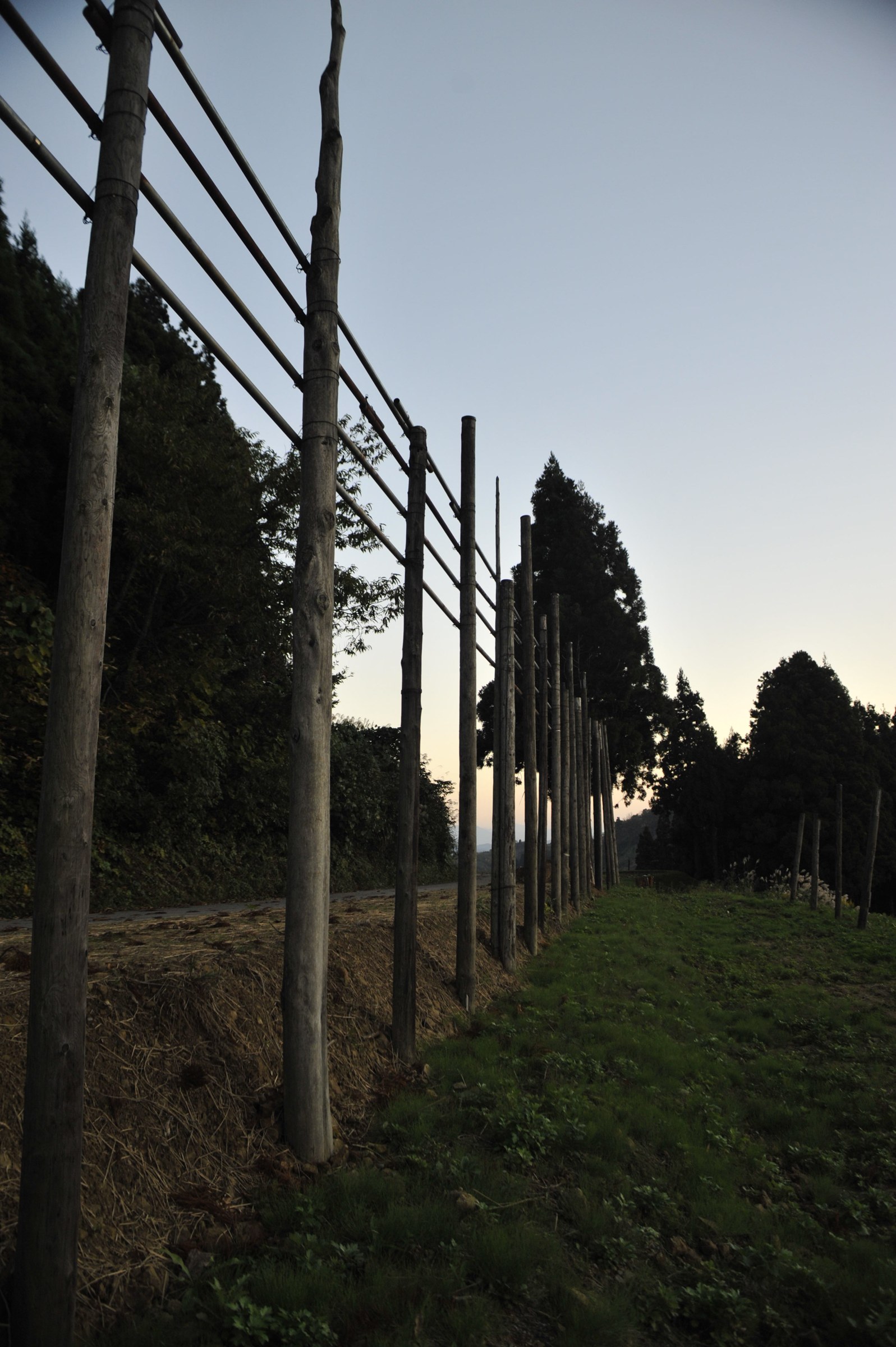
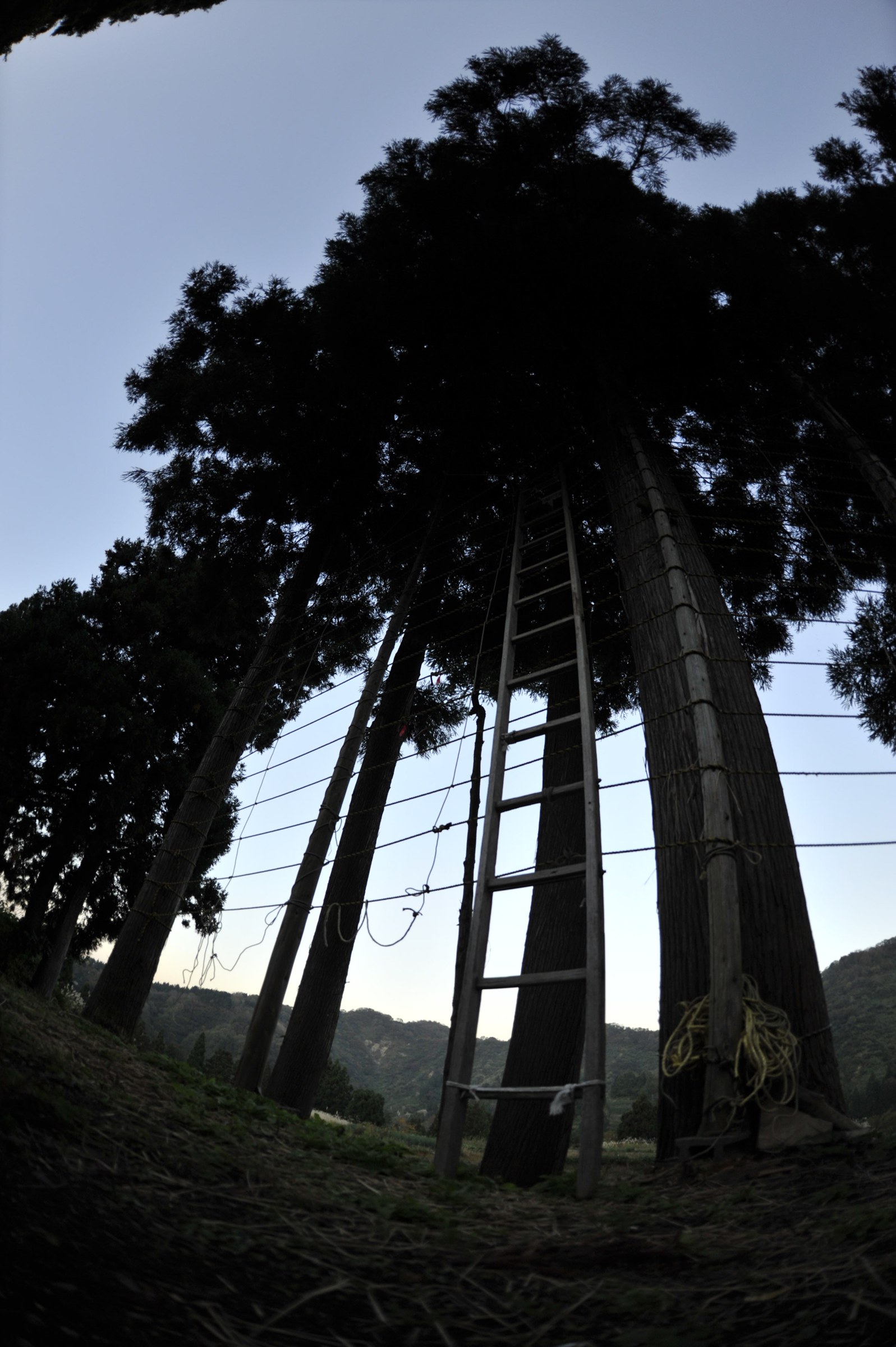
After the autumn harvest, farmers in Niigata hang their rice sheaves on tall racks made of wooden posts, poles and ropes, often between old cedars at the edge of the terraced fields. There the sheaves dry slowly in the air, grains and all. Only then are they threshed, and what remains is the straw.
This straw used to be a valuable raw material. Old pictures of field work show farmers in rain capes made of rice straw. And to this day, something very special is built from it in winter.
Rice sheaves drying on the rack. The panicles with the grains hang at the bottom. October 2010.
Empty racks, ready for the next harvest. October 2011.
January: the straw fire
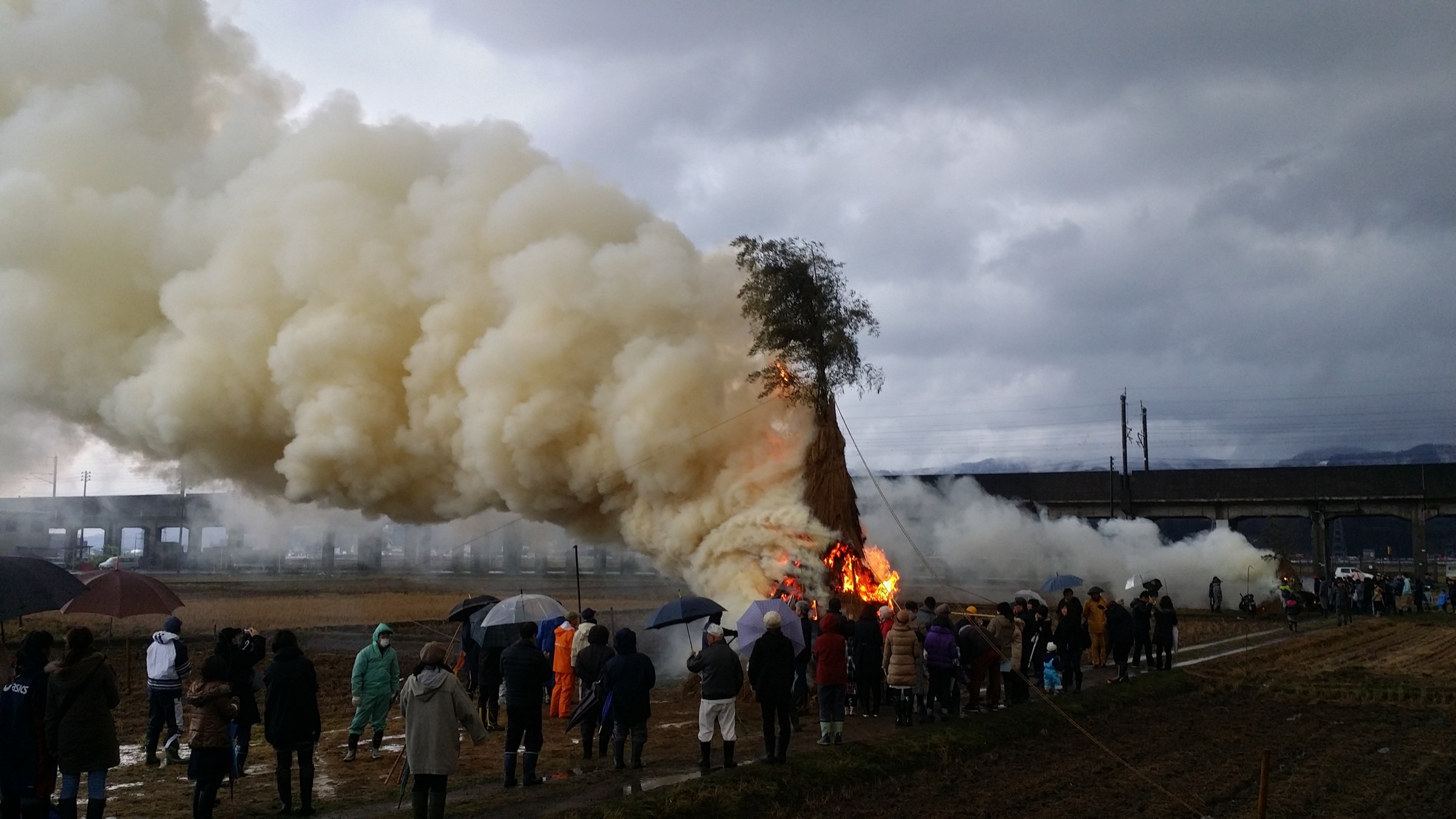
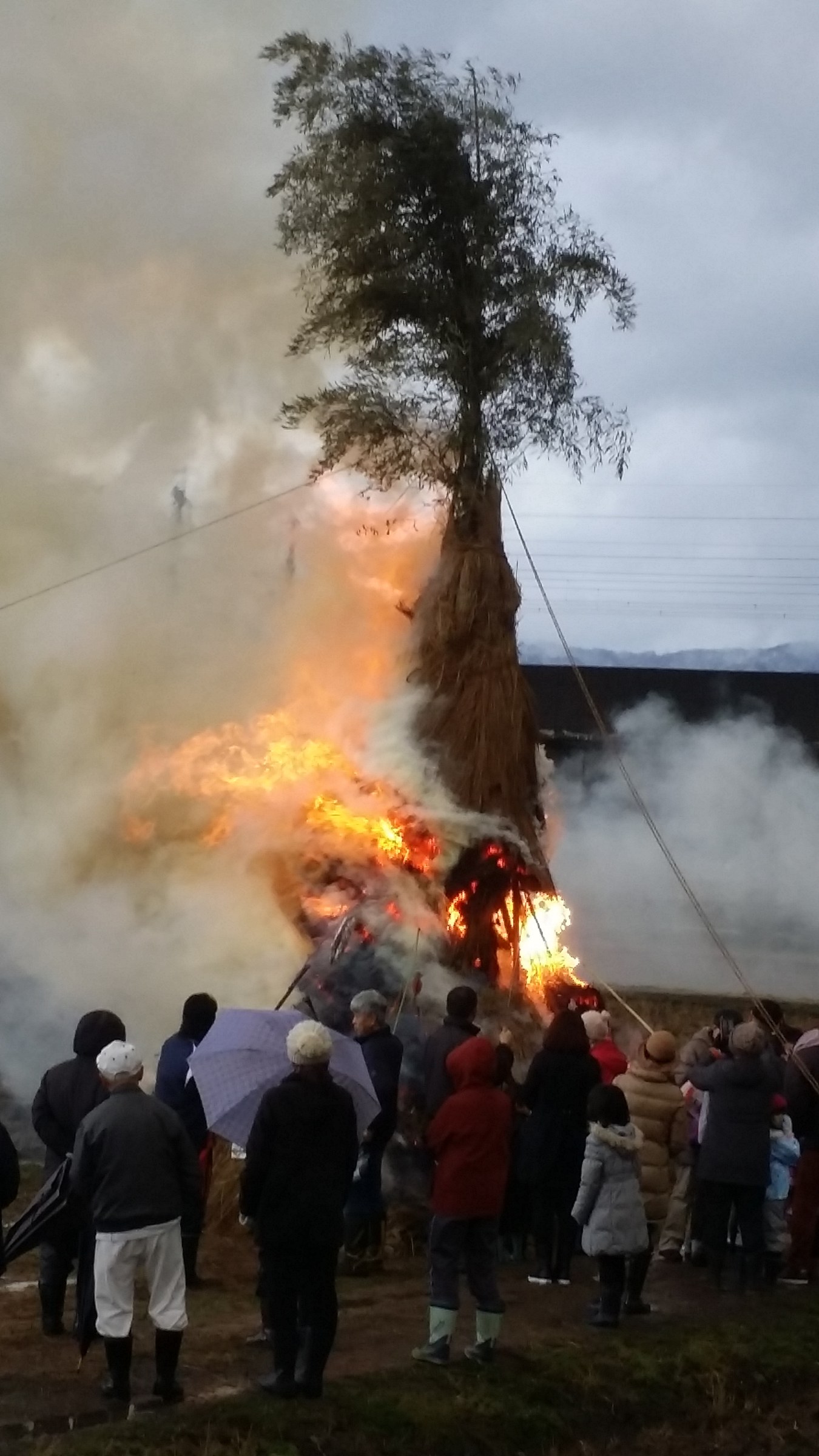
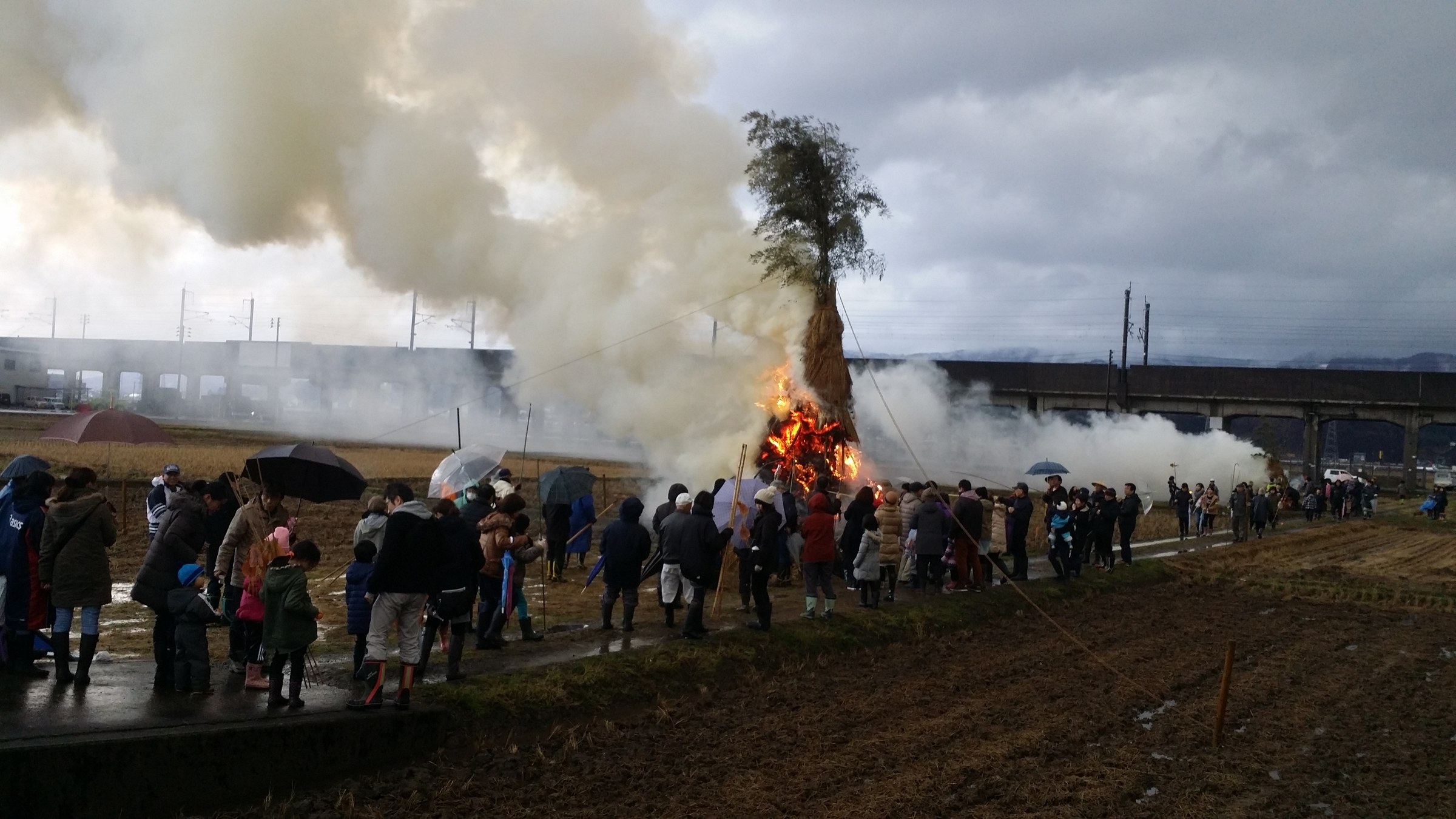
For the Little New Year, around the middle of January, villages build huge cones of rice straw, like a giant fir tree made of straw. In Niigata this fire is usually called Sai-no-Kami. New Year decorations are burned in it, and people pray for good health in the new year. For me it also has something of our carnival: you drive out the winter, and the whole village comes together.
A straw fire for the Little New Year, January 2016.The flames break through.
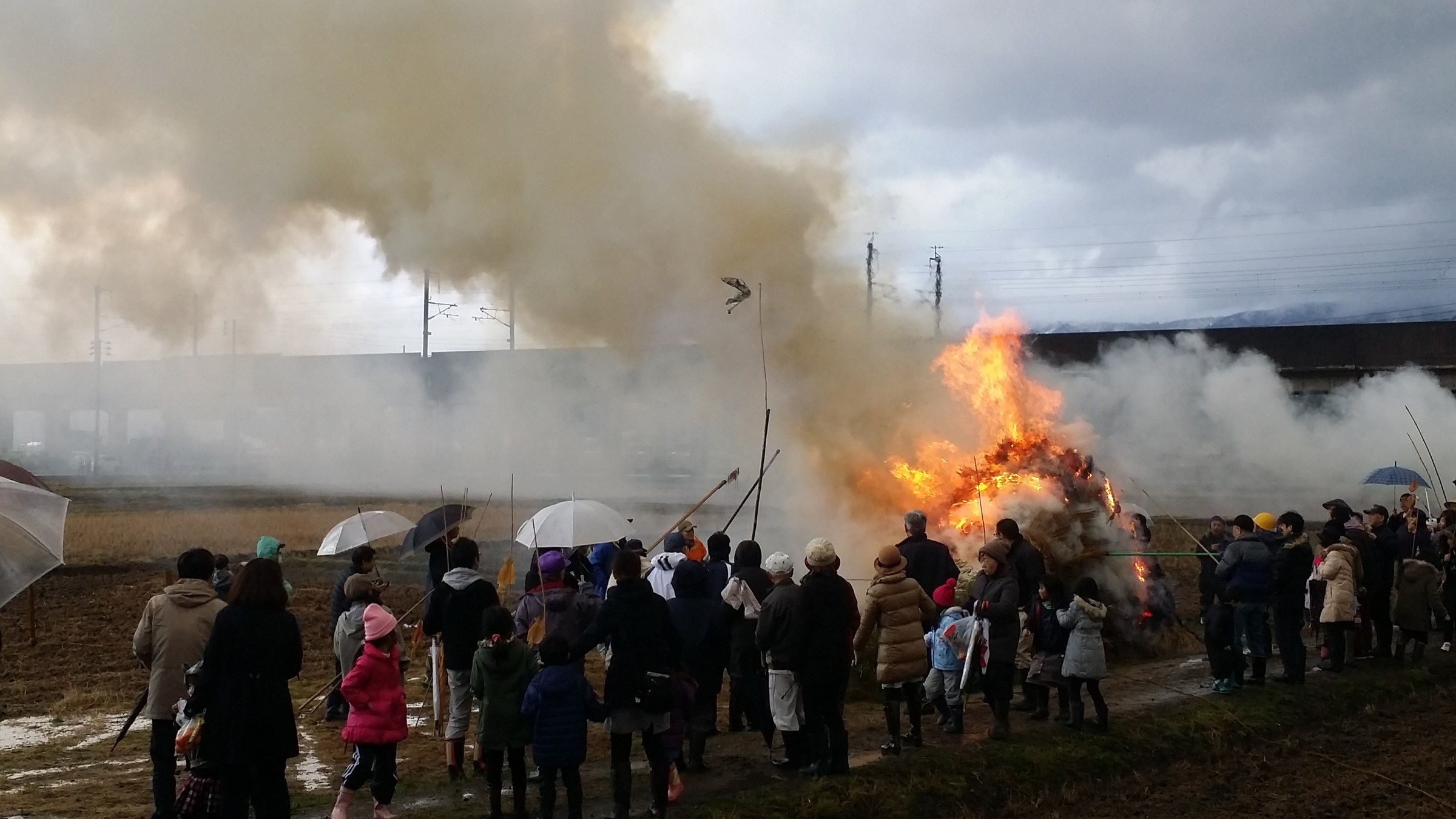
When the cone is lit, dense white smoke rises first, then the flames break through, and finally the whole thing collapses.
Then comes the moment the children have been waiting for: on long bamboo poles they hold dried squid into the embers and roast it, just as we toast bread on a stick.
The whole village watches.At the end, squid is roasted on long poles.
February: balloons in the snow
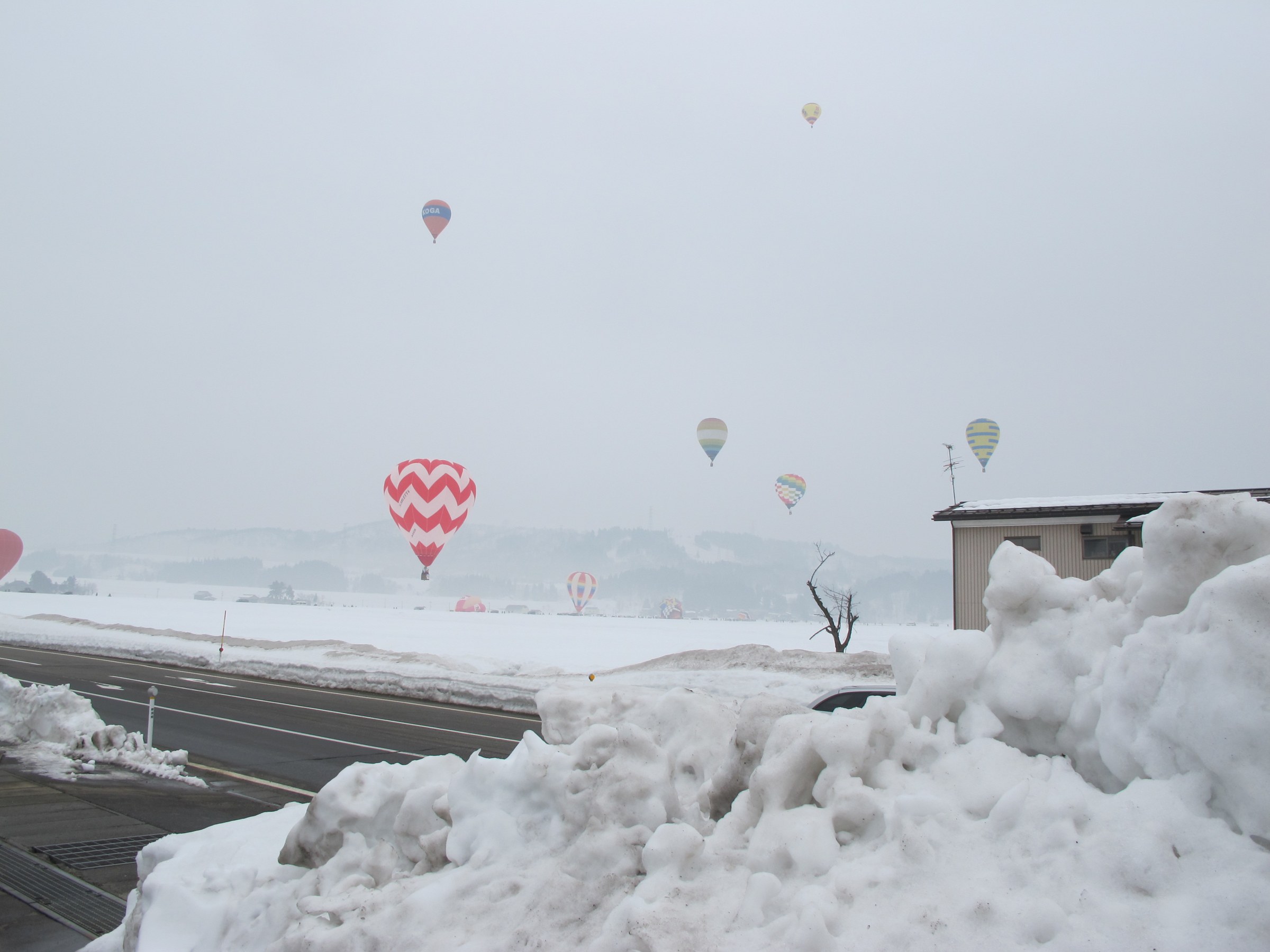
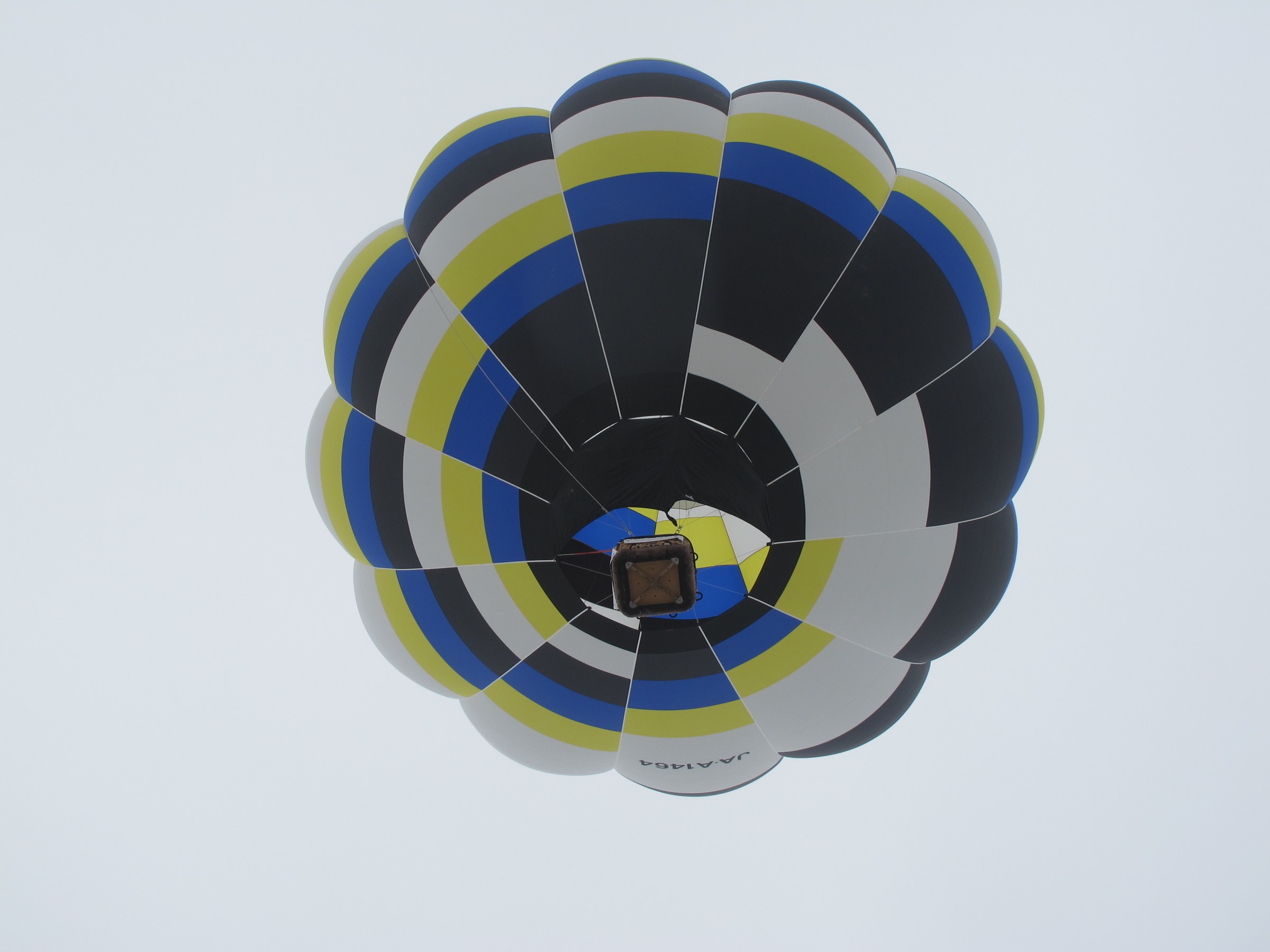
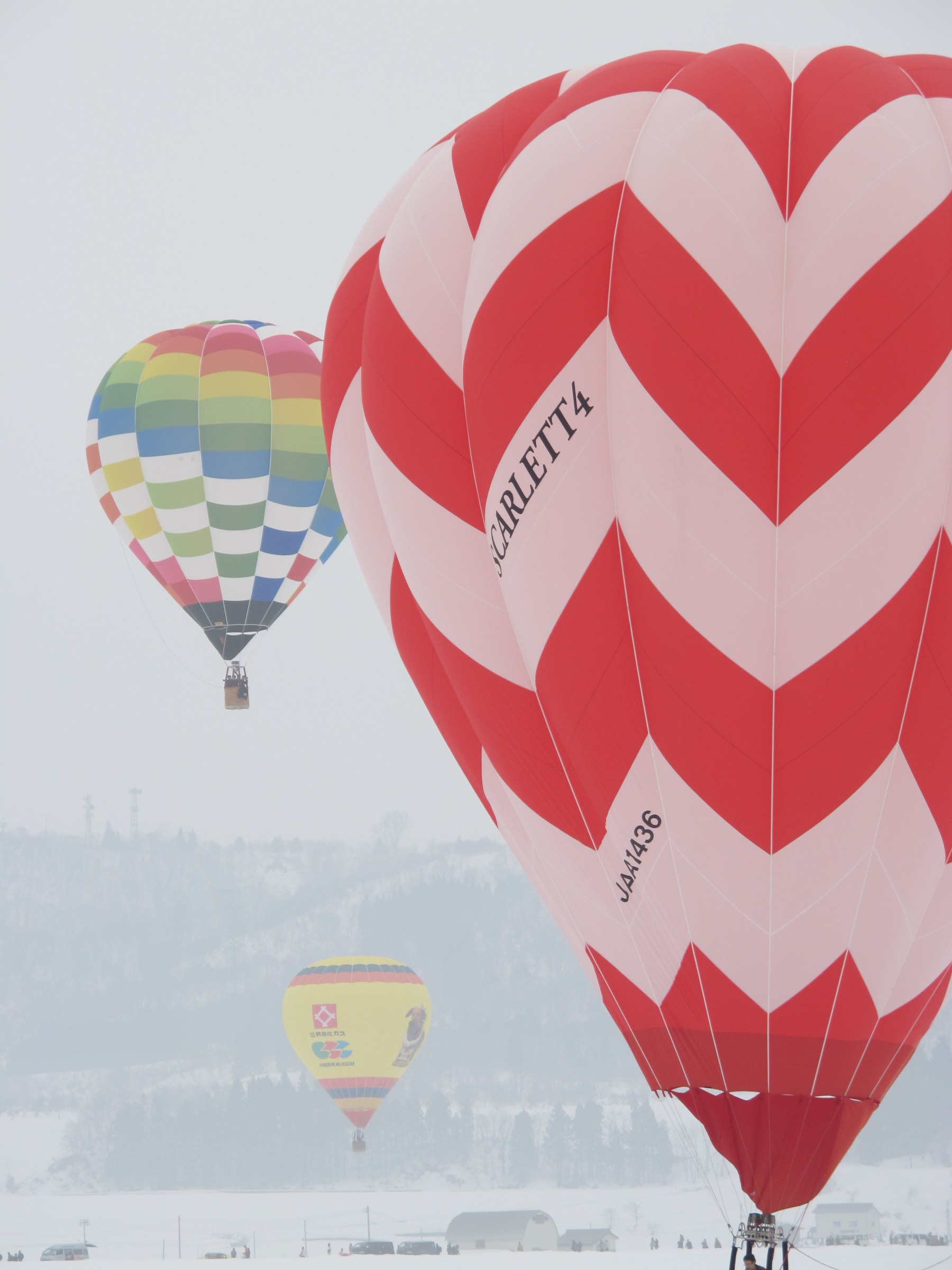
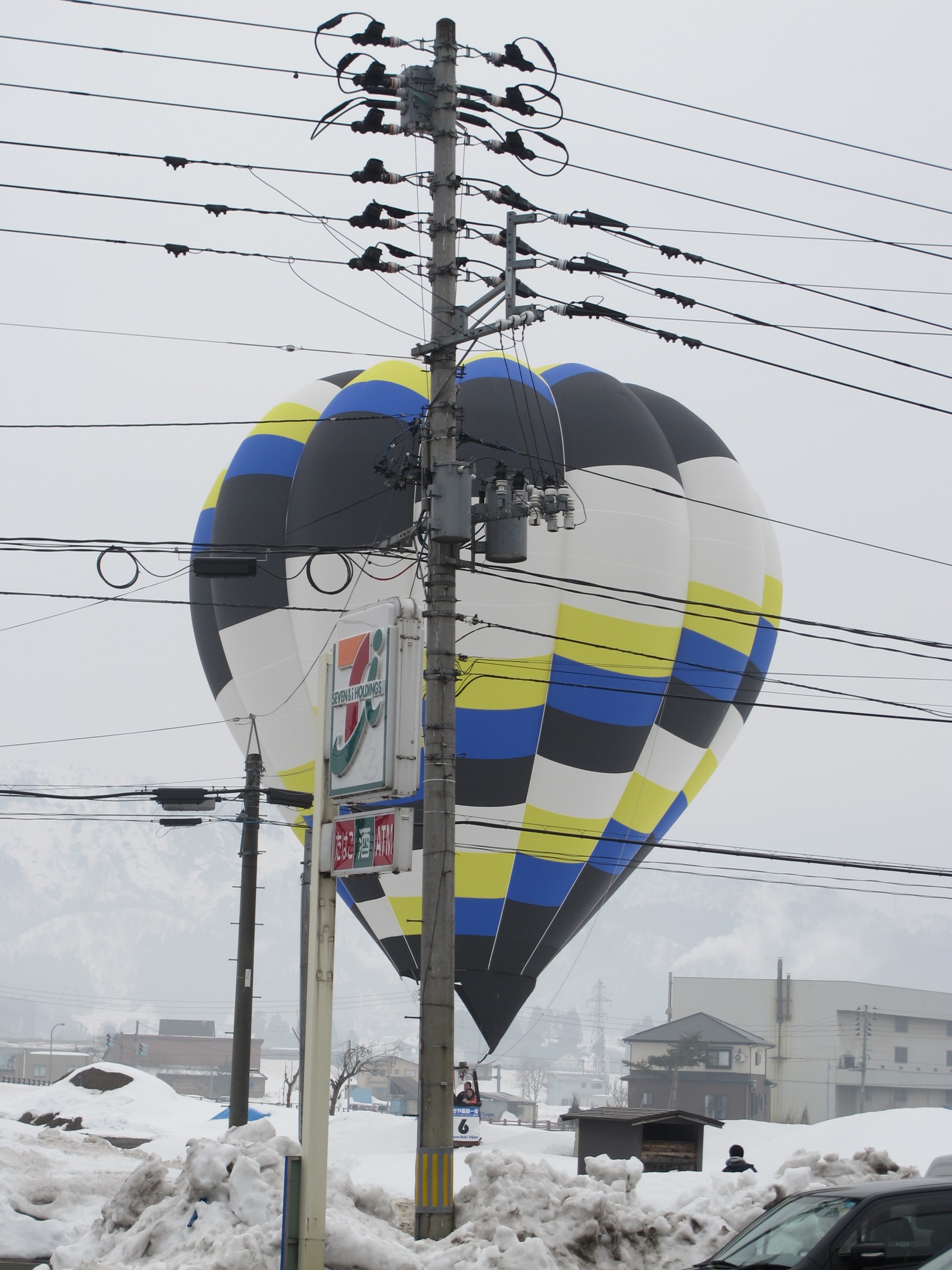
At the end of February, colourful hot-air balloons rise over the snow-covered fields of Ojiya. The balloon festival has been held since 1977. The teams also fly a competition in which the aim is to land as close as possible to a target.
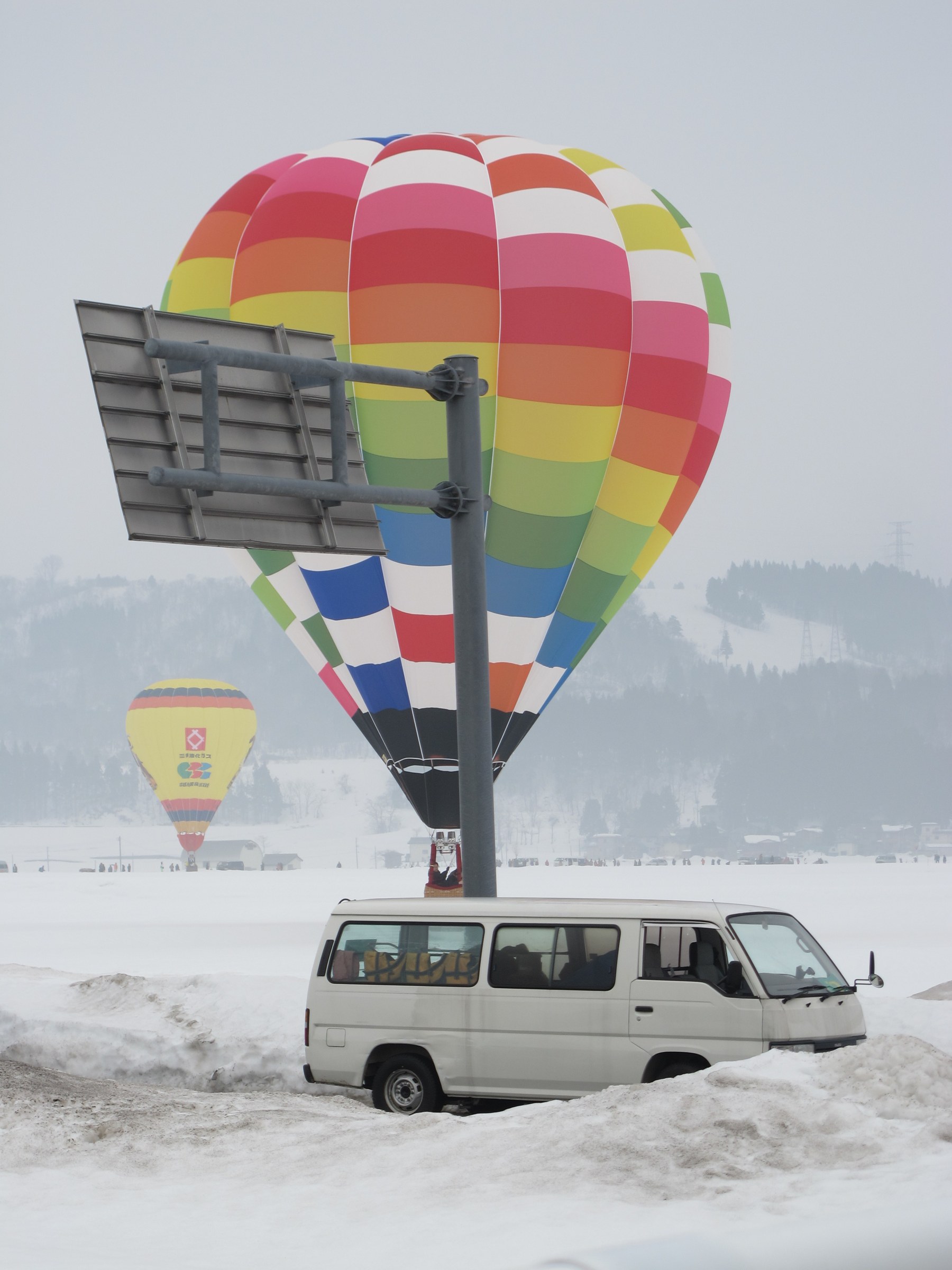
My pictures of it came about quite by chance. I stopped at a Seven-Eleven to get a coffee, and on the other side of the road the balloons were coming down. I watched for a while, took a few pictures and drove on. That's Japan: next to the power pole with the convenience store sign, a balloon is suddenly floating above the snow.
Balloons over the fields of Ojiya.Right above the road.
Ojiya Balloon Festival, March 2014.
hanabi花火
September: Katakai, the biggest fireworks
On 9 and 10 September the village of Katakai in Ojiya celebrates its autumn festival at the Asahara Shrine, and with it comes one of the most famous firework displays in Japan. Since the Edo period the fireworks have been dedicated to the shrine as offerings. I was invited there in 2017, and for me it is the world championship of fireworks.
The whole village builds a huge grandstand on open ground. Each firework costs a small fortune and is therefore usually donated by a company or an association. Before each launch the announcer calls out who donated it. A little fair springs up all around, and festival music with singing and drums hangs over everything. A tremendous atmosphere, quintessentially old Japan.
Katakai – the biggest fireworks in the world.
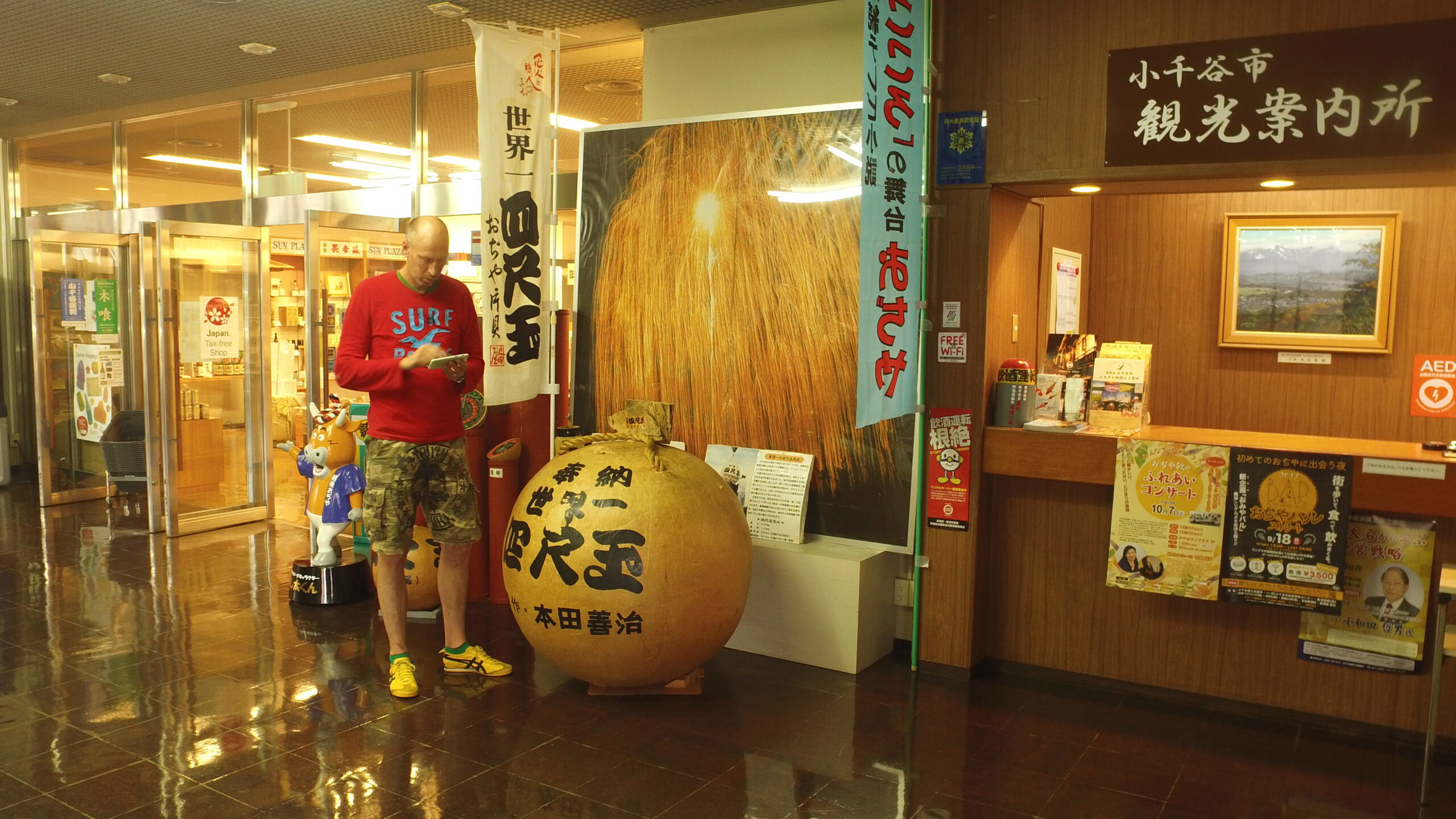
A four-shaku shell on display at the Ojiya tourist information centre.
The four-shaku shell
Katakai is famous for its four-shaku shell, a firework shell a good 1.2 metres in diameter and weighing around 420 kilos. In the sky it opens into a blossom about 800 metres across. The sign next to this shell says: the biggest in the world.
In September 2026 the fireworks season was already over, so I showed Harry Palm the shells on display. He was completely fascinated and took photos, and afterwards I sent him my pictures of the launches.
tōgyū闘牛
In the mountains: the bullfighting
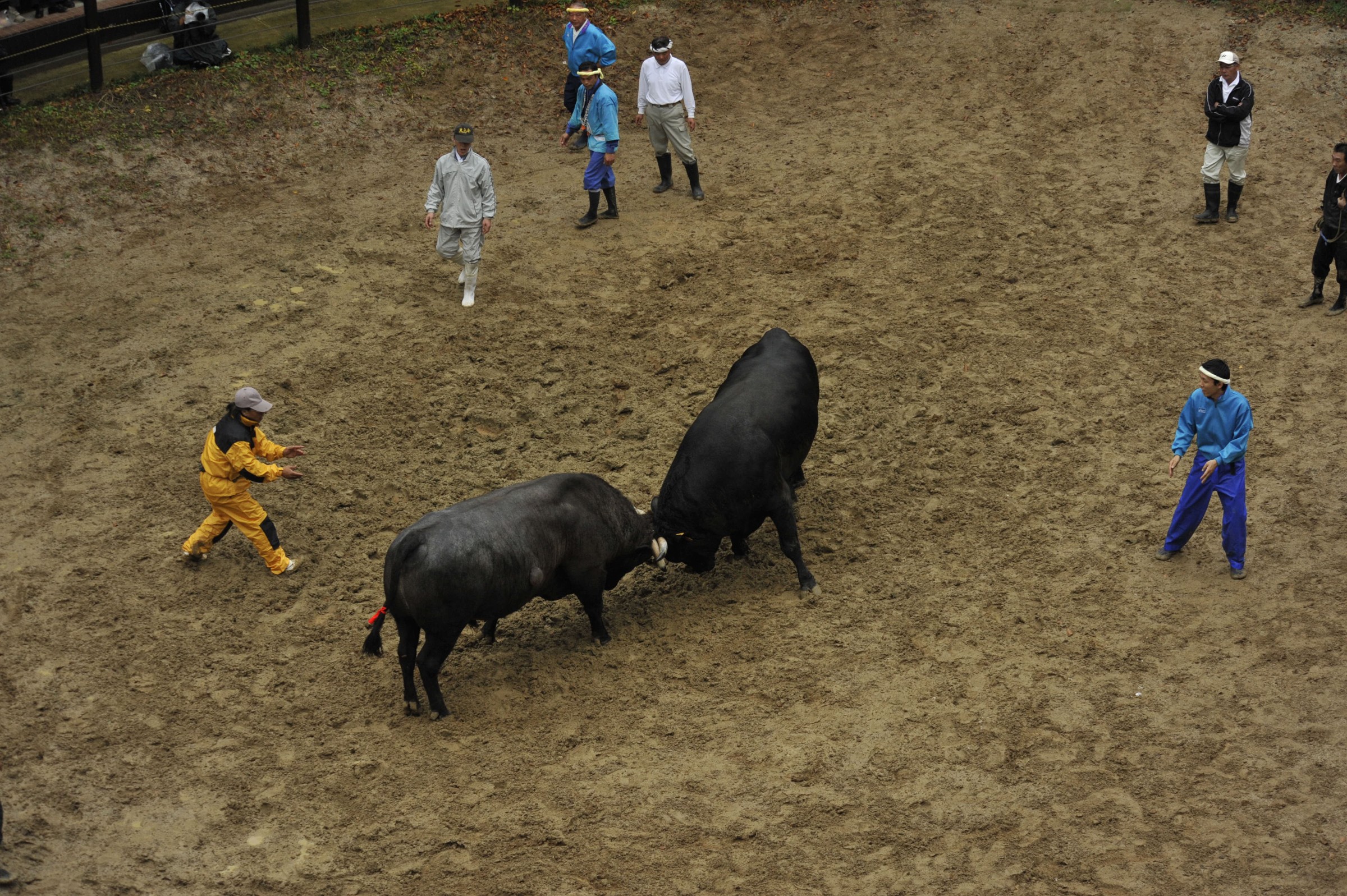
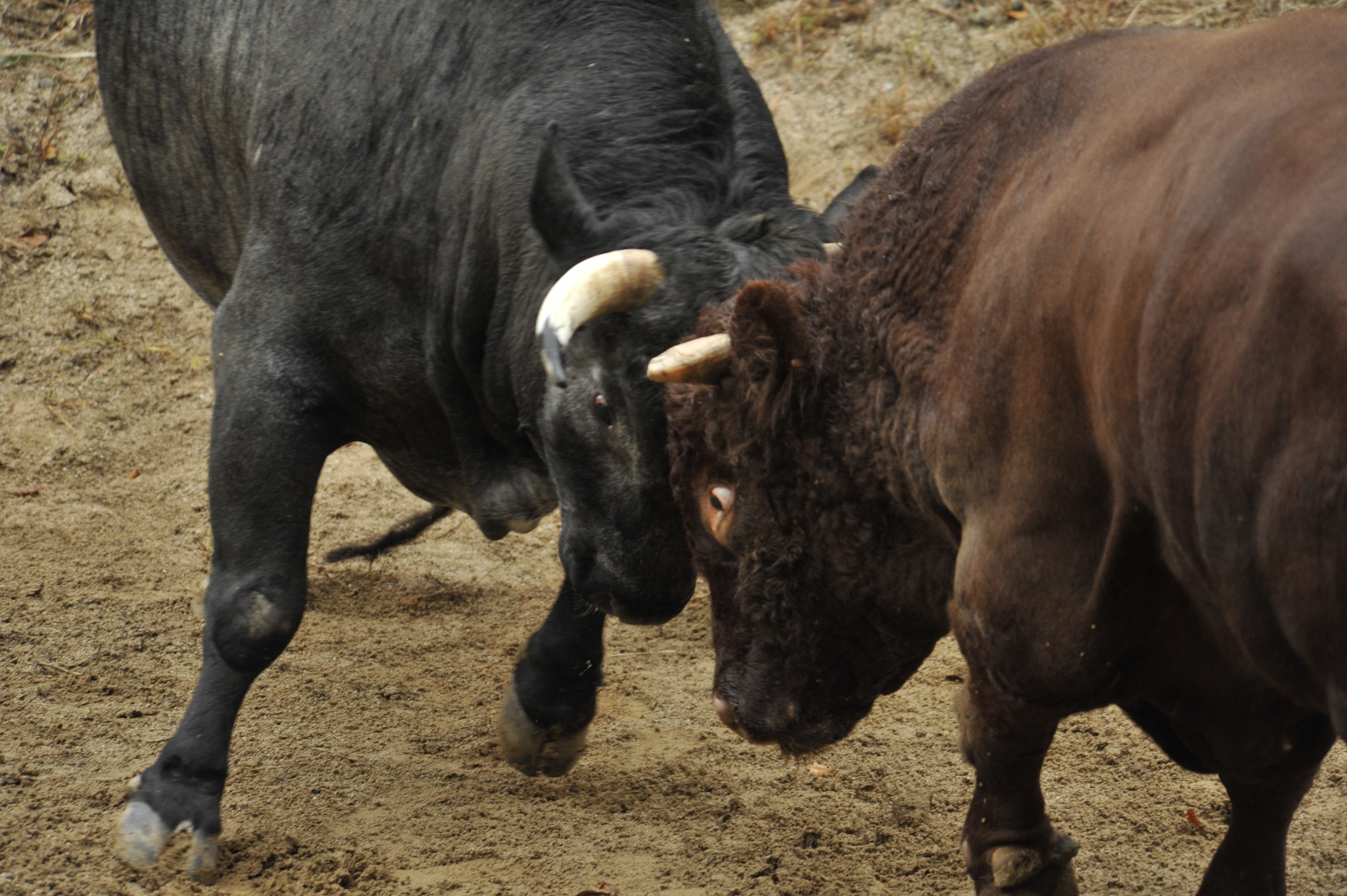
Sadly, Harry missed the bullfighting in September; we were too early. But I showed him the small arena in the woods above the Shinoda koi farm. He thought blood flows at a bullfight. Not here. The bulls only push head to head. In Yamakoshi this is called tsunotsuki, horn thrusting, and every bout is declared a draw before an animal is hurt.
Bullfighting grew out of work on the land. In the past, farmers ploughed their rice fields with cattle. According to tradition, as long as about a thousand years ago the bulls were pitted against each other in the quiet weeks between planting and harvest, bets were placed, and that became today's sport. The damp, soft ground of the arena is still reminiscent of a rice field. In Japan the bullfighting is protected as an Important Intangible Folk Cultural Property.
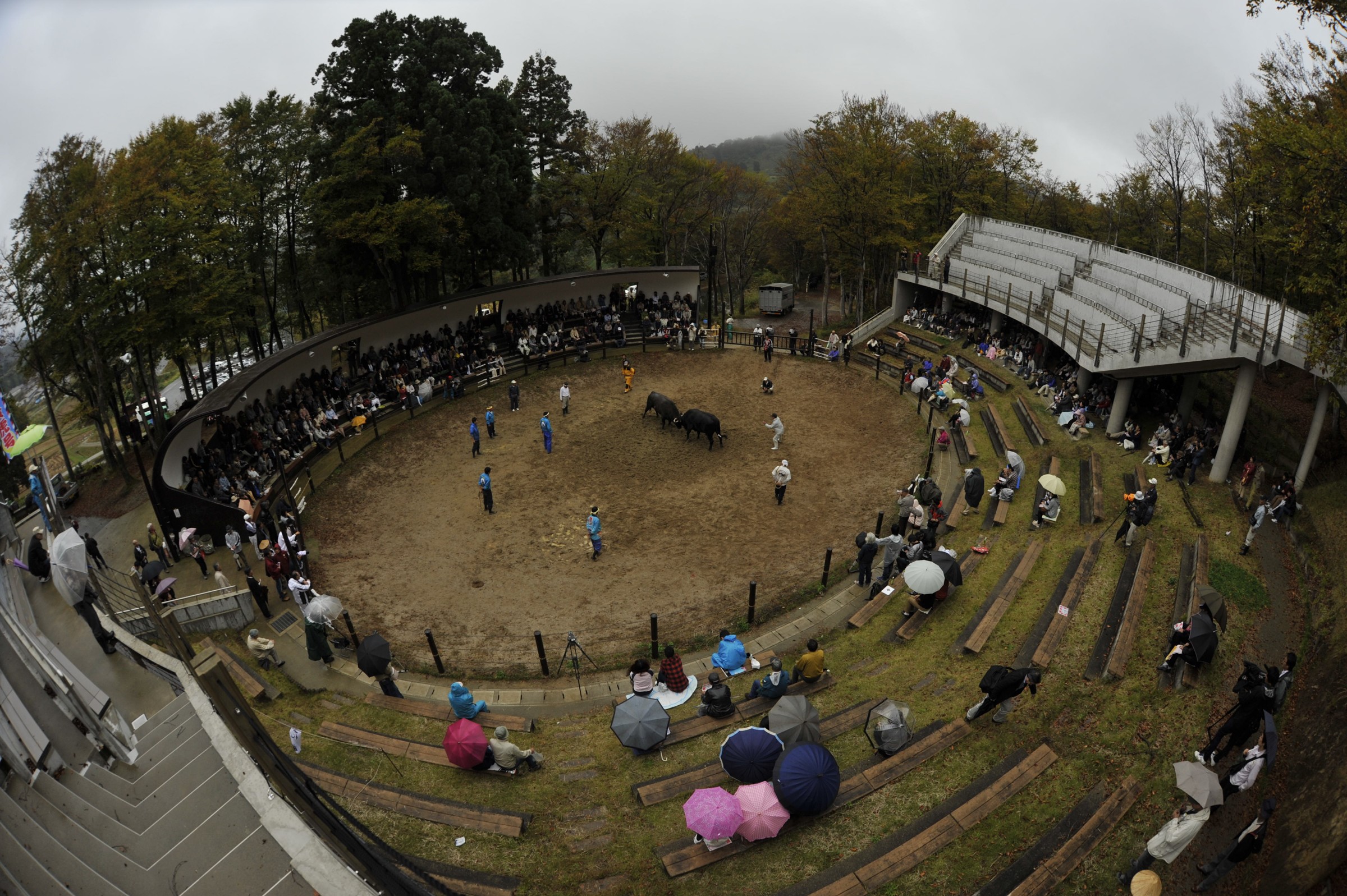
Tōgyū – bullfighting in Niigata: no blood, just head to head.
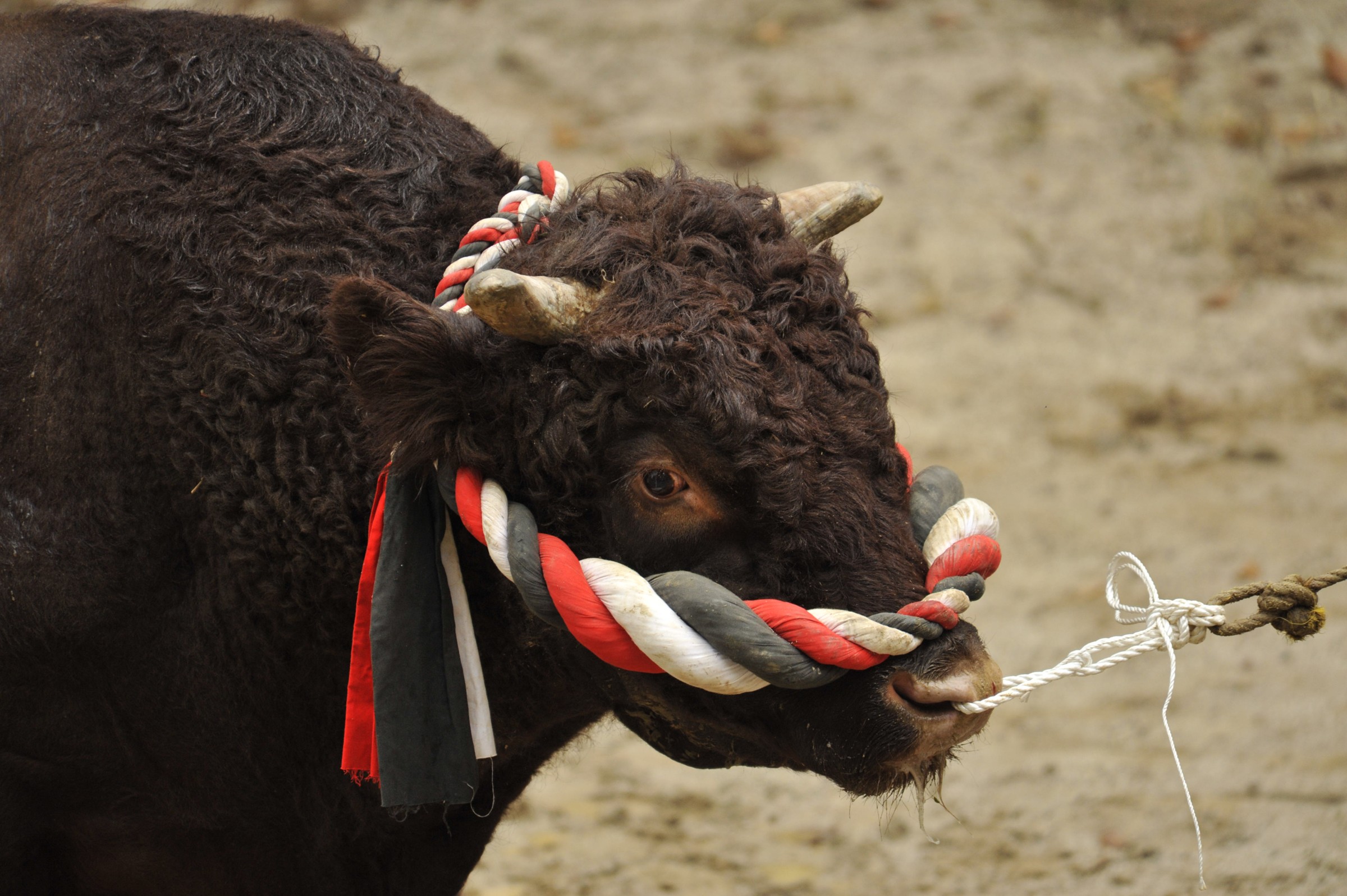
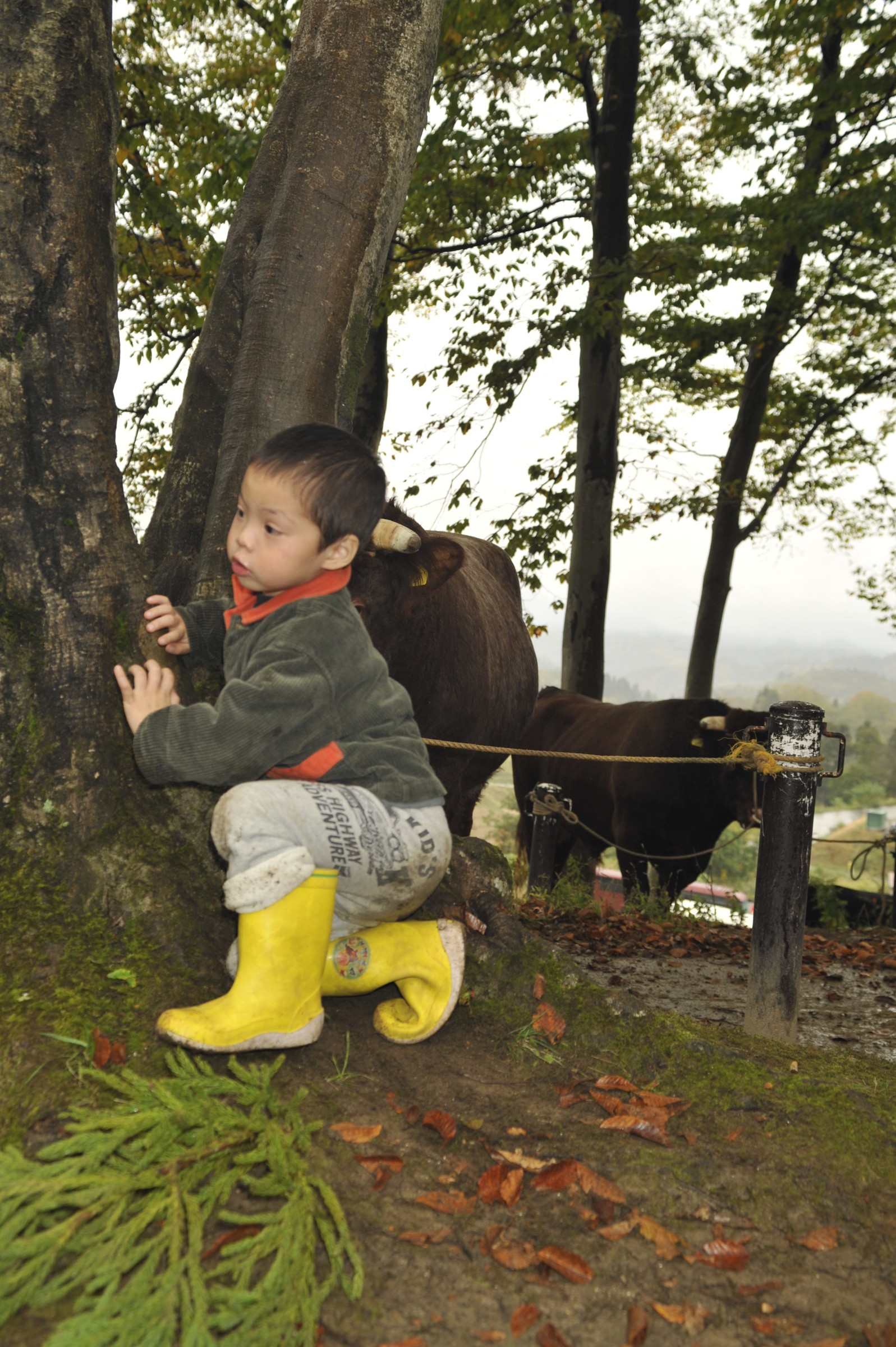
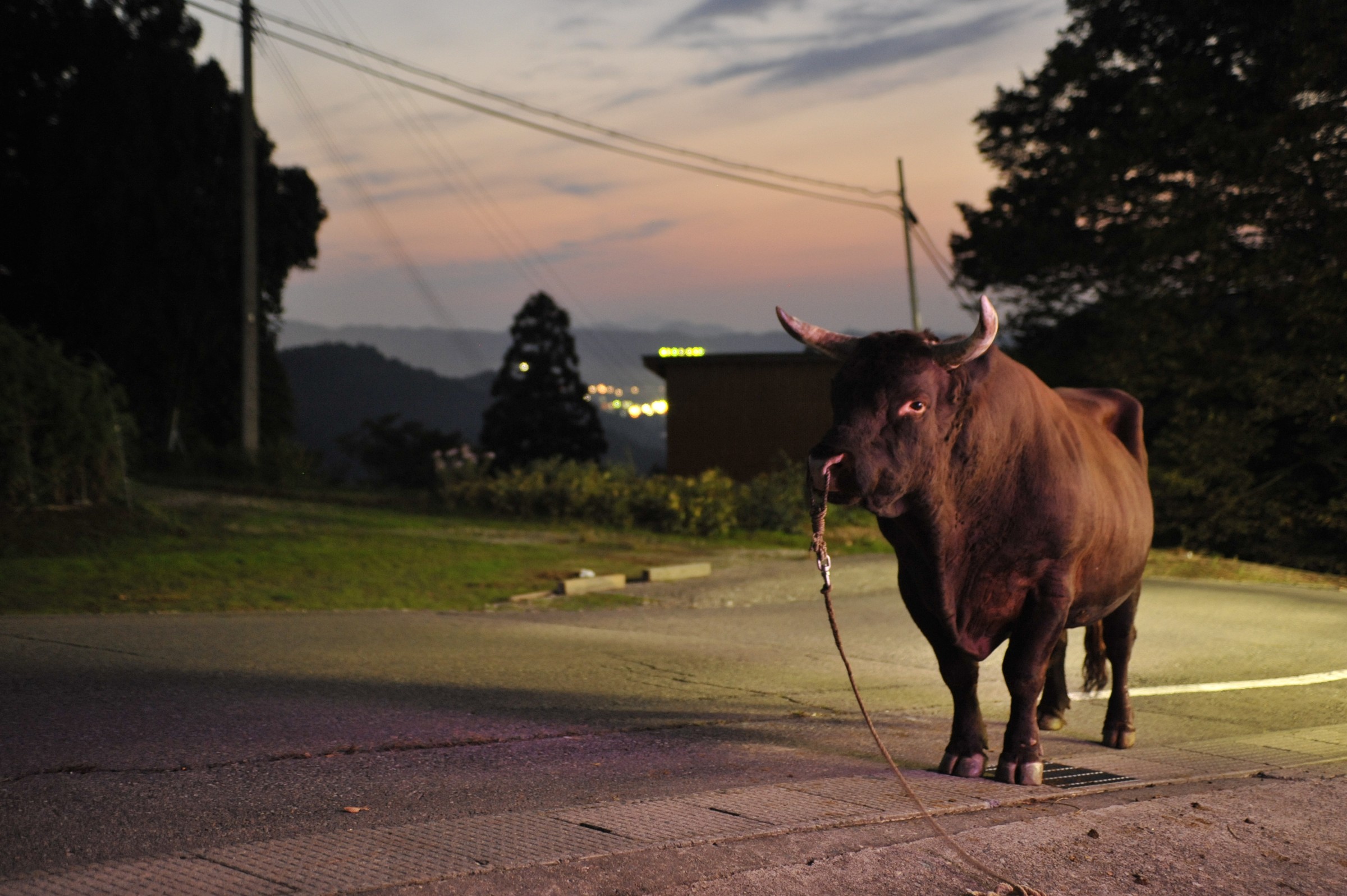
Most of the koi breeders here also keep bulls, not just Shinoda. They take their animals to the arena in a cattle truck. There the villages of the mountain region compete against each other, and the bulls' head decoration shows the colour of the village. Each team stands in the arena with its bull for its village. A bottle of sake goes round, people drink themselves some courage, and in the evening every bull returns to its home barn. It is all very much a village affair and lovely to watch.
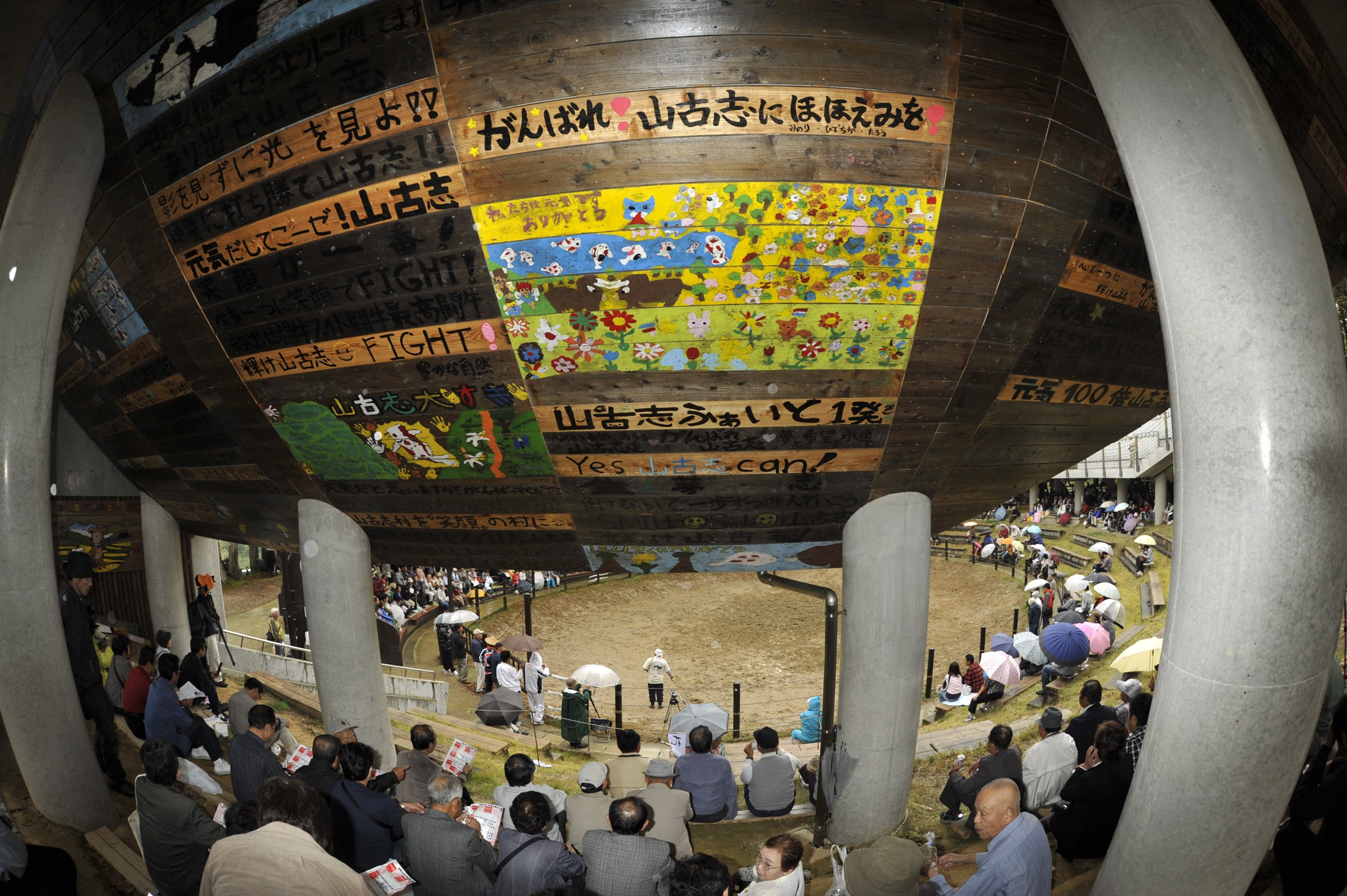
Three arenas lie close together here. Besides the small one in the woods, there is a larger one on the other side of the mountain in Yamakoshi, where tour buses from Tokyo also come. After the severe earthquake of 2004, the bullfighting there was suspended for a while. That it takes place again is, for the people, a sign of reconstruction.
The arena in Yamakoshi.“Hang in there, Yamakoshi”, reads one of the banners.
Head to head, with the helpers always close by. October 2011.
What counts is strength, not injury.The head decoration shows the village's colour.
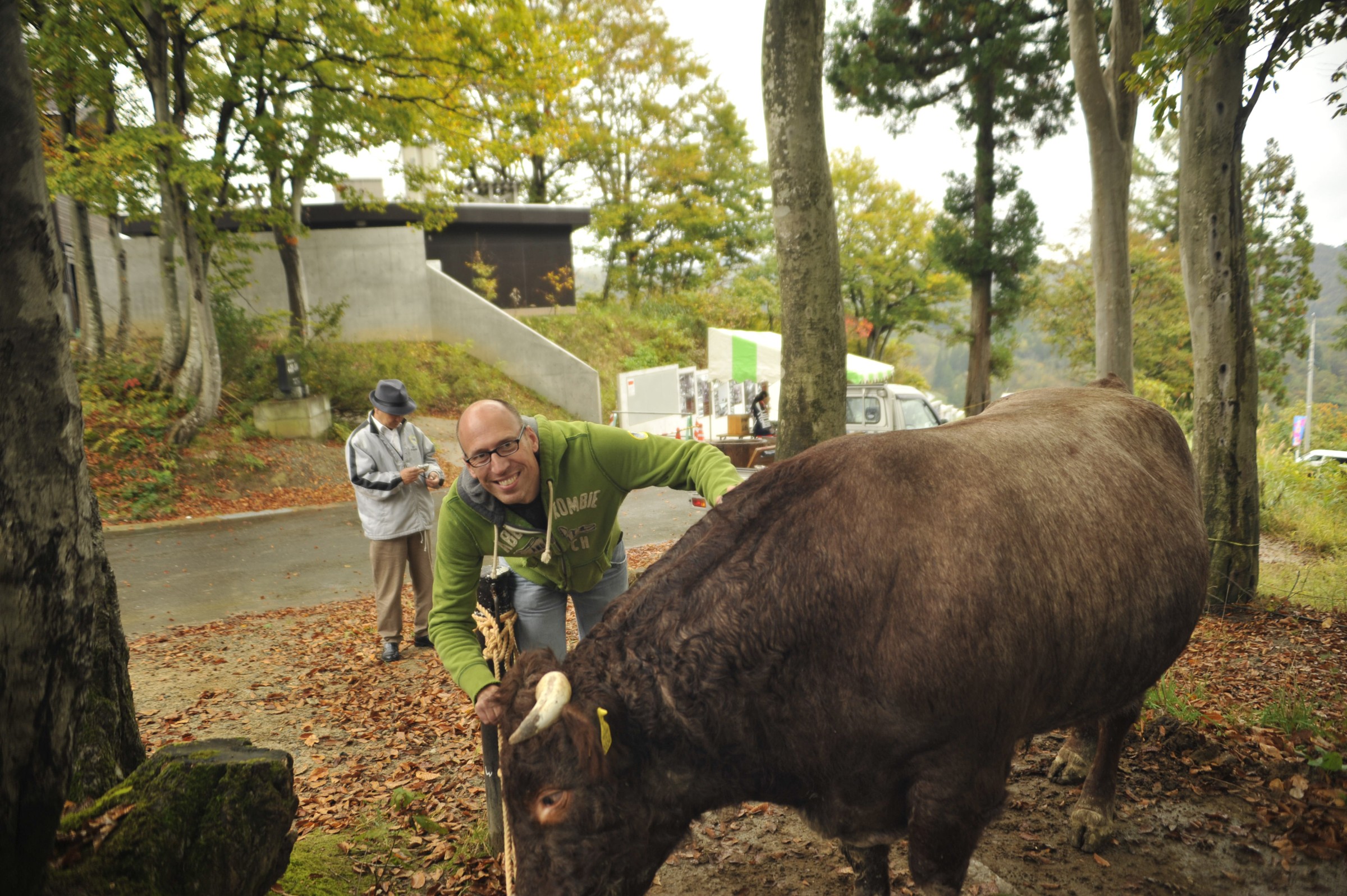
I was once allowed to lead a bull too. October 2011.
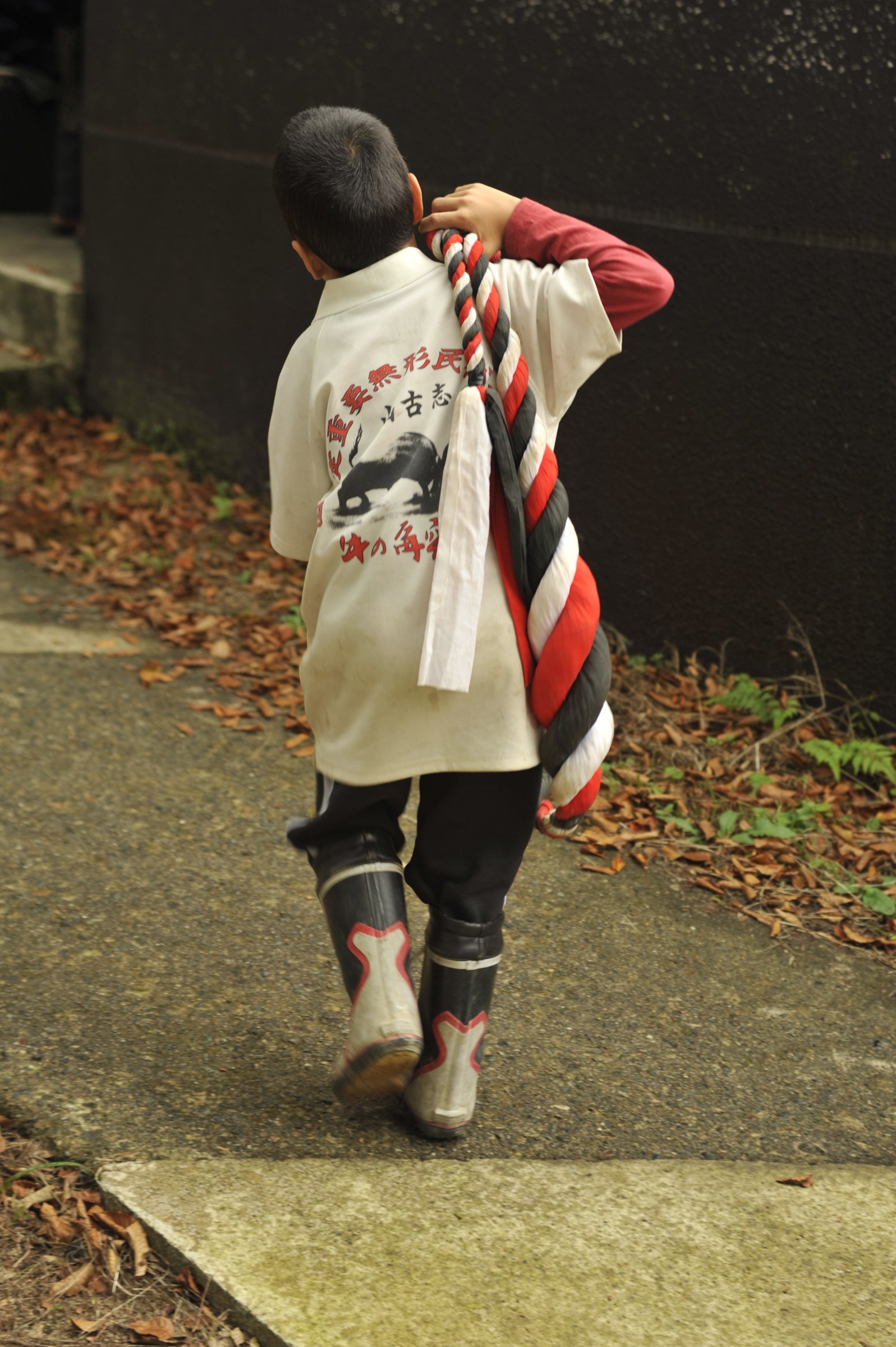
A fight day is a celebration for the whole village, and the children are there too.
Koi travellers visiting the breeders in the mountains should ask about the next fight day. The arenas are right in the heart of koi country.
The youngest are always there. October 2011.
Shinoda's bull in front of the koi house, in the evening. October 2010.
With Harry Palm in Japan
These articles tell what we experienced on the same trip at Torazo and at Japan's largest land-based trout farm. And what Haaki and I talked about before the trip is in episode 32.
To provide the best experience, we use technologies such as cookies to store and/or access device information. Consenting to these technologies will allow us to process data such as browsing behaviour or unique IDs on this site. Not consenting or withdrawing consent may adversely affect certain features and functions.
Functional
Always active
The technical storage or access is strictly necessary for the legitimate purpose of enabling the use of a specific service explicitly requested by the subscriber or user, or for the sole purpose of carrying out the transmission of a communication over an electronic communications network.
Preferences
The technical storage or access is necessary for the legitimate purpose of storing preferences that are not requested by the subscriber or user.
Statistics
The technical storage or access that is used exclusively for statistical purposes.The technical storage or access that is used exclusively for anonymous statistical purposes. Without a subpoena, voluntary compliance on the part of your Internet Service Provider, or additional records from a third party, information stored or retrieved for this purpose alone cannot usually be used to identify you.
Marketing
The technical storage or access is required to create user profiles to send advertising, or to track the user on a website or across several websites for similar marketing purposes.
 Deutsch
 Nederlands
 English
 Français
 Italiano