Haaki with Bachmann, episode 32. At the end of August, shortly before my trip to Japan, Haaki asked me what awaited me there. It turned into a conversation about China, about Japan's auctions, about Shigeru's Kawari lines and about a cola machine that gambles for your can.
Haaki, a keen angler, with a barracuda.
Haaki with Bachmann, episode 32: Japan and the koi market.
Haaki is a good friend, a friend of koi and a gifted angler, and he is interested in everything that happens here. When we sit down in front of the camera in the koi house, he asks, I answer, and behind us the big fish do their rounds. This time, on 30 August 2026, we talked about Japan, where I was due to travel three weeks later, and about where the koi market is heading.
shijō市場
China is catching up
My main goal for the trip was to sort the new Tosai and Jumbo Tosai myself. Beforehand I had made some calls to find out how things stood with the Chinese buyers, and it sounded more relaxed than in previous years. I believe that the Chinese-bred koi now coming onto their domestic market are pushing back imports of Japanese koi there to some extent. At the Asian shows you now see top Chinese fish that are truly remarkable. They are not just close, they are world class.
China is taking the same path as with cars: young people learn abroad where things are done best, come back and build it up at home, with a great deal of state support. In my view, it is mainly Japan's mid-range breeders who will feel this. With the very big names such as Dainichi, Sakai or Momotaro, the 'Made in Japan' label will probably still count with top Chinese customers for quite a while.
What the German market is losing
The German market, on the other hand, has been declining slowly but steadily for years. The knowledge it started out with in the nineties and early 2000s is no longer there in the same breadth. Many of those who were really good back then have grown older, and some are no longer involved at all.
I experienced something similar in the bonsai world. In the nineties, Paul Lesniewicz's Bonsai-Zentrum Heidelberg was the pinnacle of European bonsai art, with workshops for which a master travelled over from California. The man with the beautiful vintage car felt just as much at home there as the pensioner on a small income; young people stood next to old, the successful next to enthusiasts. That diversity is being lost to some extent.
Haaki sees an important reason for this in the change brought by social media. In the past you had to meet up to exchange ideas, you read books and went to events. Today a lot happens from the sofa, without ever seeing the people, and something personal is lost along the way. On top of that, koi shows in Germany have not really got going again since Covid.
"You had young people next to old people and successful people among enthusiasts. We are losing a bit of that diversity."
Drawing lots at the pond
Haaki wanted to know whether Japan still has the auctions you know from our videos. Yes, it does, above all at the big breeders such as Dainichi, Sakai or Momotaro, who have to sell two or three hundred good fish at a single auction.
In the second tier, at breeders who are quite well known, things often work differently. A pond is harvested, then lots are drawn: the first may choose a Nisai, the second the next one, the third may swap with the first, and so on. The breeder only names the price afterwards. So you queue for half a day, perhaps get lucky with your lot, pick your favourite and then hear a figure you politely decline. For me, that would be nothing today.
In the past I had a different way. I helped with the harvest at various breeders, got up at five in the morning, helped load the truck and stood in the pond at dawn. At nine we came back, the buyers were already waiting, and then the breeder would say: Harald, you helped me for three or four hours this morning, you choose first. That is real hands-on work, and you genuinely get talking with the breeder. I still like that today.
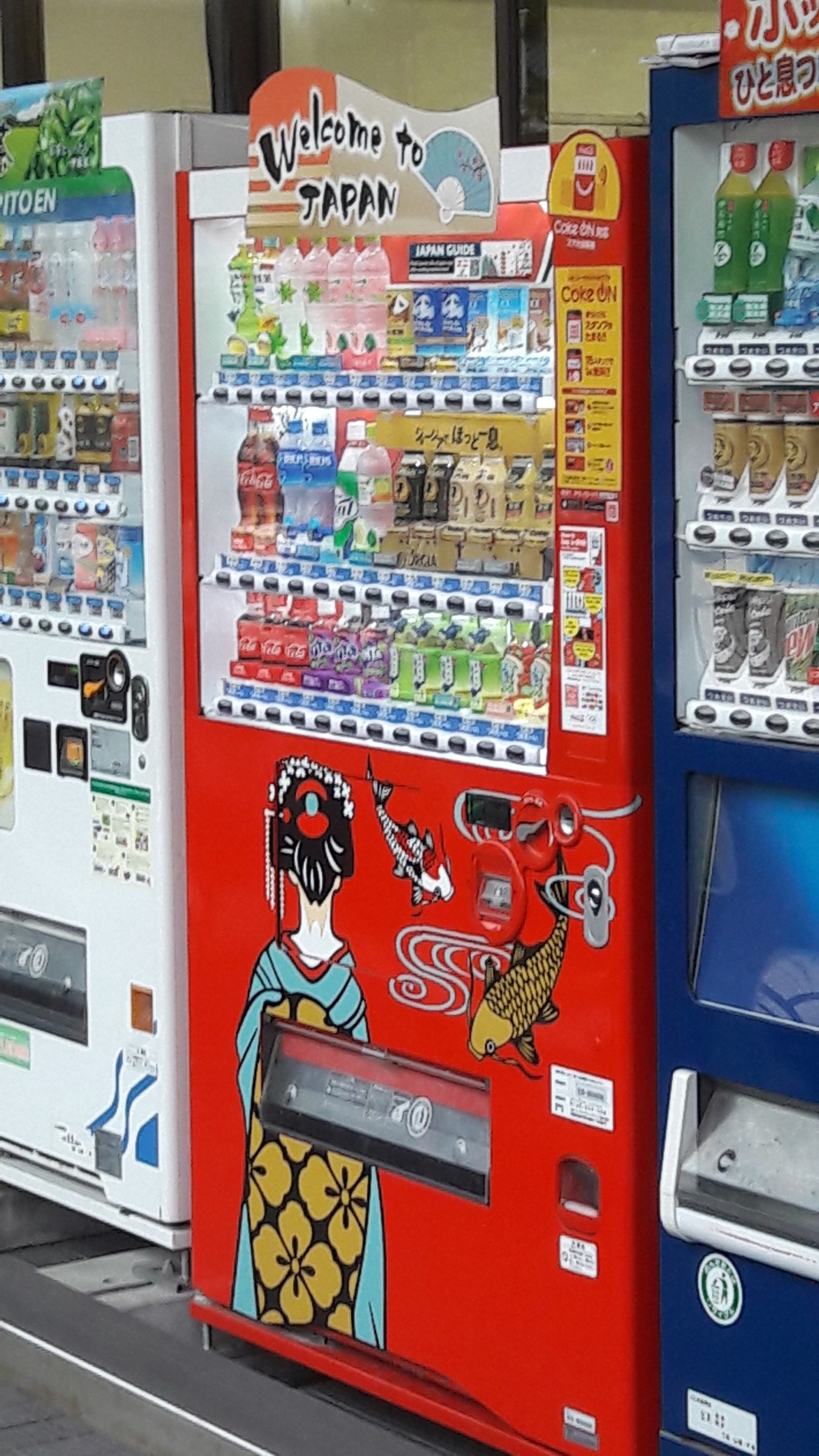
A drinks machine in Japan, painted with koi. May 2018.
jihanki自販機
The cola machine that gambles
How playful Japan can be is shown by a drinks machine on the way to a pond site in Kitayama. Everywhere else a can of cola costs 110 yen, at this one 150. In return there is a game built in: you press a button and the machine plays you for whether you get two cans or it keeps the money. I laughed my head off when I first saw it. And with a bit of luck you head to the auction with two cans.
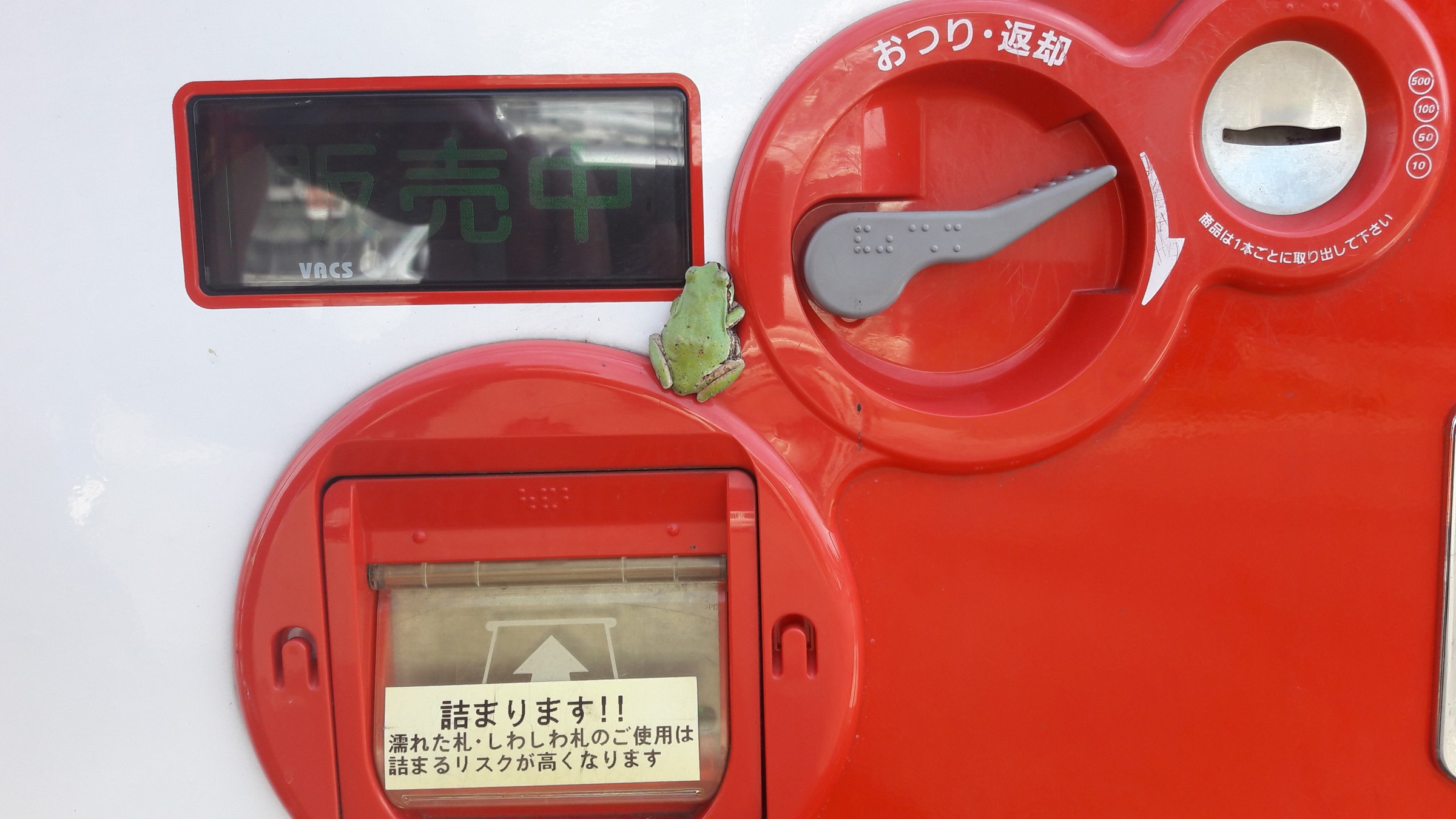
In summer these machines are lit all night, and the light attracts mosquitoes. So if you walk up to one early in the morning, you often see little green tree frogs sitting on the glass, with the drink cans behind them. During the night they have snapped up the mosquitoes that flew towards the light.
Early morning at the machine: a tree frog between the change return and the note slot. June 2018.
Shigeru's Kawari lines
At Dainichi I was particularly interested in Shigeru's Kawarimono lines, which are in high demand in Europe. A myth stubbornly persists here: that a koi of over 1.10 metres can only be achieved in a single colour, as a Karashi. In my experience, Kohaku, Sanke and Showa grow at least as well here, perhaps even better than the Kawari.
The parent fish of the Botan line were originally females from Sakai, joined by males from Maruhiro. Maruhiro is Yoshiyuki's younger brother; their father is Setaro Hirasawa of the Marusei Koi Farm, from whom many old lines come: Ogon, Cream Ogon, Kigoi, Matsuba variants and much in between. Maruhiro has built up a fine medium-sized farm, and I see his fish at a particularly high level. His Lemon Showa is famous: patterned like a Showa, but a Kawarimono, a Kawari Showa. It does not shine in red, black and white; everything about it is earth-coloured, a greyish, reddish brown instead of red, a dark anthracite instead of black.
With an eye for detail, you can see from the fish of the last two years which line is behind them. Some have a reverse Fukurin: no longer a dark pocket around a light scale, but a light pocket around a dark scale. I would call it Gyakume, as with the reverse Asagi. And in these fish the large scales run along the whole back up to the skull plate, where there is usually a leathery edge with small scales. It looks magnificent. Shigeru had already distinguished the types on the whiteboard as type A, B and C.
That is exactly what I then talked to him about in Japan, at the sorting bowl.
The second reason for the trip was Professor Harry Palm of the University of Rostock, with whom I have since become good friends. The idea came from him: he timed his stay at the university in Tokyo so that I was in Japan at the same time and could then show him Japanese koi aquaculture, the mountains, the breeders and a detour to the bonsai village, where I still have old acquaintances.
For the University of Rostock this is more than an outing. It shapes its teaching partly around the aquaculture that exists in Mecklenburg-Western Pomerania and where its students can find work after graduating, and we are part of that. Harry is particularly interested in how koi came about in the first place and how the carp spread around the world. Through Bram I was also able to arrange a visit to the largest trout farm Japan is currently building on land.
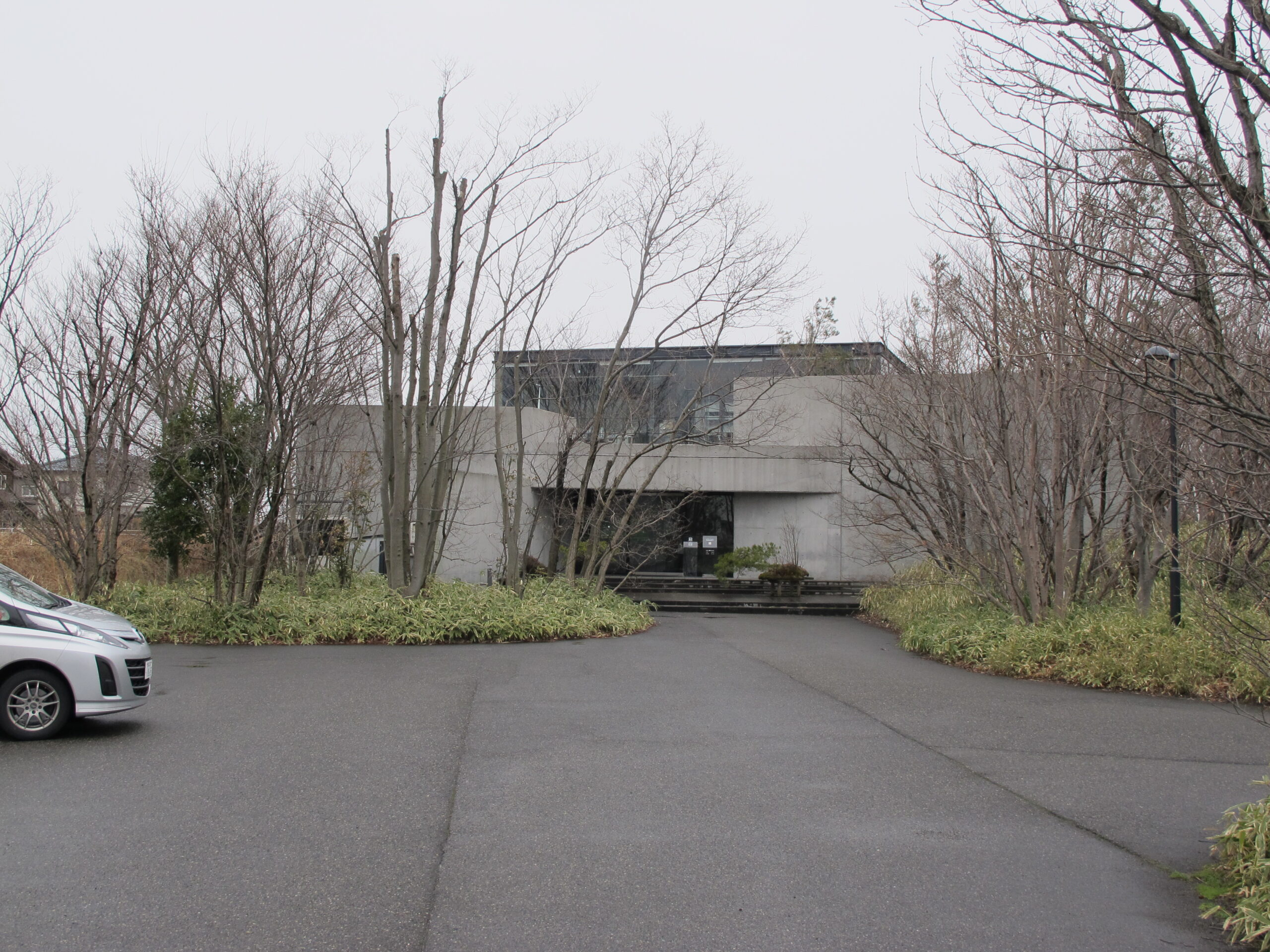
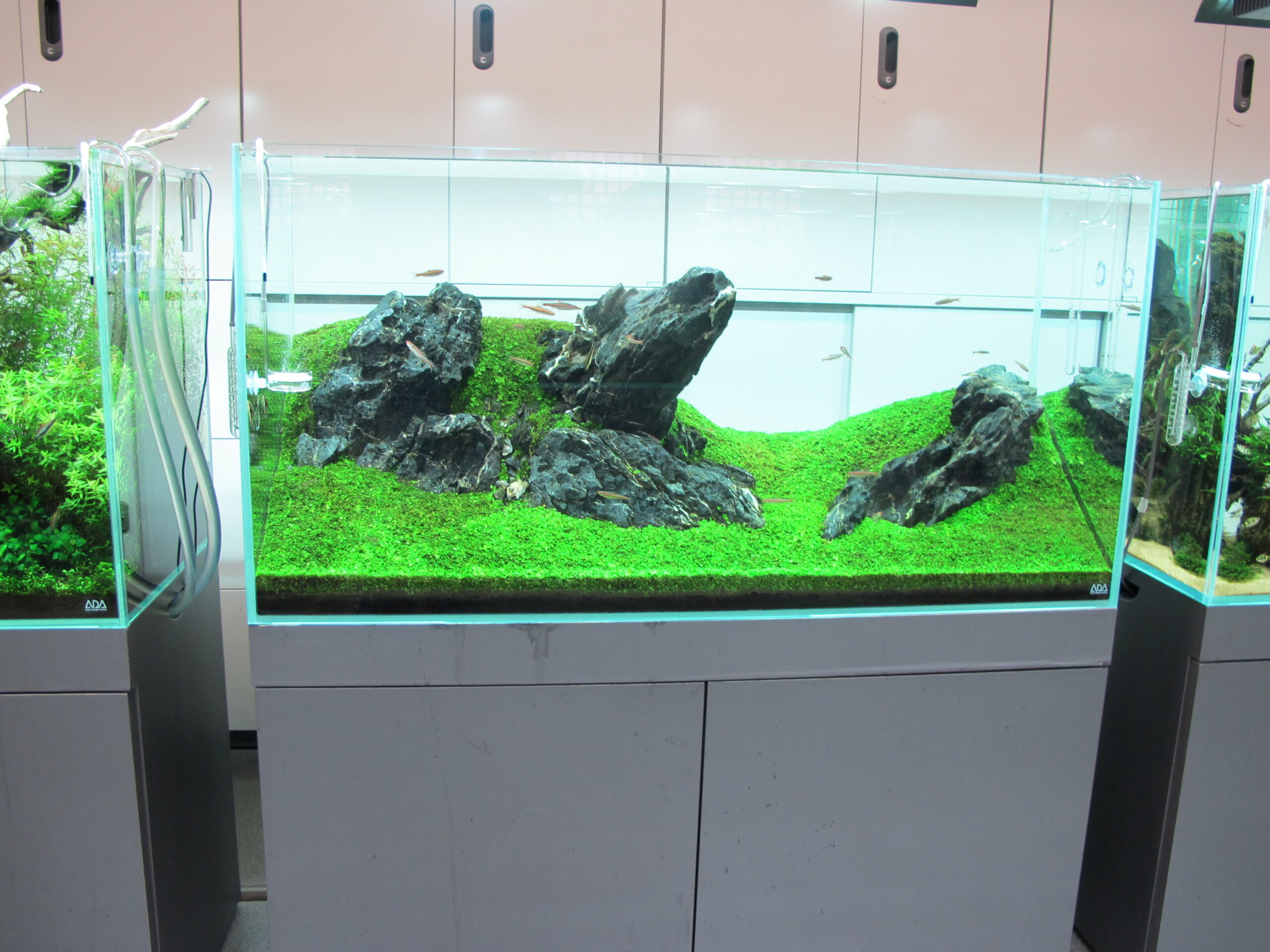
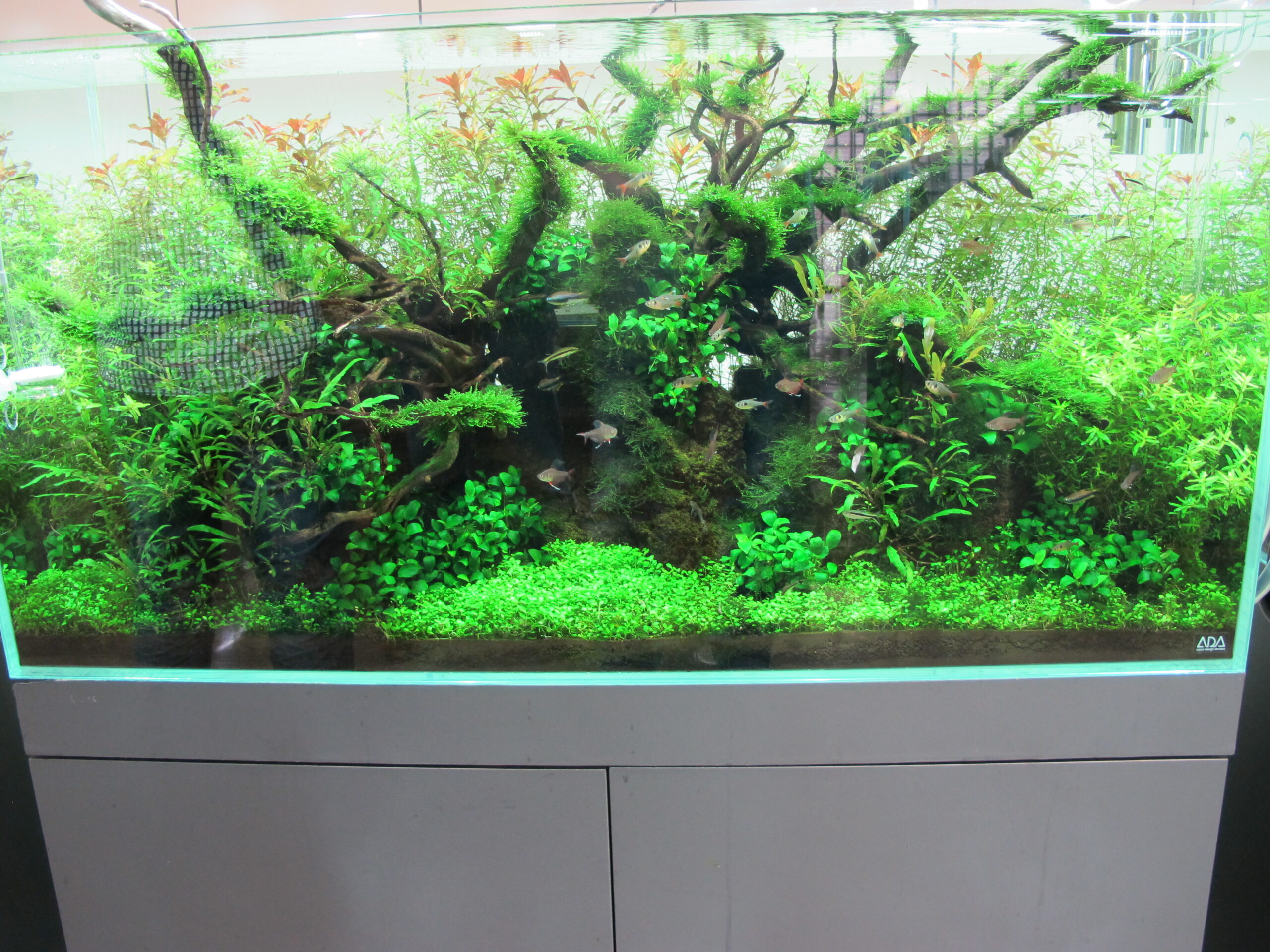
Perhaps, I thought, he would also be interested in Takashi Amano's gallery in Niigata, the great pioneer of the nature aquarium. My friend Harry Soßna had taken me there in the past; he represented the ADA brand in Germany and helped launch aquascaping here. We had been to the gallery twice, and after Takashi Amano's death Harry wrote to his daughter Sayuri to ask whether we might visit once more. We were welcome to come, and afterwards Sayuri took us out to eat.
The Amano gallery in Niigata, March 2014.
Stones and a carpet of plants.Roots, plants and a shoal of small fish. Both March 2014.
What came of the trip with Harry Palm can now be read in our magazine.
Finally, Haaki asked whether the big farms clearly stand apart from the many small ones. They do, and that was already the case in the past. The ordinary koi market is supplied by a whole range of solid breeders, visited by travel groups and wholesalers. The other world is Dainichi, Sakai, Omosako and Momotaro, where the big auctions take place, plus Ryuki Narita, where many fish are prepared for the major shows. There you meet quite different faces, buyers with a great deal more money, whom you also know from social media. Two worlds that still exist side by side today.
Next episode
In episode 33, Haaki and I sit down together again after the trip: a review of the season at our facility, from stocking density to the new feed.
To provide the best experience, we use technologies such as cookies to store and/or access device information. Consenting to these technologies will allow us to process data such as browsing behaviour or unique IDs on this site. Not consenting or withdrawing consent may adversely affect certain features and functions.
Functional
Always active
The technical storage or access is strictly necessary for the legitimate purpose of enabling the use of a specific service explicitly requested by the subscriber or user, or for the sole purpose of carrying out the transmission of a communication over an electronic communications network.
Preferences
The technical storage or access is necessary for the legitimate purpose of storing preferences that are not requested by the subscriber or user.
Statistics
The technical storage or access that is used exclusively for statistical purposes.The technical storage or access that is used exclusively for anonymous statistical purposes. Without a subpoena, voluntary compliance on the part of your Internet Service Provider, or additional records from a third party, information stored or retrieved for this purpose alone cannot usually be used to identify you.
Marketing
The technical storage or access is required to create user profiles to send advertising, or to track the user on a website or across several websites for similar marketing purposes.
 Deutsch
 Nederlands
 English
 Français
 Italiano