Three generations, a female from Yamakoshi, an earthquake and a bull: the story of the family that has set the standard for Hi Utsuri for decades.
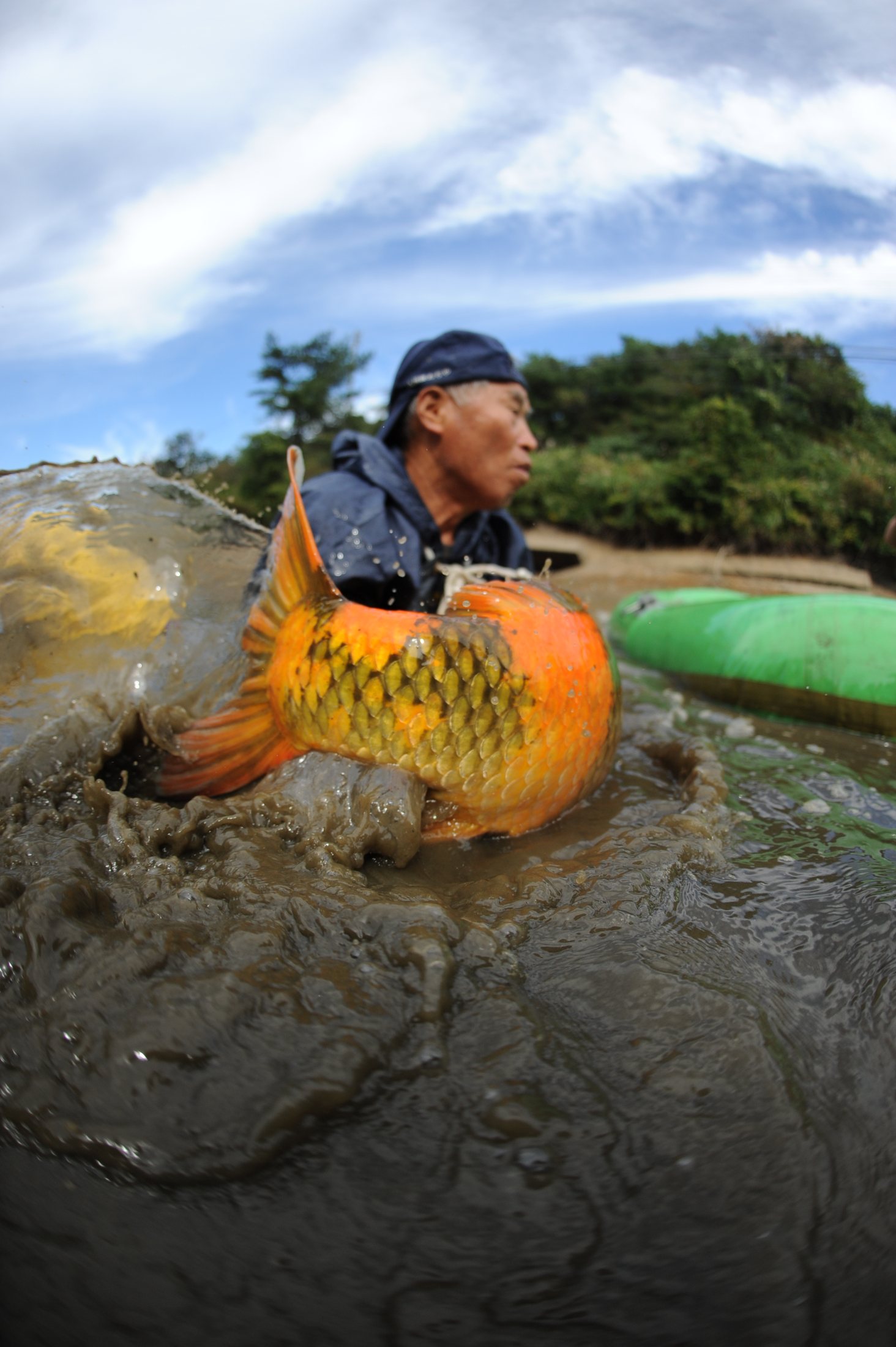
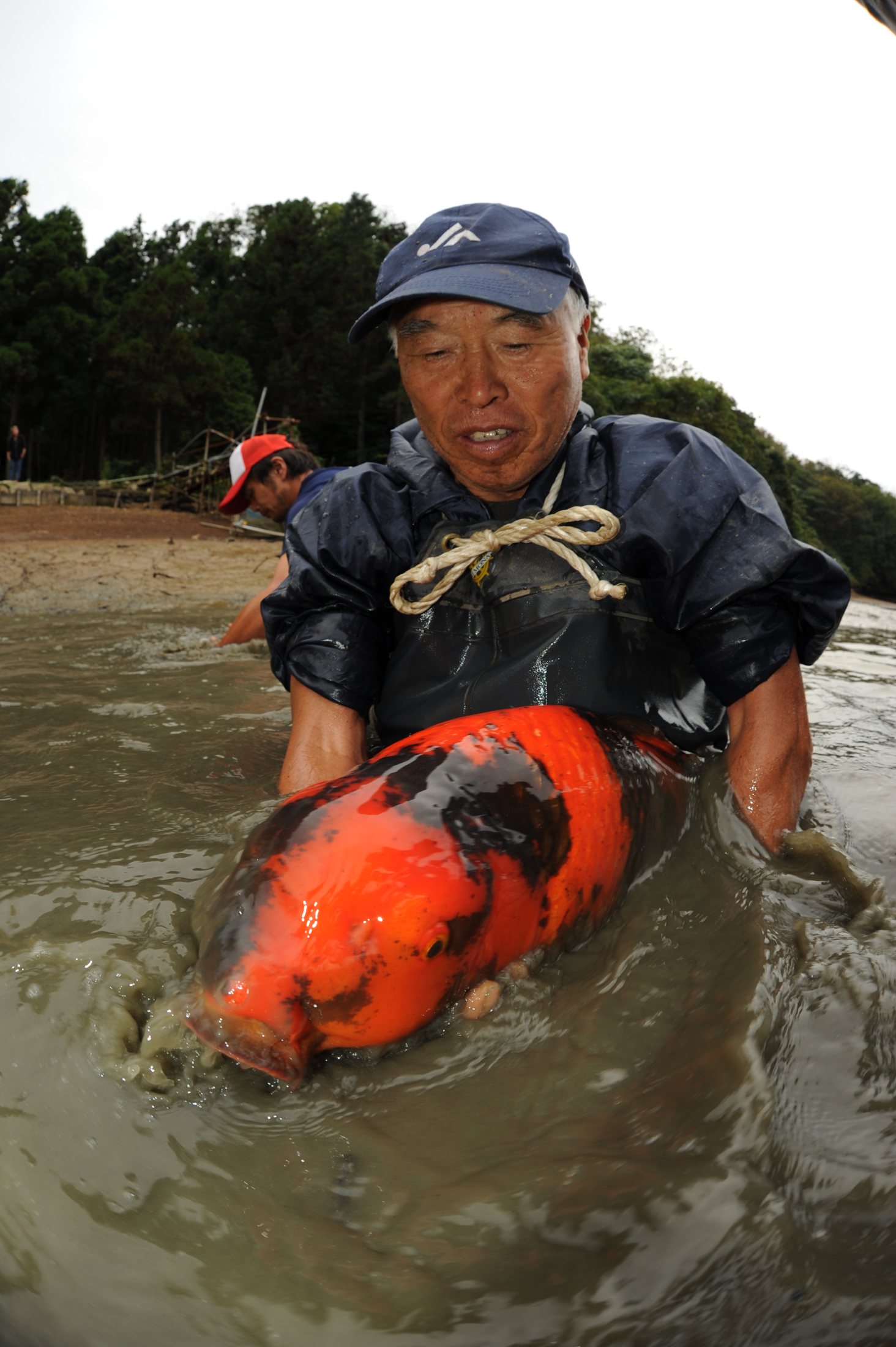
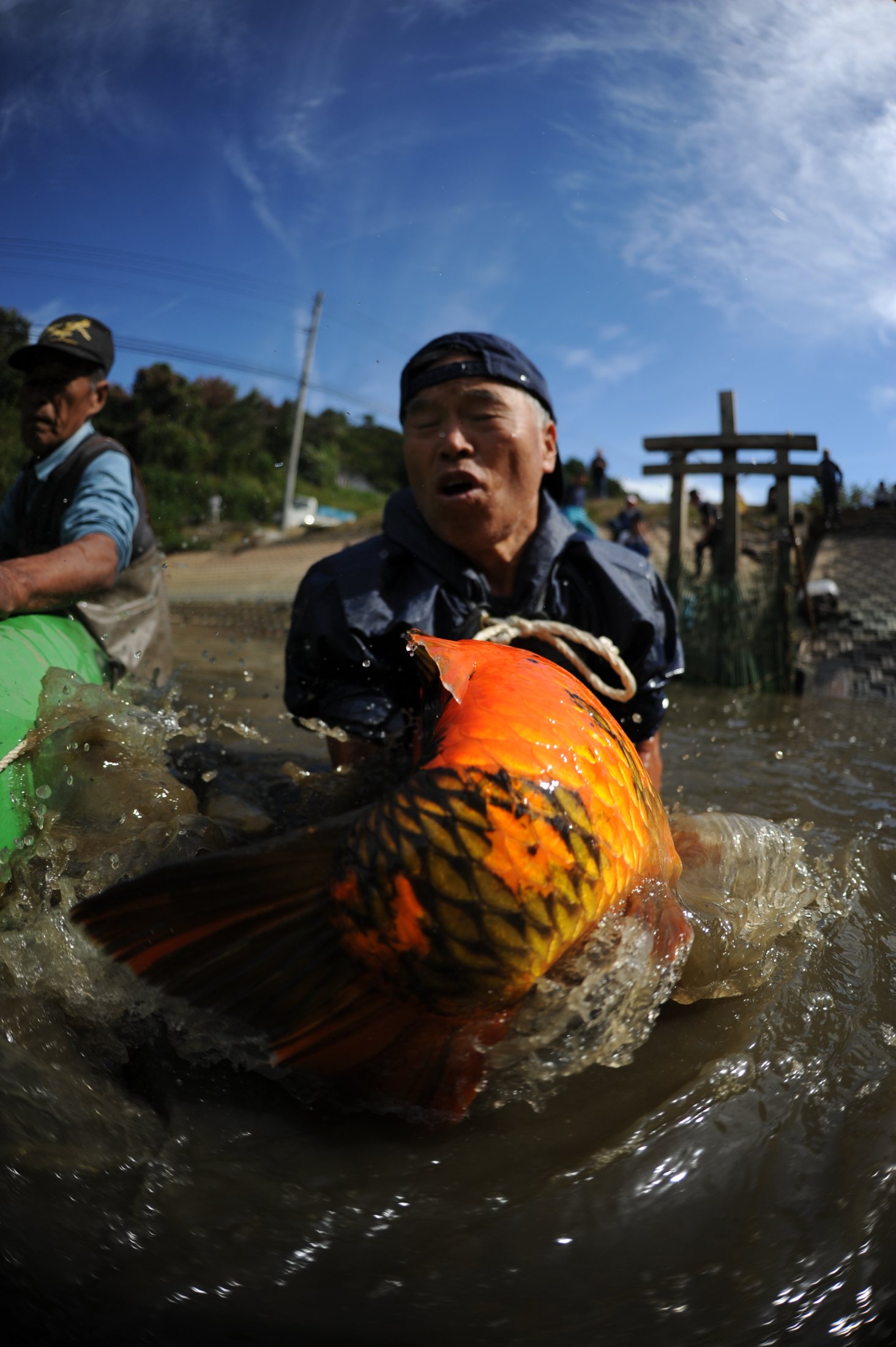
One of the Shinodas' harvest helpers with a big koi in the mudpond.
If you watched our video of the bullfighting in the mountains to the very end, you already know him. Right at the close, a man leads his bull down from the arena, back to his farm. That is Masanori Shinoda. The little arena lies in the woods above his farm, and down below his ponds and his Hi Utsuri are waiting.
The bullfighting above the farm. At the end, Masanori leads his bull home.
The Shinoda family's Shinosai Koi Farm lies on Koguriyama, a mountain in the area around Yamakoshi, where Yagozen, Hansuke, Hiroi and Hiroki also have their ponds. I have known the family since the nineties, and even back then I was buying fish here. What makes this farm special is best understood by telling its story from the beginning.
sandai三代
Three generations on the mountain
In 1951 Masaru Shinoda began breeding koi. He learned from two men whose names everyone in Niigata still knows today: Chutarou Hiroi, the grandfather of the Hiroi Koi Farm here on Koguriyama, and Kawakami, the founder of the Jurosuke Koi Farm in Urakawa. At first Masaru bred Kohaku and Sanke, like almost everyone in the mountains.
His son Susumu joined in 1961, just eighteen years old. At first he worked for Jurosuke and took koi by train all the way to Hiroshima, to a good customer named Tamaki. One day Tamaki asked whether Susumu could help him out for a week. The week turned into three years. Susumu showed him how koi are bred in Niigata.
Today Masanori, Susumu's son, runs the farm. Susumu is still alive and well past eighty. In September I visited him again together with Professor Harry Palm from Rostock.
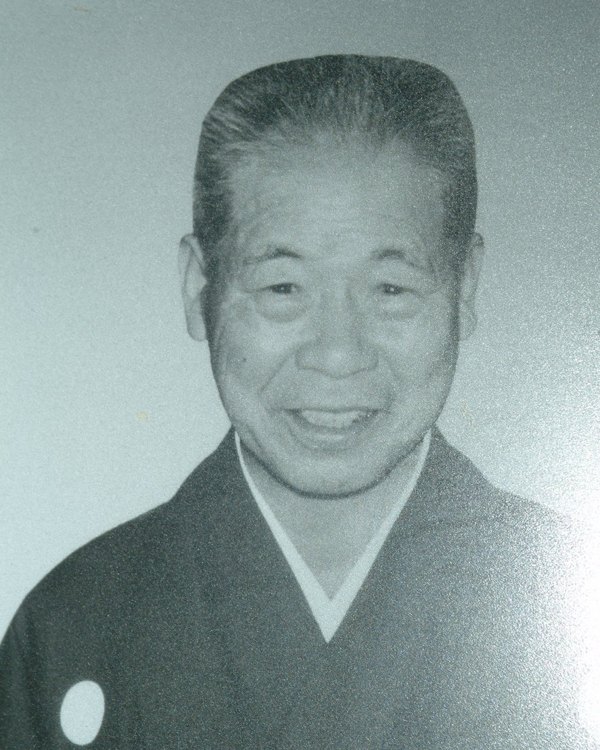
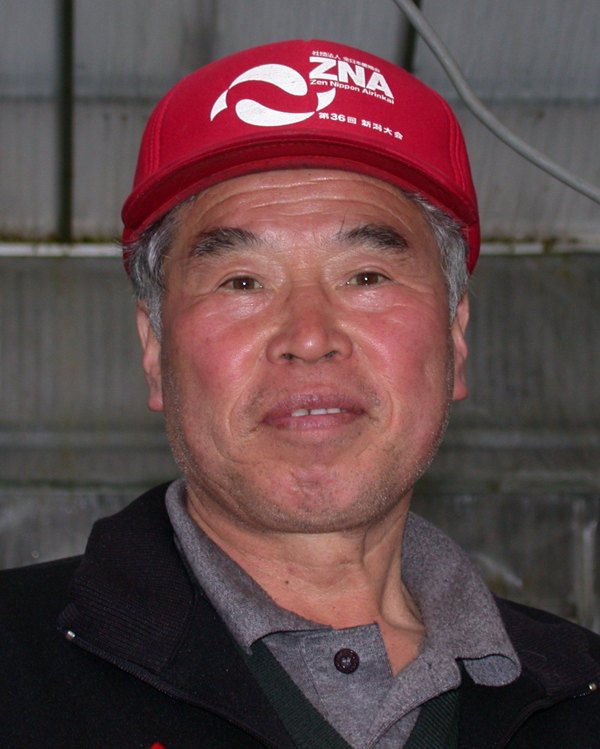
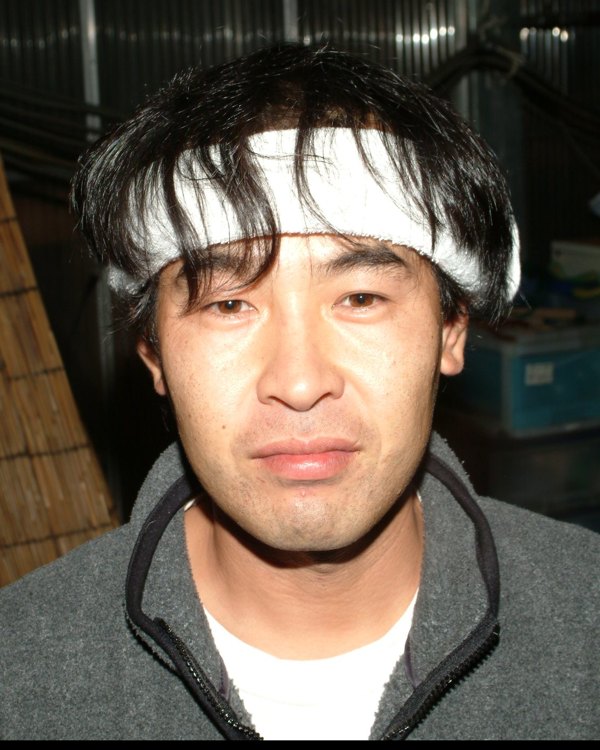
Masaru ShinodaThe founder. Breeding since 1951.Susumu ShinodaHis son. On the farm since 1961.Masanori ShinodaSusumu's son. Runs the farm today.
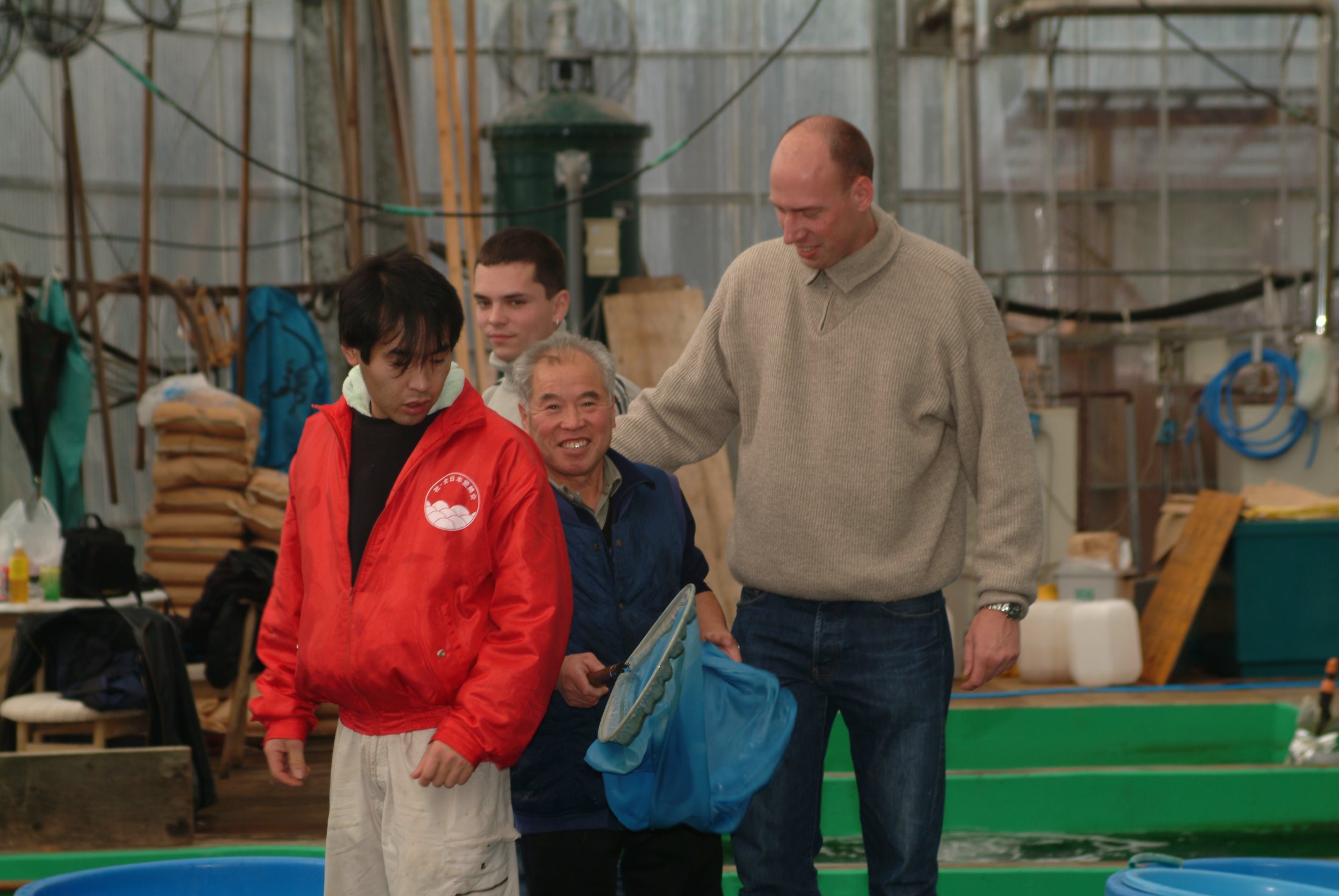
In the fish house, 2002: Masanori on the left, Susumu in the middle, me on the right.
A female from Yamakoshi
Of all the family's pictures, Masaru's portrait is the only one in which anyone is laughing. It hangs in the family home. Today Susumu calls his father a visionary, and anyone who knows his story understands why.
In 1990 Masaru started with Doitsu Go-Sanke, that is, Kohaku, Sanke and Showa without a coat of scales. Back then such fish were rare, and the market was not asking for them. It all began with a single Doitsu Kohaku female, a gift from his wife, who, like the fish, came from Yamakoshi.
From this female grew the only Doitsu line of its time whose fish could reach well over sixty centimetres. Masaru took great care not to pass any breeding fish on to other breeders. Through hobbyists who bought them and passed them on, they found their way to other farms all the same. This is how the large-growing Doitsu Go-Sanke spread from here across the whole of Japan again.
Ginrin that grow
Then Masaru took on the next gap. There were no Ginrin lines that grew as well as the normally scaled fish. He wanted to change that. He borrowed a Ginrin Showa female from the Suda Koi Farm, a Showa male with Dainichi blood from Kuniasu of the Hiroi Koi Farm and a Hi Utsuri male from Hirachin, plus a Doitsu Showa from his own breeding.
The female from Suda and the Showa from Kuniasu produced five very good young fish. One of them became a legend.
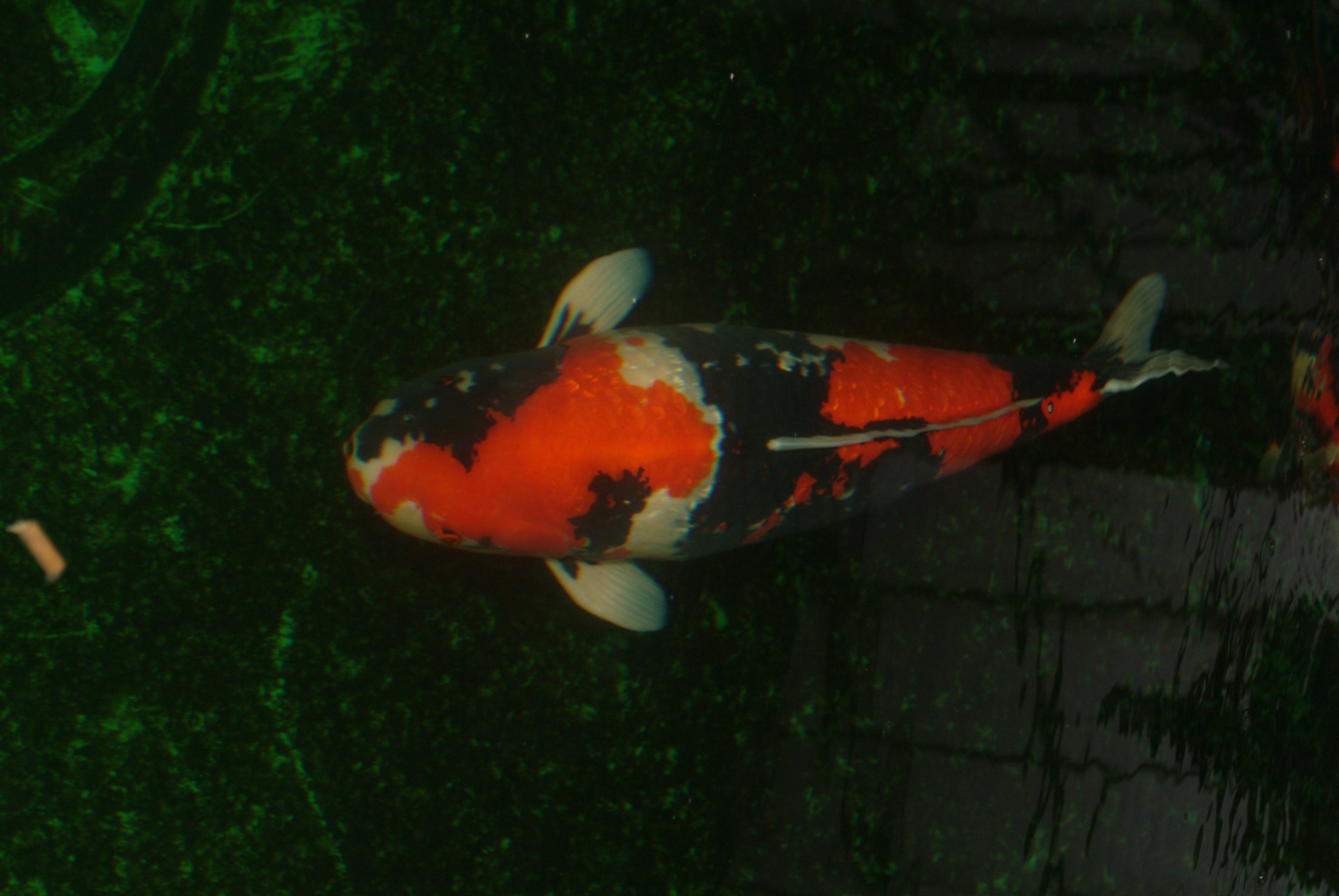
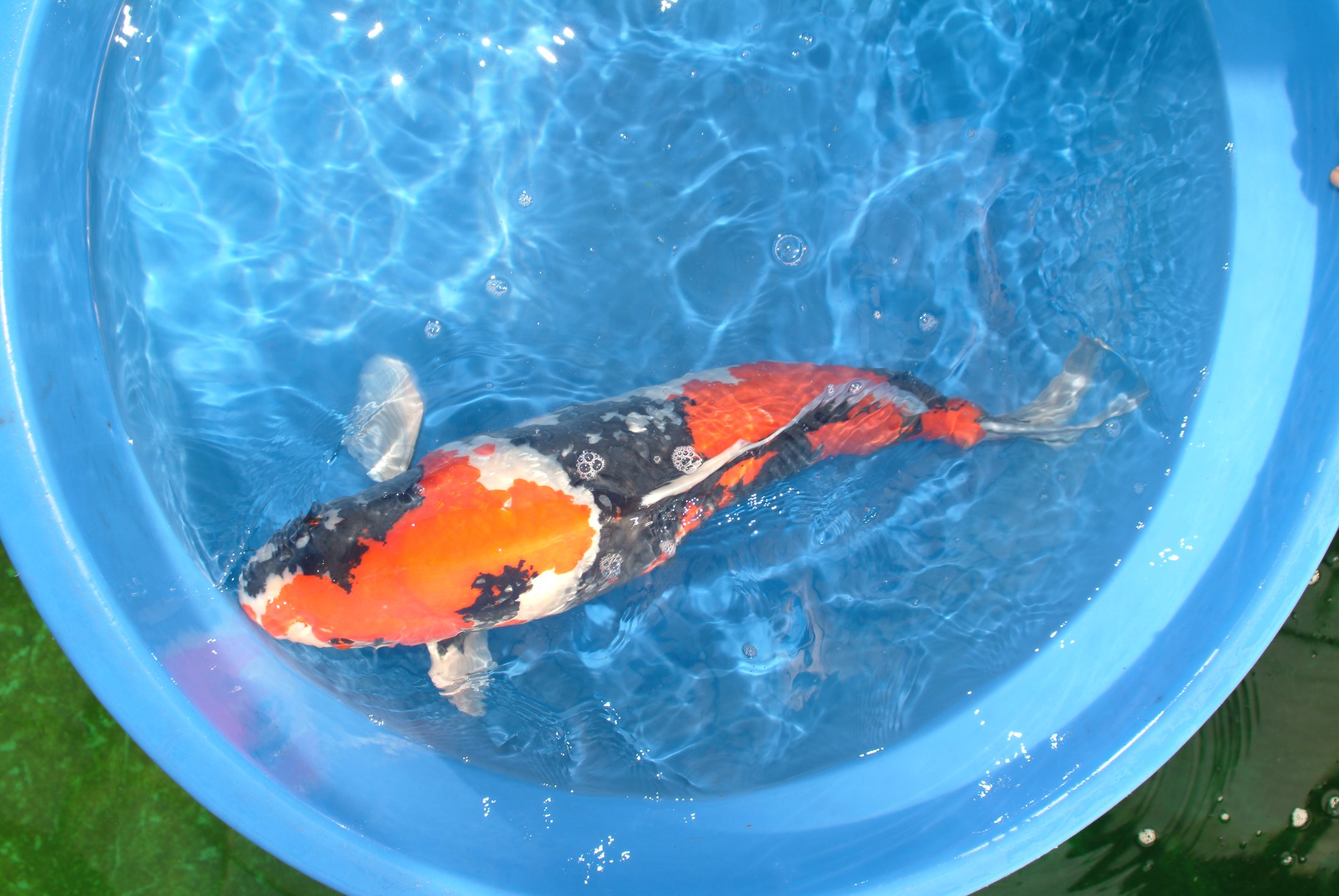
The Ginrin Showa, 93 centimetres, winner of the Nogyosai.The same fish in the bowl.
This Ginrin Showa grew to 93 centimetres and won the Nogyosai. A Ginrin Showa of this size and with this body is still a great rarity today. Back then hardly any Ginrin line grew as well as the normally scaled fish. This fish showed that it can be done.
The finest results, however, came from a different pairing: Hi Utsuri with normally scaled Showa. The farm's present-day Showa, Sanke and Doitsu lines go back to these crosses, and above all its Hi Utsuri and Kage Hi Utsuri. Masaru died in 2002.
jishin地震
The earthquake
In October 2004 the earth shook in Niigata. On Koguriyama whole mountainsides slid away, ponds broke apart, and the power was out for weeks. The Shinodas lost almost their entire stock: breeding fish, Tategoi, Nisai and Sansai. Only about 2,000 Tosai were saved.
The most valuable koi were flown out of the mountains by helicopter, among them the big Ginrin Showa. He came through the earthquake unharmed and was moved to a fish house in the valley. The following summer he and the other big fish were to recover in a spacious mudpond near Nagaoka. In October five of them could not be harvested again, all over ninety centimetres. The Ginrin Showa was one of them.
The family rebuilt the farm, bought additional land and carried on. That Shinoda fish of this quality exist again today is anything but a matter of course.
1951
Masaru Shinoda begins breeding koi.
93 cm
The Ginrin Showa, winner of the Nogyosai.
1 m
That is how big the farm's largest Hi Utsuri have grown.
Number one for Hi Utsuri
For me, Shinoda is number one in Japan for Hi Utsuri. At the Shinkokai the family has been winning almost everything in this class for years, from Best in Variety and Best in Size to first, second and third place. It is similar only with Omosako and the Shiro Utsuri: hardly anyone ever gets in between.
Shinoda fish were already known for their shape in the nineties. We call it the buffalo shape: a broad, high back, a massive body, real bulls of fish. Other breeders only learned later how to raise koi like these. Some of the farm's Hi Utsuri and Kage Hi Utsuri have grown to a metre and won major shows.
“For Hi Utsuri, Shinoda is number one for me.”
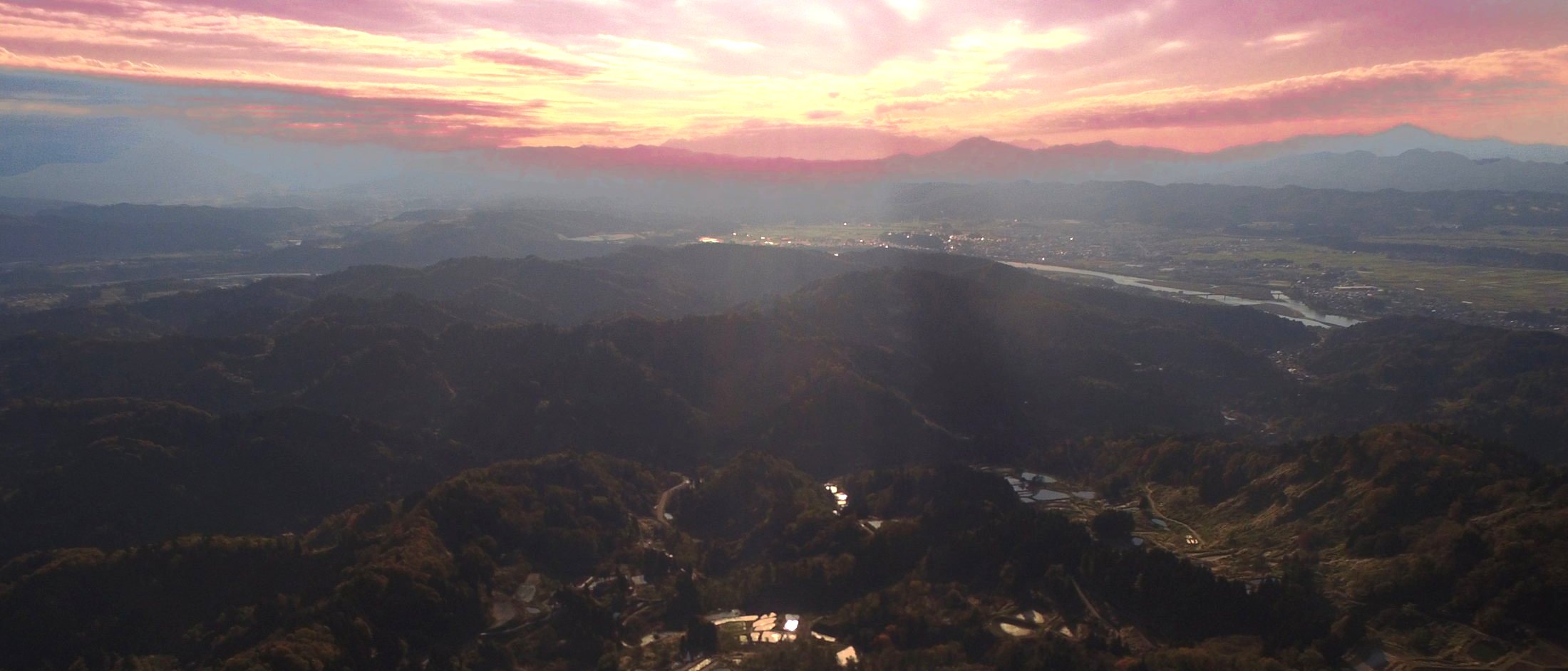
Sunset glow over the mountains and ponds of Yamakoshi, autumn 2016.
sansai山菜
Two ponds and a blue tarpaulin
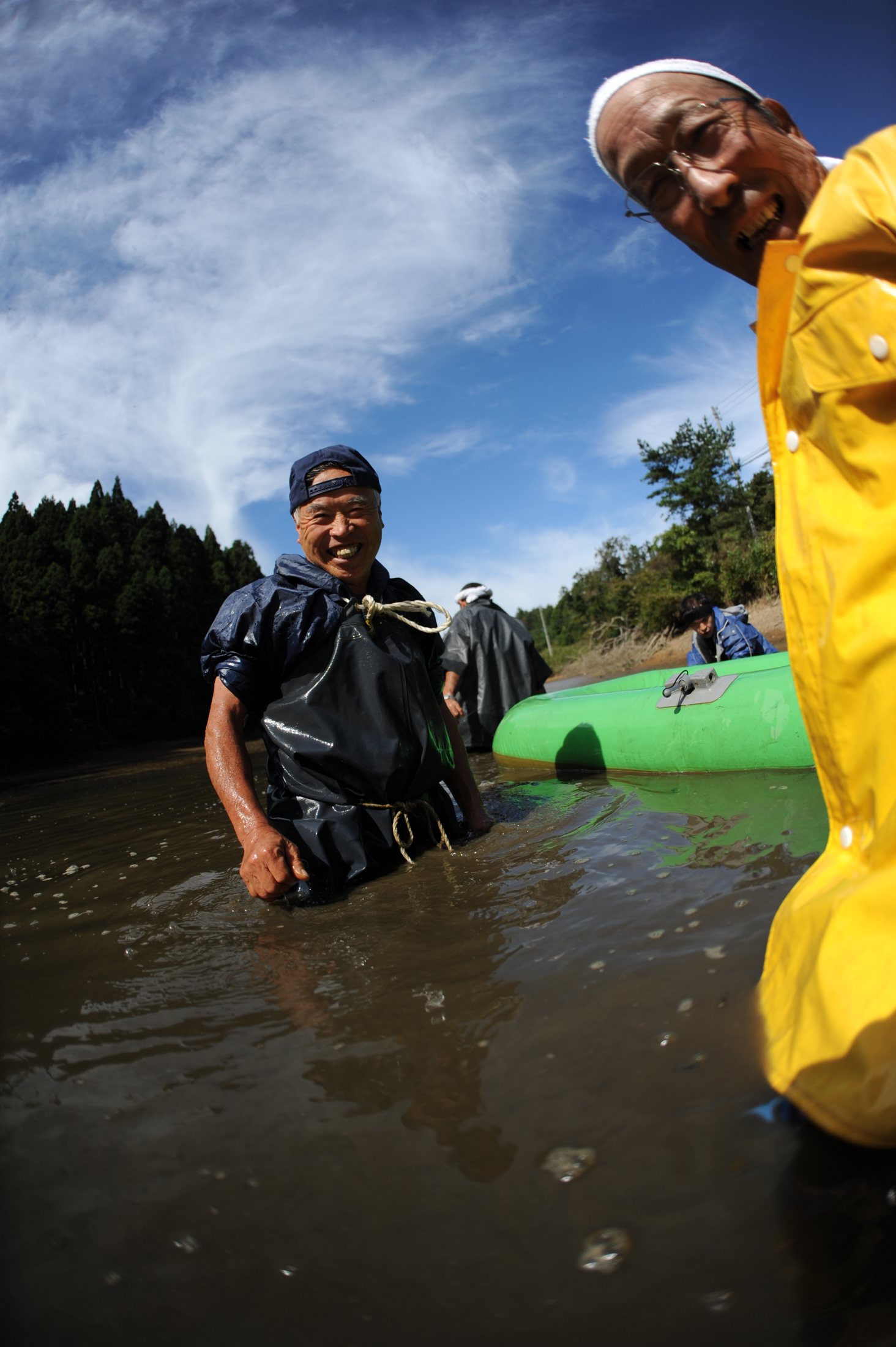
Once I was allowed to join the Shinodas for the harvest. Their two large mudponds are a good hour's drive from the farm, right on the other side of the valley around Nagaoka. That day both were harvested, first one, then the other, and the whole family was standing in the water.
Harvest in Shinoda's mudpond. Susumu on the left.
Another German koi dealer was with us. He got stuck in the mud in his waders and could go neither forwards nor back. I was just about to help him out when someone called from the edge of the pond: “Leave him there, we'll hang an automatic feeder on him, for the winter.” That was a fun day.
Between the first and the second pond we all sat down on a big blue tarpaulin and ate. You have to understand: the food a Japanese family cooks at home has little to do with what you get in a restaurant. Lots of fresh vegetables and much from the mountains and forest, deep-fried fern fronds, herbs and roots. In Japan this is called 山菜, sansai, vegetables from the mountains. Being allowed to take part is always something special.
A harvest day at Shinoda's mudponds. At the start, Masanori leads his bull down to the farm.
Our connection with Shinoda goes back to the nineties. Since then I have bought fish here again and again, and Shinoda has sent us some truly beautiful Tosai.
Haaki, who drops by every two weeks, has seen how they are developing in our ponds. When they arrived they were still yellowish orange. Today they carry a strong orange-red, and the red is still developing.
Some of these fish are now ready: Hi Utsuri, Nisai, between 45 and 56 centimetres long.
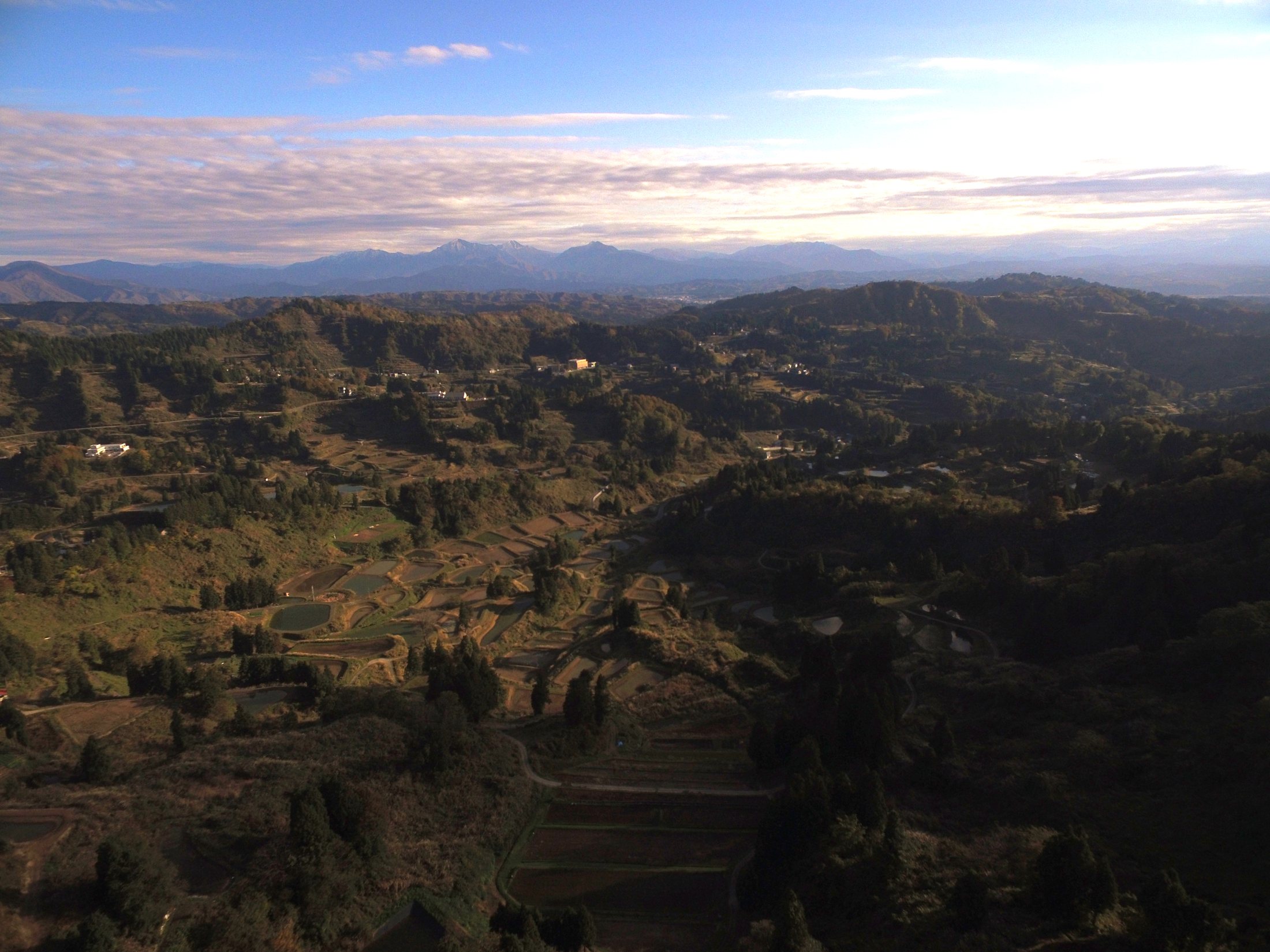
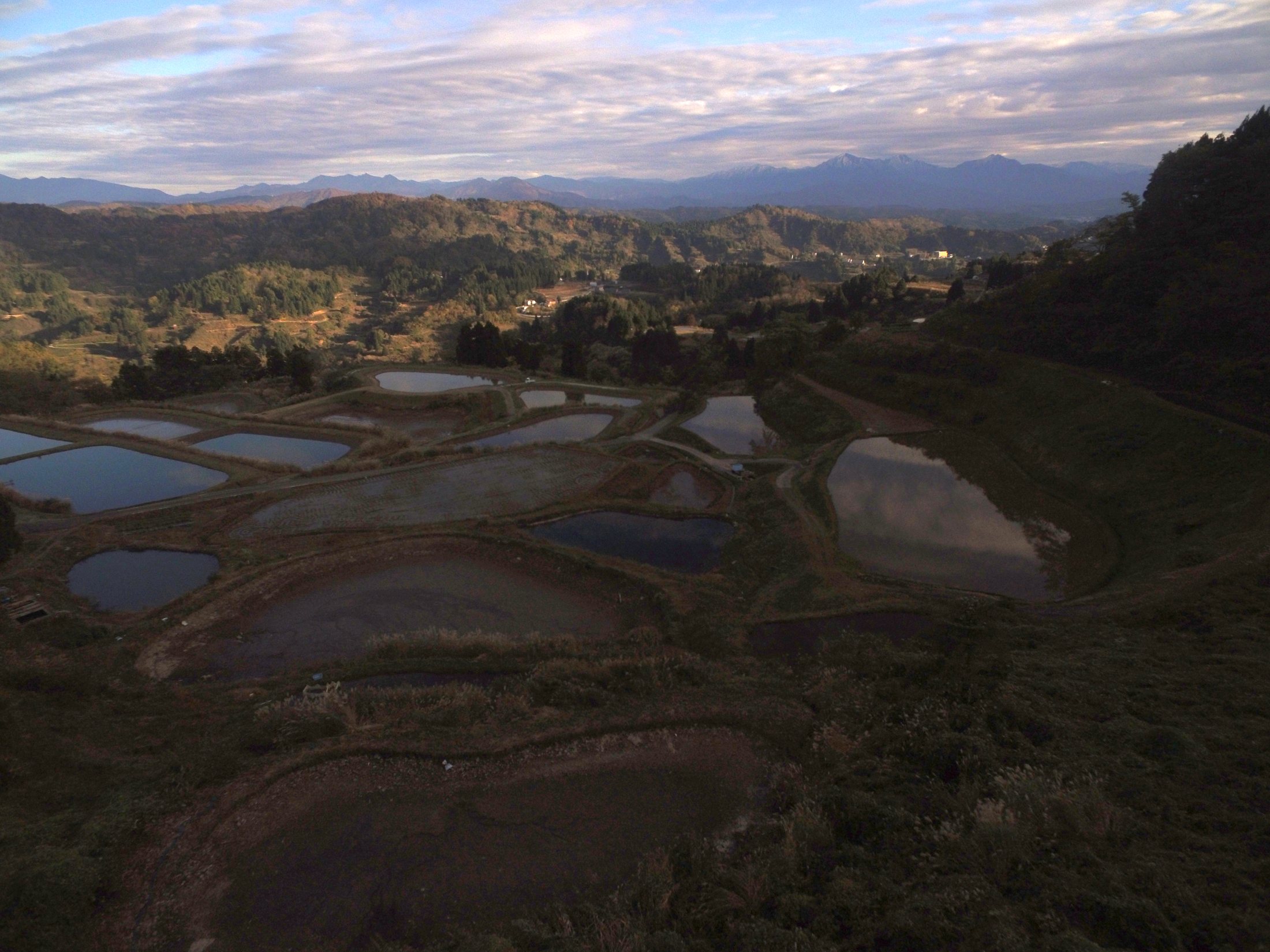
View over Yamakoshi.Natural ponds in the mountains.
For me, the landscape around Koguriyama is among the most beautiful Niigata has to offer: natural ponds on the slopes, forest, mountains as far as the horizon. In September I showed a few of these viewpoints to Harry Palm as well.
Our Shinoda Hi Utsuri
The Hi Utsuri from Shinoda, Nisai between 45 and 56 centimetres, are now in our shop. Each fish has been filmed individually.
To provide the best experience, we use technologies such as cookies to store and/or access device information. Consenting to these technologies will allow us to process data such as browsing behaviour or unique IDs on this site. Not consenting or withdrawing consent may adversely affect certain features and functions.
Functional
Always active
The technical storage or access is strictly necessary for the legitimate purpose of enabling the use of a specific service explicitly requested by the subscriber or user, or for the sole purpose of carrying out the transmission of a communication over an electronic communications network.
Preferences
The technical storage or access is necessary for the legitimate purpose of storing preferences that are not requested by the subscriber or user.
Statistics
The technical storage or access that is used exclusively for statistical purposes.The technical storage or access that is used exclusively for anonymous statistical purposes. Without a subpoena, voluntary compliance on the part of your Internet Service Provider, or additional records from a third party, information stored or retrieved for this purpose alone cannot usually be used to identify you.
Marketing
The technical storage or access is required to create user profiles to send advertising, or to track the user on a website or across several websites for similar marketing purposes.
 Deutsch
 Nederlands
 English
 Français
 Italiano
 Español
 Português
 Română
 Polski