
Bloodlines, parent fish and the right koi
Haaki with Bachmann, episode 40. How the big breeders protect and swap their bloodlines, why the most famous fish is not always the best breeding fish and what you should look for when buying.
The big DS Kohaku on spawning night, 5 June 2018.
To close our three episodes on spawning season, Haaki wanted to know whether I had also been at other breeders’ farms when they were spawning. At Tsuyoshi’s at Torazo I drop by in the afternoon, have a coffee, see the net enclosures put up and look inside. But I am not there at night or in the morning. At the smaller breeders it is not nearly as exciting to follow, either. They buy in their breeding fish from the big breeders or from hobbyists and do not follow a plan the way Dainichi, Sakai or Momotaro do.
Bloodlines at second hand
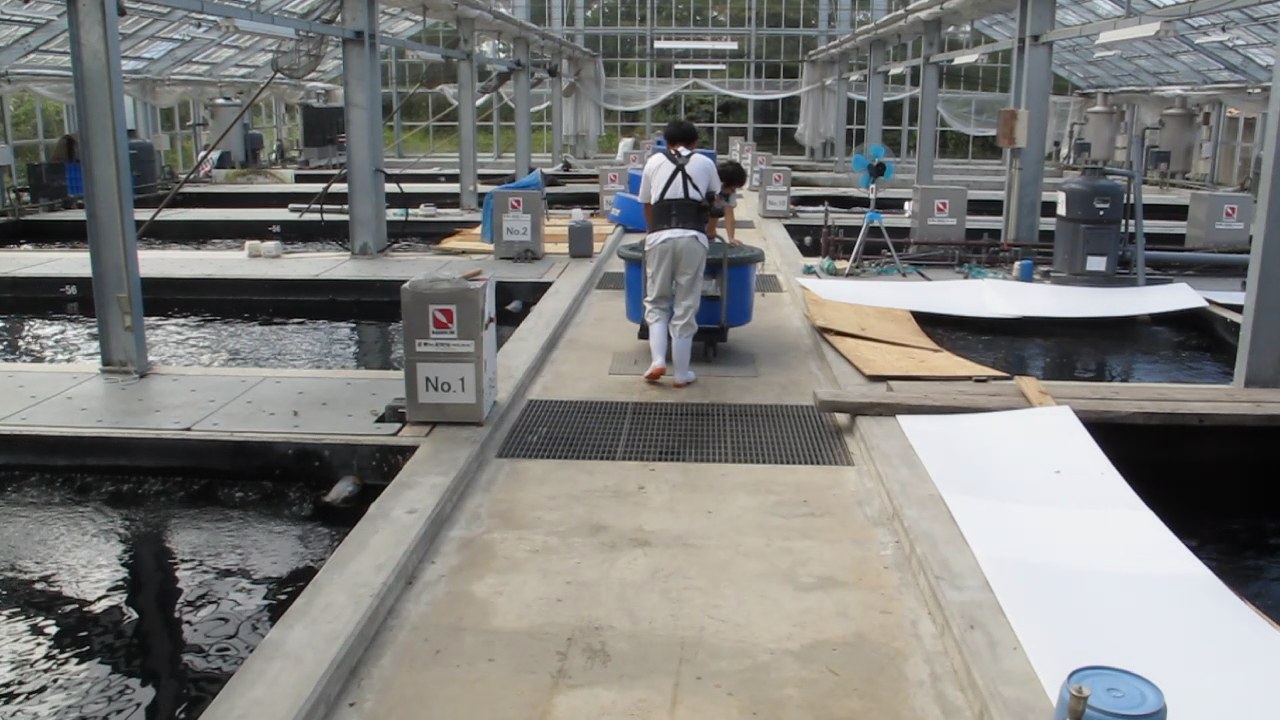
Nogami is a cousin of Futoshi and Shigeru. There is a very beautiful, thoroughly traditional video series from there: the young Nogami, Chikara, wades around the tank in his waders and puts up the spawning net enclosure with the parent fish, the camera sweeps across the horizon, and up above you see the spawning brushes being carried over. The film plays out on two or three levels and is really worth watching. But farms like that set up three, four, five sets, no more. Usually one or two people work there, and there are not that many larval ponds and mudponds in which different bloodlines could be raised.
Their job is more like mine here: to do the raising so well that it succeeds one hundred per cent, and to build up quality that way. The genetics come at second hand. It is not a bloodline followed since grandfather’s day, but breeding fish bought in again and again, and constant buying-in dilutes the whole thing. Anyone who really wants to run a bloodline needs enough fish houses for the parent fish and a genetic backup from the start of the line in case he wants to backcross. He has to build up siblings. After all, Mona Lisa is not just that one fish but several fish from the same gene pool, which can be paired again with the Monster lines or with GatchaX. You have to keep all of that genetics in stock if you want to develop your ideas further in a well-considered way.
Swapping among equals
How do the big breeders get hold of other breeders’ parent fish without handing their own potential to their competitors? With a breeder of equal standing you can swap. But who qualifies? At the moment, apart from Sakai, perhaps Isa, and that is really it. Everyone else has to buy their way in, and that is a question of money. Sometimes a parent fish from one of the top farms costs so much that you will never earn it back by selling the young fish. Through the price, the breeder also limits how far the gene pool he wants to protect spreads, because he wants to sell his own offspring and secure his market share.
Among the big ones it works differently. Shigeru, for example, buys four fish from Sakai, and Sakai buys four fish from us. Each then has to see for himself whether the fish work; sometimes one is unlucky, sometimes the other. On paper there are then, let’s say, 200 million yen on each side, and in a newspaper it reads as though someone had bought a parent fish for 200 million yen. In reality it is just a swap, and no money changes hands at all. For the small players, who are not playing on equal terms, it gets expensive, and sometimes it is Russian roulette: the money does not come back in, or the young fish do not deliver in the end.
Video not showing? Watch on YouTube · Subscribe to the channel
The figurehead
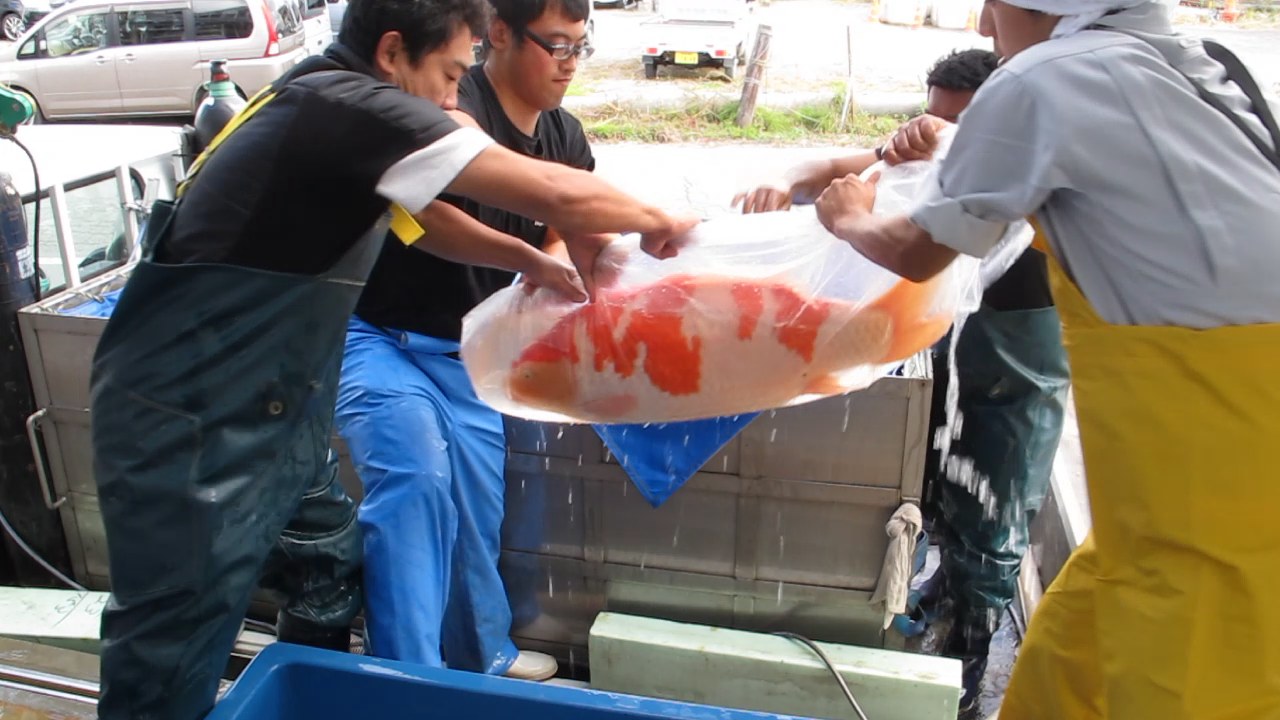
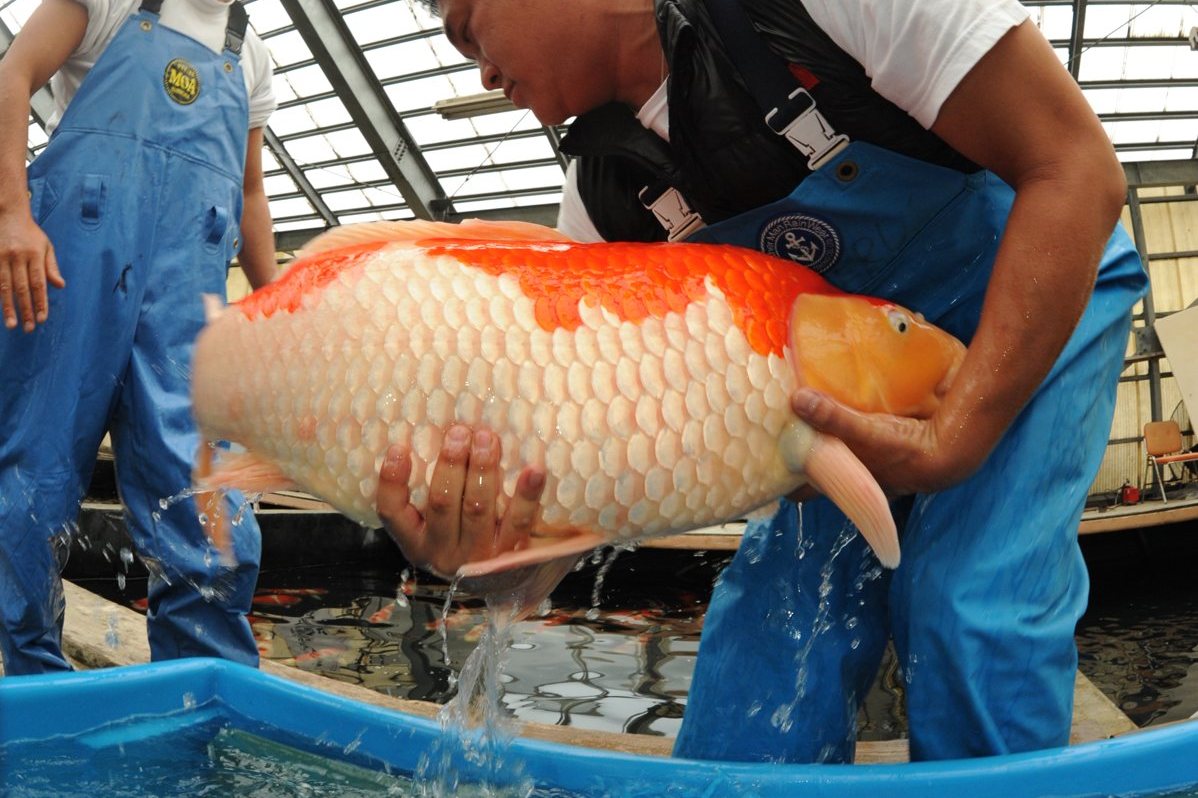
Haaki asked about the huge DS Kohaku that can be seen in our videos from 2018. Do you buy a spawning fish without knowing whether it works in practice? This incredibly big Kohaku weighed 23 kilos, and everyone who saw it just said: wow. Many people around the world considered it the ultimate breeding fish. In fact it gave only a few eggs and never spawned out completely. Only those who were there that night knew it.
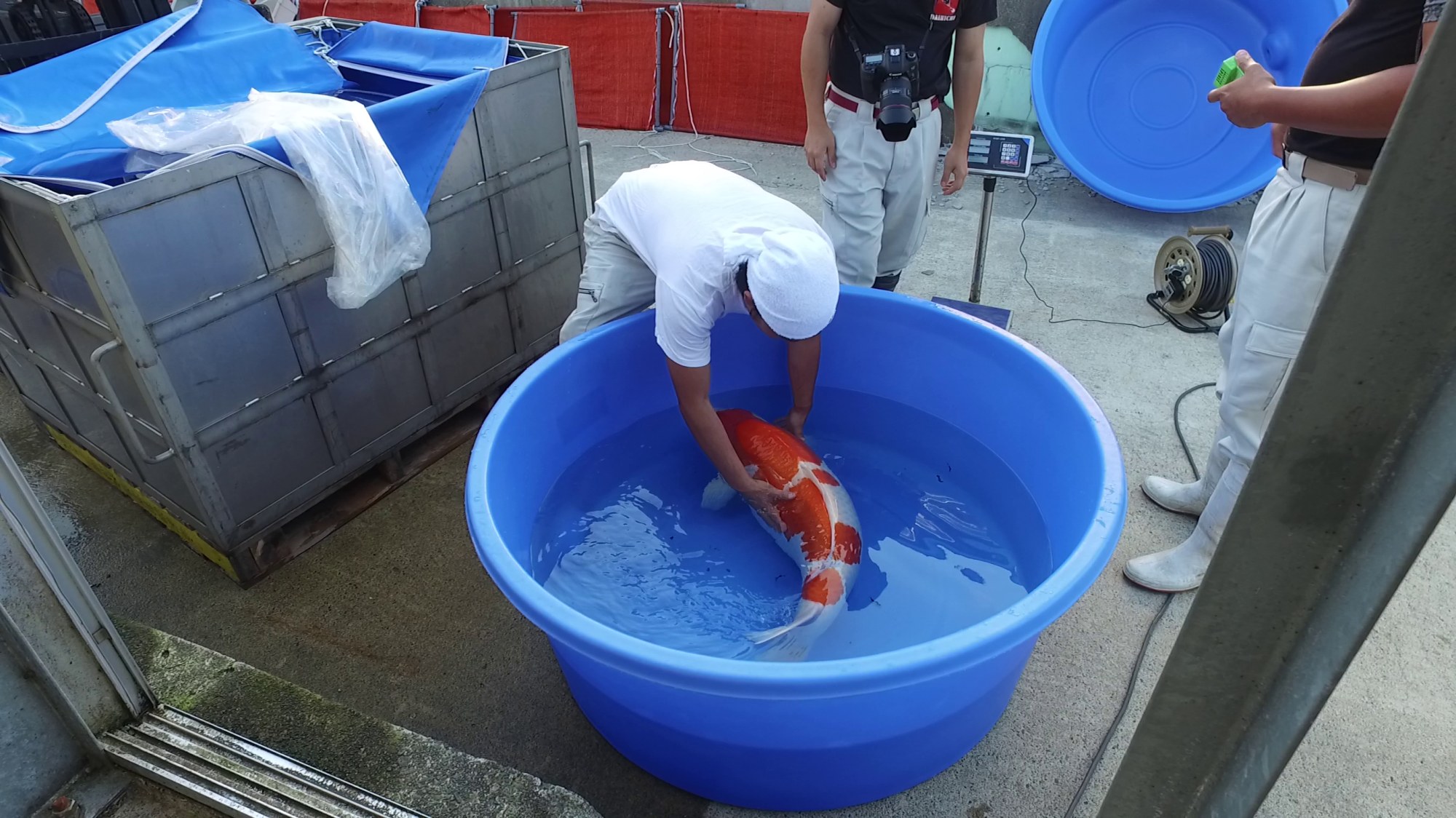
But there were three or four more genetically identical fish from this one, and they did work. That one fish was a bit of a figurehead. The genetic material was there all the same; it is still there today and is still being bred from. That is why it was also perfectly fine to sell the offspring under that name. They came from this line, just not from that exact fish.
Female or male?
You might think that because both parent fish contribute their share, you can simply buy the cheaper males of a good bloodline. It does not work like that. Over the last two years Matsue has replaced his entire stock of males with Dainichi males, and that was a good fit; he is having great success with it. But it can work, and it need not. Depending on what you want to improve and where the weaknesses of your own line lie, you need females or males. Through the females you tend to bring in size and body shape, through the males rather skin quality and pattern. And the two have to match; there are also bloodlines that do not work with each other. I deliberately do not name examples; I do not want to run down any breeder.
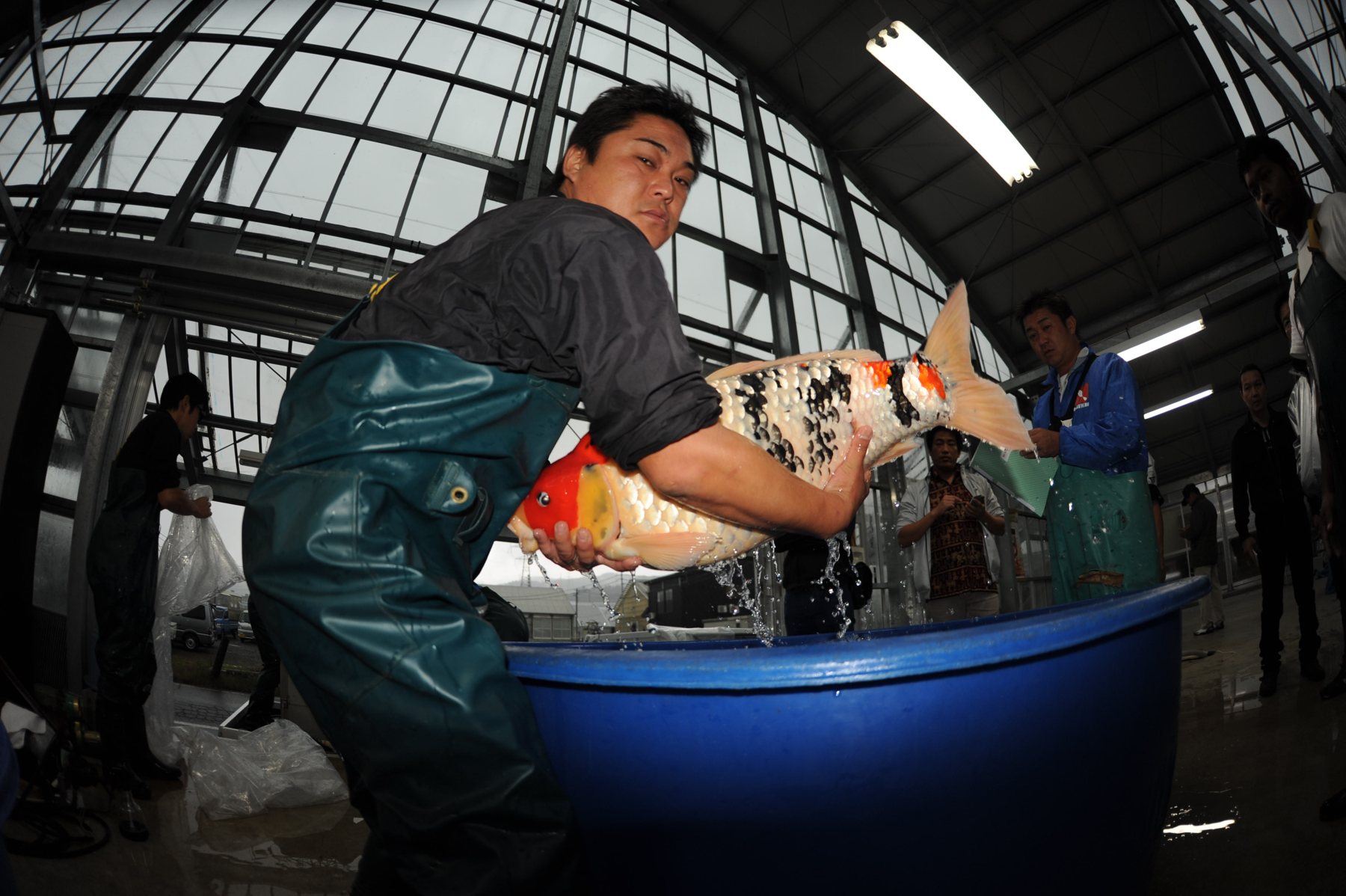
Really following a bloodline through crossing and backcrossing is something very few do: Matsue, Dainichi, Torazo, Sakai and Momotaro are good at it. The difference from the second tier is like night and day. It is exactly the same with customers. There are dealers who drive from village to village in Niigata and buy two boxes everywhere, five Goshiki here, three Yamabuki there, then a few Hi Utsuri and Kawarimono. They serve the hobbyist. And there are dealers who buy from Dainichi, Sakai, Omosako or Momotaro. They tend to serve the dedicated enthusiasts, who are a level above.
Success has many levels
How pairs and genetics come together remains a matter of trial and error. Anyone with 80 attempts may land ten hits. Anyone with only four is in a tight spot. At Dainichi, too, there are pairings that produce many beautiful, very saleable fish, and others that produce only a few saleable fish but regularly yield the three, four, five standouts that go right to the top at a show. The former matter for commercial success, the latter for keeping the name at the top.
And sometimes you set up a pair just to get an intermediate stage. You discard all the rest, but you need the four or five fish that carry 25 per cent of a particular blood in order to cross them into the next idea. Not every pair gives you the next generation, not every one the coming champion and not every one broad commercial success.
“As long as it is alive, it is a work of art. Once it is dead, it is just a dead carp.”
What a champion costs
Anyone who wants to buy a future champion from Shigeru, a fish you know could finish right at the front at the next Nogyosai or Shinkokai, is now looking at a seven-figure sum in euros. In Germany hardly anyone has any idea what such fish cost today. A few dealers with worldwide contacts do, currently above all from China and Taiwan. They buy for very wealthy business owners, who also use it to show what they can afford: a living creature with a limited lifespan. As long as it is alive, it is a work of art. And whether it wins in the end also depends on the judges’ leanings. Some favour the south, others the north, some Sakai, others Dainichi.
Open eyes instead of bloodlines
For the ordinary hobbyist things look quite different. Anyone who says their next fish must come from this or that bloodline is already far too fixed. You really should not have that in your head at all. Any more than: now I have to buy a Showa, or a Kohaku. Buy whatever catches your eye for your money at the time. We had one year with really great Kohaku, before that one with beautiful Showa, and this year I brought back some very fine Shiro Utsuri. Buy what is available in larger numbers in top quality at the time.
Sometimes there is a single Goshiki swimming in the tank of a Kohaku breeder, which he has certainly bought in from somewhere, and because it stands out so much, the customer absolutely wants that Goshiki. Yet he has a choice of 150 really great Kohaku Nisai right there and can compare siblings with one another: body shape, skin, pattern. Only that comparison shows how good a fish is relative to its siblings and what you are getting for your price. At a dealer with five Kohaku, you can, if you are good, pick out the best of the five. Where 200 Kohaku are swimming, you can see which one is the biggest under the same conditions, has the most volume and the pattern you like. Go in with open eyes and see what strikes you. You will be far better served that way.
The Shinoda fish and the new year’s intake
Haaki comes to us every two weeks and sees how the Shinoda fish are developing in our ponds. When they arrived a year ago they were still yellowish orange; today they have a lovely orange-red, and the red will develop further. The Sanke are very good again this year too. I did not sort those myself; Shigeru offered me a whole package. It was the same three years ago, when the Sanke line Mr. Big came out: Shigeru had not had good Sanke for a long time, people looked mainly to Sakai for Sanke, and then he had a hit with a pairing but not the buyers for it. Back then we bought 600 Sanke, including some real high-flyers, and sold them at very reasonable prices. Hardly anyone noticed.
For the last two years I sat next to Shigeru again and could pick out my fish straight after him. That will pay off, next year with the Tosai, in two years with the Nisai. This year I deliberately did not import 3,000 fish as I did last year, but 2,000, so that last year’s fish keep the big ponds and can stretch out over the winter.
You only see the size here
Many people who come to us for the first or second time say: you can’t tell from the videos how huge it is here. The camera conveys the size of the fish just as poorly. And your own eye recalibrates. Since the new little ones arrived, you see the next size up quite differently again: what chunky fish! If there are only 80-centimetre fish in a tank, you hardly notice any more. Only when a 90 or 92 swims among them do you think: what a whopper that is.
 Deutsch
 Nederlands
 English
 Français
 Italiano
 Español
 Português
 Română
 Polski